Wish You Were Here, By Graham Swift

For free real time breaking news alerts sent straight to your inbox sign up to our breaking news emails
Sign up to our free breaking news emails
We still know little for sure about the prospects for intelligent fiction in a digital age. Yet most observers agree that the status of the professional "career novelist", one devoted to an exacting craft that builds over many books into a shelf that makes sense, may shift from that of a rare species to a deeply endangered one. Read Graham Swift – this quietly commanding new novel, and the eight that preceded it before and after the big splash of his third book Waterland in 1983 – and feel the weight of what we stand to lose. Single-minded, gimmick-proof, Swift's fiction has paid unswerving attention, in both the fine detail of his prose and the wide architecture of his forms, to what the critic Raymond Williams called "structures of feeling". These novels have grown organically into a social-emotional record of modern English experience sensed on the pulse, on the tongue – in the heart. Future historians should trust them above headlines.
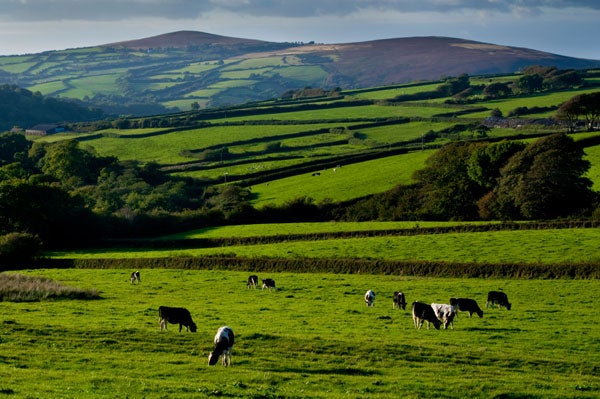
Swift earns this trust precisely because he reads like the least overtly "historical" or documentary of authors. Wish You Were Here turns on the repatriation of a soldier's body from the battlefields of Iraq to the dead corporal's native Devon in 2006. After the "mad cow" epidemics – and political panics – of the 1990s, the family dairy farm with its "generations going back and forwards, like the hills" where Tom Luxton grew up has been sold off to an investment banker from London. Other losses scarred this accursed time, which saw young Tom go for a soldier in the dead of night. Jack, the grieving elder brother around whose silently tormented inner life the novel circles, has decamped with his wife (and childhood sweetheart) Ellie. Richer, but uprooted, with winters spent sipping parasol-topped drinks under a Caribbean sun, they now run a thriving caravan site on the Isle of Wight.
As he battles through memories and fears to collect Tom (the victim of a roadside bomb) from an airbase ceremony in Oxfordshire and see him safely buried in the village churchyard, Jack must review the half-buried traumas of the past and face the "larger, unlocal malaise of insecurity" that has overturned his life. Yet in a Swift novel, media clichés and sociological soundbites have no place. The backward-looking belatedness of our current military adventures; the deep bond between the farm that binds and the barracks that frees; centuries-old patterns of agriculture in decline; the evolution of the countryside from working landscape into weekenders' theme park: Swift lets us absorb all this, rather than inspect it as abstract theme or topic, through the minutely rendered flow of feelings and reminiscences.
Wish You Were Here burns with a sombre, steady rather than a pyrotechnic flame. Stick with it; stay close to its hearth. Like the gruff and saturnine folk within it, this novel takes some getting to know – but more than rewards the effort. As always, Swift refuses to impose a superior meta-language onto the flux of consciousness. Taciturn, ruminative Jack, a gentle giant whose still waters run deep indeed, thinks back during his mission of mourning from "the cullings and slaughterings of recent times" to earlier episodes of sharp grief on the farm.
He measures the gap between himself, "a sticker, a settler", and Tom, "a mover-on, a leaver-behind" – and the distance that divided both boys from their gloomy father, Michael. The windswept cliffs of the Isle and the steep valleys of north Devon – our principal locations – more or less bookend Hardy's Wessex. His epic fatalism will sometimes come to mind.
Yet language and action here march to their own peculiar rhythms. Alien to all bluster and bombast, Swift fashions a delicate, Larkin-esque poetry out of the self-confessed limits of Jack's reflections. As he well knows, Jack could not make a speech to save his life. Yet, thrust into a public role as emblematic mourner, jostled at the pompous homecoming by the "besmothered and encrusted" uniforms of power, he thinks for himself – and feels like "scum", "liable to arrest", rather than the object of a grateful nation's sympathy. Around him cluster shorter scenes in which we hear other minds at work: Major Richards, the sensitive army officer appointed as a by-the-book regimental angel of death; Ellie, the dynamic wife flabbergasted by this sudden crack in her genial rock of a man; Tom himself, the wounded fugitive far from home; even the incoming banker's wife – a proper person, and a burdened one, rather than the satirist's cheap caricature.
The finale threatens melodrama. Unlikely? Not to anyone who has known the quiet one who never bends but may – in extremis – break. This last act also brings a blast of surprising, well-managed suspense. Will the trail of losses end in another "scene of devastation"? Storms, outward and inward, punctuate this novel. But you never quite know when they'll pass.
Subscribe to Independent Premium to bookmark this article
Want to bookmark your favourite articles and stories to read or reference later? Start your Independent Premium subscription today.
Join our commenting forum
Join thought-provoking conversations, follow other Independent readers and see their replies