The Brandstrup-Rojo Project, Linbury Studio Theatre, Royal Opera House, London
Variations that bear repeating

For free real time breaking news alerts sent straight to your inbox sign up to our breaking news emails
Sign up to our free breaking news emails
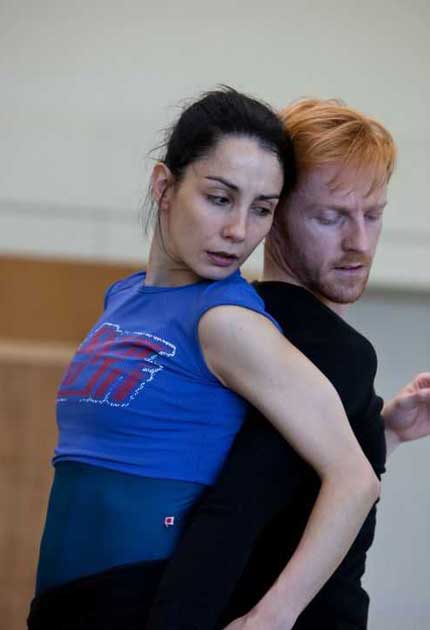
Kim Brandstrup's new Goldberg plays with the idea of dancers in rehearsal. Eager to show the Royal Ballet star Tamara Rojo in an intimate setting, he's chosen to show her at work. The cast try out steps, flop on chairs and benches, pursue relationships. Brandstrup catches the absorption of working dancers, though Goldberg is slowed down by repetition and some sentimental storytelling.
Richard Hudson designs a plain studio setting: a piano and chairs, an old television turned away from the audience. A long ladder is propped against a high window. Pianist Philip Gammon plays Bach's Goldberg Variations – playing live, but also on tape, as the soundtrack for the film shown on television. In Paule Constable's lighting design, light from unseen windows moves across the studio.
Brandstrup's characters are clearly learning a dance from video, watching in a huddle, sketching out moves with their hands. I like the way he shows their attentiveness, the nodding heads and thinking-aloud gestures as they sort out steps before performing them.
Moving into full performance, Brandstrup's dancers dip and wind, slither through their partnering. The line between rehearsal and performance gets blurred, with prepared moves sliding into duets. The choreography is all fluid, drifting moves. It's fluent, but short on bite and contrast.
Dancing with Thomas Whitehead, Rojo clings to him – both in their finished numbers and elsewhere, looking after him as he walks away. All the dancers leave the studio, but Rojo's character tends to linger, waiting alone in the darkness.
Steven McRae, who also acts as Gammon's page turner, doesn't dance until the others have gone. His solos are full of soft-shoe shuffles, turned in and twitchy. It's clear that the 'umble page turner has fallen for Rojo's ballerina; over the course of the ballet, she starts to notice him, giving up on Whitehead.
It's casting violently against type to show the virtuoso McRae as a shy, repressed man, but it works brilliantly. His movement is quiet and uptight, held-in. He can shift from his twitchy shuffles to a perfect spin without apparently changing gears; the flying turn emerges naturally, and vanishes again.
Rojo is broader, yearning boldly after Whitehead. She's best in her most thoughtful scenes, as she catches sight of McRae or prepares for her dances. The happier dances are more exaggerated. When she smiles with delight, caught up in quick movement, it doesn't look spontaneous.
Brandstrup's cast mixes ballet and contemporary dance, with Clara Barbera, Laura Caldow and Riccardo Meneghini alongside the Royal Ballet dancers. They echo and frame the central relationships. What looked like a personal duet for Rojo's and Whitehead's characters is suddenly mirrored by more couples.
Street dancer Tommy Franzé*stands out from the ballet/contemporary group. His display solos are gleefully full of flips, handstands and bouncy rhythms. The phrasing is muscular and juicy, little dips and spits catching the flow of Gammon's playing.
Leo Warner's video design marks lines of light on the studio walls, sometimes sketching moves the dancers will take. Best of all, Warner and Brandstrup set Franzé*against his own shadow. As he climbs the ladder, his shadow springs ahead. It swings and dives around, kicking high, scampering about. Is his character dreaming of future exploits, or too self-conscious to show off in front of the others?
Rehearsals are full of repetition. So is Goldberg. Perhaps Brandstrup means to show rehearsals as variations on a theme, matching Bach's music. The dancers arrive, get to work, break off and leave – over and over again, perhaps eight or nine times. There's time to notice the padding in these scenes, the predictability of the relationships.
To 21 September (020-7304 4000)
Subscribe to Independent Premium to bookmark this article
Want to bookmark your favourite articles and stories to read or reference later? Start your Independent Premium subscription today.
Join our commenting forum
Join thought-provoking conversations, follow other Independent readers and see their replies