Are vitamin supplements actually bad for us?
We spend millions on them, yet mounting scientific evidence says they offer few benefits – and may even shorten our lives. So are any worth taking? Rob Sharp reports
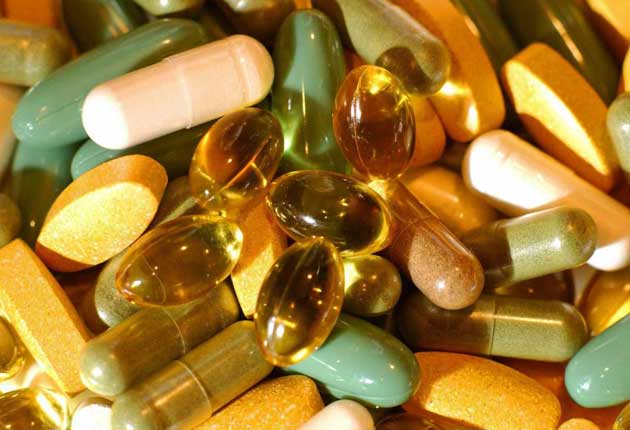
Next time you visit your local chemist, pause in the aisle containing vitamin supplements, and take in the quantities and varieties of pills and potions on offer. Tiny boxes and bottles stretch as far as the eye can see, affirming that even in these cash-strapped times, the gorging of such "miracle cures" continues to be big business.
But as the UK population continues to shell out millions annually on vitamin supplements, the scientific evidence supporting their efficacy is waning. Earlier this month, US scientists discovered that taking vitamins A and E does not lower your risk of cancer, one of the supposed major benefits of taking them.
"There have been a number of previous studies that have suggested that vitamin E and vitamin C might be important in the prevention of cancer," says Dr Howard Sesso, one of those involved in the recent research. "The lack of an effect that we observe for vitamin E or C on cancer does convince us that these particular doses that we tested really have no role for recommendation for cancer prevention," continues the academic. The clinical trials he oversaw involved nearly 15,000 American men.
Another recent study, part-funded by German chemicals firm BASF, whose products include vitamins, working in association with Brigham and Women's Hospital, Boston, discovered that there were no significant effects on rates of heart disease after taking vitamins E and C. Two months ago, a major trial studying whether vitamin E and selenium (which, among other things, helps regulate hormone metabolism in the thyroid) could lower a man's risk of prostate cancer ended amid worries that such treatments may do more harm than good. As if that were not enough, doctors at New York's Memorial Sloan-Kettering Cancer Centre have warned that vitamin C seems to protect not only healthy cells, but cancer cells, too.
So should we be taking vitamin supplements at all? "We say that people don't need to take vitamin supplements to have a healthy balanced diet. The only situation in which you should have to take vitamin supplements is if you are elderly or suffering from a long-term illness. People should address whether they have a healthy diet rather than seeing vitamins as a complete solution," says Heather Caswell, nutrition scientist at the British Nutrition Foundation.
"People get a lot of vitamins from food," adds health expert and author Oliver Gillie. "The exception is, of course, if you have too many things in your diet that are vitamin-depleted because they are totally refined. This includes cake and biscuits, which have large amounts of refined starches in them. On the other hand, if you are eating brown bread and you are consuming lots of vegetables, and a certain amount of meat and eggs, you will be OK."
If the evidence against supplements is rapidly becoming insurmountable, why do people keep taking them? Well, some supplements still have proven advantages for people's health. Vitamins such as B12 – that are good for facilitating normal functioning of the brain and nervous system – are still believed by some to have benefits for women of child-bearing age and the elderly. Furthermore, calcium and vitamin D in women over 65 appear to protect the health of the bones of those taking them.
People seem to experience the placebo effect more than ever with vitamins – thinking that the more they spend, the more they are able to stave off the worst effects of disease and age. The general belief is that they boost the body's ability to mop up cancer-and-heart-disease-causing free radicals.
In some cases, in the UK at least, there is increasing evidence that some vitamins do have benefits. "Vitamin D is different," adds Gillie. "A healthy person normally gets 90 per cent of the vitamin D they need from the sun. Unless you are an Eskimo or a Scottish fisherman living 100 years ago where you ate fish every day, then you can't get enough from your diet." A lack of vitamin D has been linked to increased rates of cancer, high blood pressure, osteoporosis, depression and schizophrenia.
Today, top Scottish doctors are meeting to discuss how to deal with the fact that, due to the country's northerly location and consequent lack of sunlight, large swathes of its population are not getting enough of the vitamin, which is believed to support the healthy operation of organs.
"I am going to a conference in Edinburgh called by Scotland's chief medical officer, Dr Harry Burns, who is concerned with the low levels of vitamin D in the Scottish population. It is an extreme case in the industrial world. In places like Glasgow there is so little ultraviolet light that people are in drastic need of vitamins. They are in an extreme situation because of their maritime climate. Scotland has got more cases of multiple sclerosis [which is believed to be naturally inhibited by vitamin D] than any other country in the world."
But there's now increasing evidence that taking too much of some vitamins can cause harm to people's health. Recent studies – one by the Johns Hopkins School of Medicine – have shown that taking large amounts of vitamin E with other vitamins results in a 6 per cent higher risk of premature death. Another study, reported in the Journal of Clinical Oncology, of 540 patients showed that cancer recurrence rates were higher among vitamin users than among non-users. There seems to be increasing evidence that the death knell for certain vitamin supplements has now well and truly been sounded. Could it be time to step out of the chemist's and back into the kitchen?
Complete meals: How to get your daily dose
Vitamin A
Liver, full-fat dairy products, spinach, broccoli, tomato juice, peppers and watercress. Orange things, such as mango, dried apricots, butternut squash, carrots, sweet potatoes and pumpkin tend to be good sources of this vitamin.
Vitamin D
Oily fish (salmon, sardines, pilchards, tuna, mackerel, trout or herring), dairy products and eggs. Also exposure to sunlight.
Vitamin E
Broccoli, nuts, soya beans, brussels sprouts, spinach and eggs. Some believe vitamin E is destroyed by heat, so try to eat your vegetables raw or lightly cooked.
Vitamin C
Citrus fruits and juices, kiwi fruit, strawberries, blueberries, tomatoes and peppers.
Vitamin B
Vitamin B1 is found in whole grains, flour and bread and green leafy vegetables; Vitamin B2 is found in eggs, liver, milk, and cheese; B3 is in protein-rich foods like meat, liver and peanuts; B5 is in chicken, eggs, beef and broccoli;
B6 is in fish, chicken and wholegrain cereals; B9 is in raw fruit as well as yeast and liver and B12 is in fish, dairy produce, meat and yeast extract.
Join our commenting forum
Join thought-provoking conversations, follow other Independent readers and see their replies
Comments