Plastics chemical linked to health problems
Sign up to our free Living Well email for advice on living a happier, healthier and longer life
Live your life healthier and happier with our free weekly Living Well newsletter
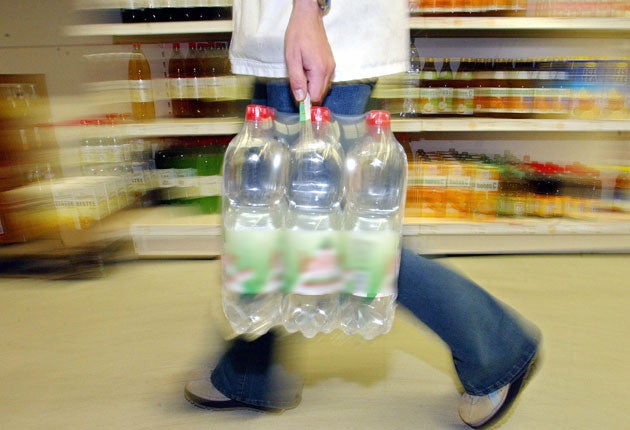
British researchers have linked a common chemical used in plastic drink containers and baby bottles to health problems, specifically heart disease and diabetes.
Environmental and consumer activists who have questioned the safety of bisphenol A, or BPA, have relied on studies showing harm from exposure in laboratory animals.
But British researchers, who published their findings today in the Journal of the American Medical Association, analysed urine and blood samples from 1,455 US adults aged 18 to 74 who were representative of the general population.
Using government health data, they found that the 25 per cent of people with the highest levels of bisphenol A in their bodies were more than twice as likely to have heart disease and, or diabetes compared to the 25 per cent of with the lowest levels.
"Most of these findings are in keeping with what has been found in animal models," Iain Lang, a researcher at the University of Exeter in Britain who worked on the study, told a news conference.
"This is the first ever study (of this kind) that has been in the general population," Lang said.
Steven Hentges of the American Chemistry Council, a chemical industry group, said the design of the study did not allow for anyone to conclude BPA causes heart disease and diabetes.
"At least from this study, we cannot draw any conclusion that bisphenol A causes any health effect. As noted by the authors, further research will be needed to understand whether these statistical associations have any relevance at all for human health," Hentges said in a telephone interview.
A US Food and Drug Administration panel of outside experts will hear testimony on health effects from BPA as it reviews a draft report it issued last month calling BPA safe.
"The study, while preliminary with regard to these diseases in humans, should spur US regulatory agencies to follow recent action taken by Canadian regulatory agencies, which have declared BPA a 'toxic chemical' requiring aggressive action to limit human and environmental exposures," Frederick vom Saal of the University of Missouri and John Peterson Myers of the nonprofit US-based Environmental Health Sciences, wrote in a commentary accompanying the study.
BPA is used to make polycarbonate plastic, a clear shatter-resistant material in products ranging from baby and water bottles to plastic eating utensils to sports safety equipment and medical devices.
It also is used to make durable epoxy resins used as the coating in most food and beverage cans and in dental fillings.
People can consume BPA when it leaches out of plastic into liquid such as baby formula, water or food inside a container.
In the study, the team said the chemical is present in more than 90 percent of people, suggesting there is not much that can be done to avoid the chemical of which over 2.2 million tonnes is produced each year.
The researchers, who will also present their findings at the US FDA session on Tuesday, added it was too early to identify a mechanism through which the chemical may be doing harm.
Animal studies have suggested the chemical may disrupt hormones, especially estrogen.
The researchers also cautioned that these findings are just the first step and more work is needed to determine if the chemical actually is a direct cause of disease.
"Bisphenol A is one of the world's most widely produced and used chemicals, and one of the problems until now is we don't know what has been happening in the general population," said Tamara Galloway, a University of Exeter researcher who worked on the study.
Canada's government in April decided BPA was harmful to infants and toddlers and announced plans to ban some products.
The European Union's top food safety body said in July the amount of BPA found in baby bottles cannot harm human health.
Subscribe to Independent Premium to bookmark this article
Want to bookmark your favourite articles and stories to read or reference later? Start your Independent Premium subscription today.
Join our commenting forum
Join thought-provoking conversations, follow other Independent readers and see their replies