
Sign up to our free Living Well email for advice on living a happier, healthier and longer life
Live your life healthier and happier with our free weekly Living Well newsletter
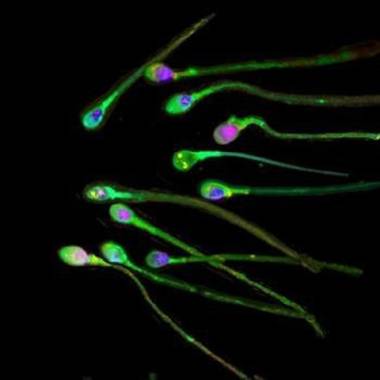
Too much tofu may affect a man's fertility, according to a study linking soya and low sperm count.
Scientists found that even modest consumption of soya products, such as meat and dairy substitutes and bean curd, can have a significant impact on sperm count.
Men who ate an average of half a serving of soya food a day had lower concentrations of sperm than those who did not.
Low sperm count is known to make it harder for a man to conceive.
Soya compounds called isoflavones, which mimic the female sex hormone oestrogen, are thought to be behind the effect.
Animal studies have linked high consumption of isoflavones with infertility, but until now there has been little evidence of their impact on human reproduction.
Sperm count ranges between 80 and 120 million sperm per millilitre (million/ml) of semen for normal healthy men.
But researchers in the US found that among the men they studied, those with the highest soya intake produced much less sperm. On average their counts were 41 million/ml lower than those of men who did not consume soya products.
The scientists, led by Dr Jorge Chavarro, from the Harvard School of Public Health in Boston, questioned 99 men seeking help for fertility problems about their consumption of 15 soya-based foods.
Each man was asked about his diet in the previous three months. The foods included tofu, tempeh, soy sausages, bacon, burgers and mince, soy milk, cheese, yoghurt and ice cream, and other soya products such as roasted nuts, drinks, powders and energy bars.
The scientists varied serving sizes to take account of the fact that different foods contained different levels of isoflavones. A standard serving of tofu was said to be 115 grams, and for soya milk, one 240 millilitre cup.
Factors such as age, body mass index (BMI) which relates weight and height, smoking, alcohol and caffeine intake, and the length of time since last producing semen, were adjusted for.
"Men in the highest intake group had a mean soy food intake of half a serving per day: in terms of their isoflavone content, that is comparable to having one cup of soy milk or one serving of tofu, tempeh or soy burgers every other day," said Dr Chavarro.
"It is important to highlight that the figure of half a serving a day is the average intake for men in the highest intake group. Some men in this group had intakes of soy foods as high as nearly four servings a day."
The association between soya consumption and sperm count was stronger in men who were overweight or obese, according to their BMI.
This applied to 72% of the group, which reflected the general proportion of overweight and obese men in the US population.
The effect was also most pronounced in men with higher sperm counts.
"The implication is that men who have normal or high sperm counts may be more susceptible to soy foods than men with low sperm counts," said Dr Chavarro.
Soya appeared to have no effect on sperm activity or shape, which can also influence fertility.
Overweight men may be extra affected because their bodies produce more oestrogen than slimmer individuals, the researchers believe.
Writing in the journal Human Reproduction, they concluded: "We found an inverse association between the consumption of soy foods and sperm concentration which was more pronounced at the higher end of the sperm concentration distribution and among overweight or obese men.
"The clinical significance of these findings remains to be determined. Owing to the scarcity of human data in this area, it is very important that this issue is examined further, ideally in randomised trials."
In their paper, the scientists addressed the question of why Asian men, who eat large amounts of soya, still appear to be perfectly fertile.
Previous studies had shown Asian men to have slightly smaller testicles and lower sperm counts than non-Asian men, although it was not known whether the findings were statistically significant.
One post-mortem study found that Asian men had lighter testicles than Caucasian and Hispanic men. They also had fewer immature sperm in their testes.
"Although it is true that Asian men consume five to 10 times more phytoestrogens (plant versions of oestrogen) than men in our study, there may be other factors that could make Western men more susceptible to phytoestrogens," the scientists wrote.
"One possibility is that excess body weight modifies the relation between phytoestrogen intake and semen quality as our data suggests. While increasing at alarming rates, the prevalence of overweight and obesity is still much lower in Asia than in the USA."
It is possible that higher levels of oestrogen from body fat made reproductive organs more sensitive to oestrogen-like chemicals in the environment, said the researchers.
Subscribe to Independent Premium to bookmark this article
Want to bookmark your favourite articles and stories to read or reference later? Start your Independent Premium subscription today.
Join our commenting forum
Join thought-provoking conversations, follow other Independent readers and see their replies