Google adds automatic captions to YouTube

For free real time breaking news alerts sent straight to your inbox sign up to our breaking news emails
Sign up to our free breaking news emails
Google, in a significant development for deaf Internet users, announced on Thursday it was adding automatic caption capability to videos on YouTube.
Google said machine-generated captions would initially be available only in English and on videos from 13 YouTube "partner channels" but it hopes to extend the feature eventually to all videos uploaded to the site.
"Google believes that the world's information should be accessible to everyone," said Vint Cerf, a Google vice president who has been described as the "Father of the Internet."
"One of the big challenges of the video medium is whether it can be made accessible to everyone," said Cerf, who also holds the title of "Chief Internet Evangelist" at Google.
Speaking at Google's Washington office, Cerf noted that he has a "great personal interest" in the closed caption capability. Cerf, 66, is hearing impaired and has been wearing hearing aids since the age of 13.
Since last year, YouTube users have been able to manually add captions to videos but the feature is not widely used and most content on the site does not have captions.
Noting that over 20 hours of video are uploaded to YouTube every minute, Ken Harrenstien, a deaf Google software engineer who led the caption project, said "the majority of user-generated video content online is still inaccessible to people like me."
Google uses Automatic Speech Recognition technology to generate captions and Harrenstien noted that it is not perfect - the word "sim card," for example, came out as "salmon" during one demonstration.
Google audio engineers said background noise and strong accents pose a challenge to creating precise captions from the spoken word, but Harrenstien said the technology "will continue to improve with time."
"Today I'm more hopeful than ever that we'll achieve our long-term goal of making videos universally accessible," he said in a blog post. "Even with its flaws, I see the addition of automatic captioning as a huge step forward."
Although the automatic captions can only be generated from videos in English for the moment, they can be simultaneously machine-translated into any of the 51 languages Google supports.
In addition to the automatic captions, Google announced a new feature that will make it easier for users to add captions to their videos.
Called automatic caption timing, it involves creating a text transcript of the video and uploading it to YouTube. Speech recognition technology is then used to create and synchronize captions for the video.
"This should significantly lower the barriers for video owners who want to add captions, but who don't have the time or resources to create professional caption tracks," Harrenstien said.
Both features will be available in English by the end of the week.
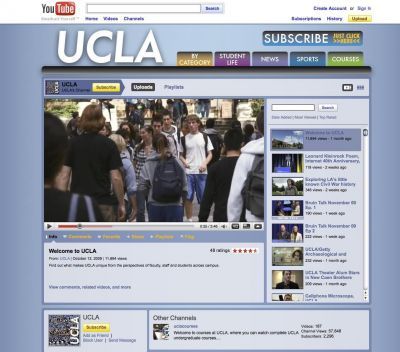
The university partners whose videos will allow automatic captioning include the University of California at Berkeley, the University of California at Los Angeles, Columbia University, Duke, the Massachusetts Institute of Technology, Stanford, Yale and the University of New South Wales in Australia.
National Geographic's YouTube channel will also include the feature, as will most of Google and YouTube's own channels.
Thursday's event was attended by representatives of Gallaudet University, the largest US university for the deaf, as well as the National Association of the Deaf, the American Association of People with Disabilities and other groups.
Subscribe to Independent Premium to bookmark this article
Want to bookmark your favourite articles and stories to read or reference later? Start your Independent Premium subscription today.
Join our commenting forum
Join thought-provoking conversations, follow other Independent readers and see their replies