Show dying horses, BBC told, as Aintree faces legal action
Annual Grand National 'carnage' covered up in bid to sell television footage overseas, say campaigners

For free real time breaking news alerts sent straight to your inbox sign up to our breaking news emails
Sign up to our free breaking news emails
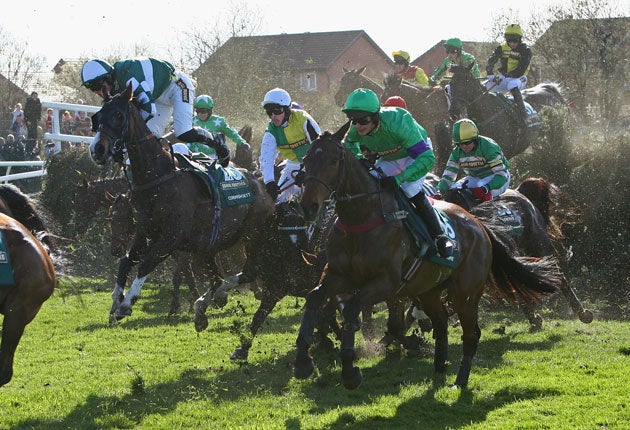
The BBC has been urged to show the deaths of any racehorses when they broadcast the Grand National meeting at Aintree, which starts this week. Activists claim a television "cover-up" is helping to perpetuate a "national disgrace". The organisers of Britain's biggest race day have also been threatened with legal action if any horses are killed or injured during this year's race.
Campaign group Animal Aid has accused the BBC of "concealment and a negation of basic journalistic standards" by, it says, barely mentioning the deaths of five horses at last year's meeting. In a letter to Barbara Slater, director of BBC sport, it claimed the broadcaster is "fashioning a dishonest, sanitised picture" to maximise overseas sales of footage.
The accusation came as the group launched a publicity drive to get people to stop betting on the race. It plans protests at Aintree course, where a 40-strong field takes on 30 fences over a gruelling 4.5 mile course on Saturday.
Five were killed at last year's Grand National meeting – the highest since 1997. During the past decade, 30 horses have died and many others injured at the event. The campaigners say that more than 500 horses have died on British racecourses since March 2007.
Campaigners claim that race organisers could be in breach of the law, and are threatening legal action. Andrew Tyler, director of Animal Aid, said: "The Animal Welfare Act talks about a duty of care, and clearly that is breached because the animals are subjected to an unreasonable and predictable hazard involving unnecessary suffering that can result in death or injury." He added: "We are going to seek legal advice as to the prospects of a successful prosecution being mounted against the race organisers if horses die or are injured during this year's race."
The RSPCA has also urged jockeys to exercise caution. David Muir, the charity's equine consultant, said: "When jockeys go into the Grand National they have to remember what their duties are under the animal welfare laws. For example, taking a tired horse over jumps when they are out of contention is totally unacceptable."
In a statement, the BBC denied taking part in any "cover-up". A spokesman said: "With live coverage of all horse racing, the cameras show the full race as it happens. Following a race the BBC presenter gives an update on the condition of any horses involved in an incident and will inform viewers in the case of a fatality."
Aintree racecourse said they recognised racing was risky and that they worked hard with organisations such as the RSPCA to minimise the risk. Professor Tim Morris, director of equine science and welfare for the British Horseracing Authority, said: "The position of horseracing generally and the Grand National specifically has already been fully examined with respect to the 2006 Animal Welfare Act.
"There has been no question that horseracing is a lawful activity... and that reasonable steps are taken to reduce the inherent risks in horseracing and avoid unnecessary risk."
Subscribe to Independent Premium to bookmark this article
Want to bookmark your favourite articles and stories to read or reference later? Start your Independent Premium subscription today.
Join our commenting forum
Join thought-provoking conversations, follow other Independent readers and see their replies