Sue Cook reflects on two decades of broadcasting at the BBC

For free real time breaking news alerts sent straight to your inbox sign up to our breaking news emails
Sign up to our free breaking news emails
Imagine turning on the TV to watch I’m Alan Partridge, Steve Coogan’s celebrated sitcom, and hearing your name mentioned over and over again. It’s something Sue Cook has had to get used to. The comedian constantly talks about her in his show, although she insists their association is pure fantasy.
“I am in his book and he sent it to me with a letter. I haven’t read it properly but you look at the index and it says Sue Cook page 9, 17, 22, 32, 34 etcetera...” she says.
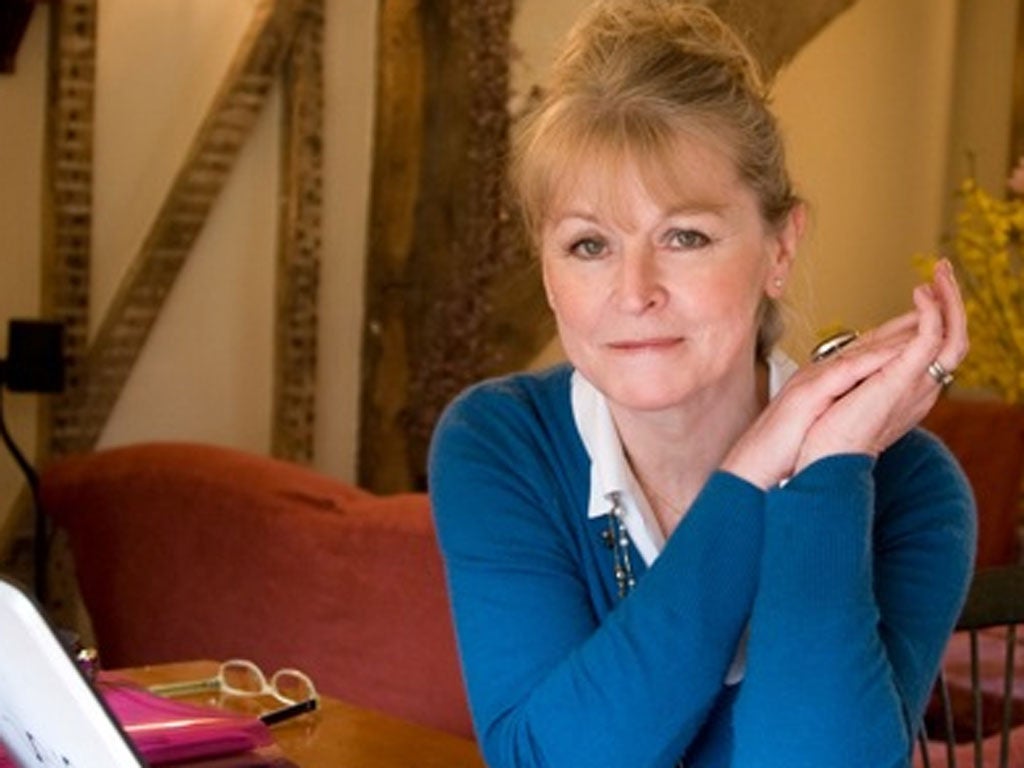
The TV presenter and broadcaster finds Coogan’s obsession “bizarre”, but takes it in her stride, as she does most things. She made a name for herself in the 1980s, presenting Crimewatch, Nationwide, Breakfast Time and Children in Need, but disappeared from our screens when she turned 45.
Today Sue Cook still looks as fresh faced as she did when she started in live TV. In fact she has a figure someone half her age would envy. She is currently carrying out research for a new book, which she plans to write in her new apartment that overlooks Regent’s Park.
Cook is smart and opinionated and everything about her harks back to the halcyon days of the BBC, when programming was constructed with the care and expertise that is arguably missing from today’s back-to-back programming.
Of course when Cook began presenting – she winces to think it was almost 35 years ago - things were very different. There was almost no competition for the BBC because there were so few channels. “When daytime programming was introduced, the number of hours of TV increased exponentially and of course they have to fill it with lots of content so inevitably the quality drops,” she says.
Recently MP Tessa Munt argued that there was still a big problem with ageism and sexism within the BBC. When I ask Cook about this she mentions Miriam O’Reiley, who won an employment tribunal against the BBC on the grounds of ageism last year.
“I think it is fair to say such things do exist at the BBC. In the States there are a lot more women broadcasters who have their own shows that have a lot more gravitas. I did experience sexism at the BBC, although I always thought you shouldn’t grumble,” she says.
“I got in trouble once and it was all over the papers. It was when I fought for equal pay with Nick Ross on Crimewatch. We started the programme together, we were absolutely equal and we did absolutely equal jobs but his pay-packet was a good deal bigger.”
After some battling, Cook settled for a £50 pay difference but thinks that there would be more sympathy for her cause now.
She looks back on her days presenting Crimewatch with less fondness than other jobs because she missed the buzz of interviewing people and meeting the public. However, her eyes light up when she remembers her time at Capital Radio. “I just had a ball,” she says. “Everyone was very generous-spirited in those days.”
The mum of two says that her broadcasting and presenting style was always “free”, and she thinks she appealed to people because of how “natural” she was - which is very different to what is demanded of presenters nowadays. “I think there is too much instruction about how you should and shouldn’t be on the screen now,” she says.
Despite this Cook would go back to TV if the right opportunity arose. She says: “I adored live TV, absolutely loved it. I thrived on the adrenalin but hated the tedium of pre-recorded stuff and having to say things over and over again.”
She even remembers the disasters fondly, gleefully reminiscing about Children in Need and the problems she faced. These include a time when she put eggs on a table and then to her dismay “saw these eggs roll slowly off the table and smash one by one on to the floor.”
What does she think constituted her appeal to audiences back then? “I have always been very un-abrasive really, and I think on the whole people think I am very nice and sweet to the point where I used to get annoyed at myself.”
Sue Cook says that the thing she hates most in the world is being underestimated, and her crippling shyness as a young woman spurred her on to show people what she could achieve.
Perhaps her drive to prove people wrong comes from her mother who taught her to be self-sufficient. “I decided I would always have my own money. I was never going to feel trapped at home,” she says.
It is with this indomitable spirit that she reflects on the state of TV today. Amid BBC sexism, ageism and redundancy headlines, she says: “I have a huge affection for the BBC, a great institution in the world and I can see it going down the drain if it is not careful.”
Subscribe to Independent Premium to bookmark this article
Want to bookmark your favourite articles and stories to read or reference later? Start your Independent Premium subscription today.
Join our commenting forum
Join thought-provoking conversations, follow other Independent readers and see their replies