Tories to reclaim power over planning decisions
Business leaders fear ministers' rulings will be influenced by politics

Sign up for the View from Westminster email for expert analysis straight to your inbox
Get our free View from Westminster email
Ministers would decide whether major planning applications should go ahead if the Conservative Party wins the general election, despite David Cameron's pledge to reduce "big government".
A Tory policy paper, passed to The Independent, says that the relevant secretary of state would take the final decision on projects such as nuclear power stations, wind farms, airport extensions and major roads.
The Tories would abolish a new Infrastructure Planning Commission (IPC) set up by Labour to streamline the system after long-standing complaints from industry that decisions took several years.
Now some business leaders are worried that the Tory proposals will create delays as ministers agonise over sensitive applications. The Tory blueprint also opens Mr Cameron to criticism for facing both ways after he promised to curb big government and devolve power in his speech to his party's conference.
The Tory document, sent to some business leaders, seeks to allay their fears that a Cameron government would bring back a cumbersome decision-making process. It says: "We fully recognise the importance of a planning system which can make effective and timely decisions."
Charles Hendry, shadow Energy minister, says in the report that while the Tories accept the need to speed up the planning process, they are concerned that the IPC, "an unelected quango", will give the public no chance to express a view, so its decisions will lack legitimacy. The IPC's specialists would be transferred to the existing Planning Inspectorate and make recommendations to the Government. Mr Hendry says: "We are very mindful of concerns that the secretary of state might then sit on decisions, as has happened in the past, and we would therefore place a requirement on the secretary of state to make a decision within a given timescale – probably similar to that proposed for the IPC."
The commission aims to cut the average time for a public inquiry from 100 to 35 weeks to save £300m a year.
"We are concerned that the IPC will be quickly bogged down in legal challenges – from judicial reviews in the High Court to challenges in the European Court of Justice," it says.
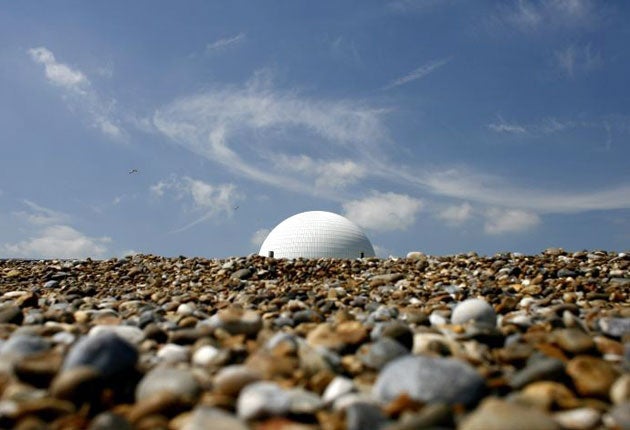
Yesterday, the IPC said that nuclear plants at Hinkley Point in Somerset and Sizewell in Suffolk, five wind farms, a biomass plant and two National Grid programmes will be the first projects it will consider. It will formally receive applications for nationally significant projects from next March.
Green groups fear that the new system will allow projects to be railroaded through. Fiona Howie, head of planning and regions at the Campaign to Protect Rural England, said the Government had already made clear its support for nuclear power: "A huge amount will depend on the national policy statement. If they say yes to nuclear, then it will be very, very difficult for the IPC to refuse them."
Sir Michael Pitt, the IPC's chairman, said: "The IPC will ensure that the public knows which projects are proposed for their areas as soon as these are confirmed to us. The projects we are highlighting raise important issues for the nation and for local communities and we want the public to have confidence that their views will be heard."
Subscribe to Independent Premium to bookmark this article
Want to bookmark your favourite articles and stories to read or reference later? Start your Independent Premium subscription today.
Join our commenting forum
Join thought-provoking conversations, follow other Independent readers and see their replies