'I forgive my dad's killer'
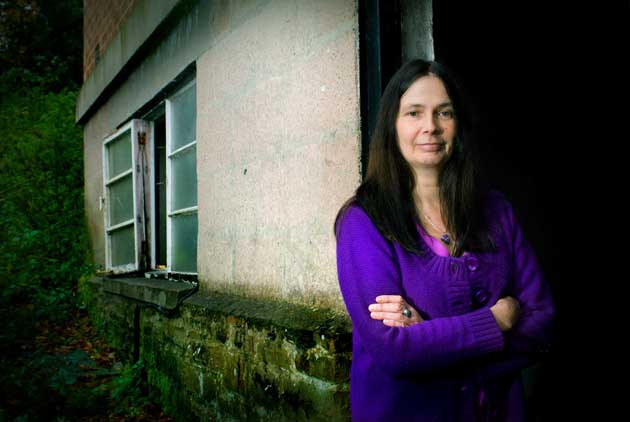
After her father was murdered in the IRA bombing of Brighton's Grand Hotel in 1984, Jo Berry began a remarkable journey that has culminated in her working alongside the man sentenced for the attack

For free real time breaking news alerts sent straight to your inbox sign up to our breaking news emails
Sign up to our free breaking news emails
Today, I can say openly that I care about Pat, that he's a friend," says Jo Berry. "It's taken me a long time to be able to say that without feeling that I'm betraying my family or my father. The connection between us, that he killed my father, is always there."
To many, this expression of friendship must sound extraordinary. Jo Berry's father, the Conservative MP Sir Anthony Berry, was one of five people killed in the early hours of 12 October 1984 by a bomb, and it was "Pat" – the former IRA activist Pat Magee – who planted it. The device had been intended for the then-prime minister, Margaret Thatcher, staying at the Grand Hotel in Brighton for the Conservative Party conference.
The journey to friendship with her father's killer has been a long and often difficult one that is still continuing. In some ways, Berry had unwittingly been preparing for it before her father died. Her parents divorced when she was a child and she spent school holidays with her father and his new family, whom she was close to. After a couple of years living in India, meditating and studying non-violence, she returned home in May 1984.
During the last summer of her father's life, she became particularly close to him. "We moved from father and daughter to friends, and I didn't have lots of regrets about things left unsaid. I appreciated him and showed it; in turn he was a very open-minded man. He didn't judge me as a wayward daughter."
On the day the bomb went off, Berry's sister had got up early to go to work, turned on the TV and saw the news about the bomb. She woke Jo and asked if she knew which hotel their father was staying in. "It was the Grand," said Berry, then 27. "Our brother was living in Brighton," she recalls now. "He went to the hotel, found out which room our father had been staying in, and told us the room no longer existed." The family had to wait eight hours before it was confirmed that he was dead: "His body was identified by his signet ring. We were in shock and grief. It was far too big a piece of information to absorb."
Berry had been only peripherally aware of the Troubles in Northern Ireland while growing up; her focus had always been on the spiritual side of life. "That all changed with the bomb," she says. "I thought to myself, 'What a waste of time that meditation was. This is the real world.' It was as if that part of me had died. For a long time, I lost my direction."
But right from the start of her grieving process, Berry was determined the legacy of her father's death would not be entirely negative. "Two days after the bombing I decided I was going to find something positive out of it and not look on those who did it as enemies. Because of the work I'd done on non-violence, I knew I had a choice about how to respond."
Three months later, a chance meeting gave Berry food for thought. "It was late one evening; a lot of people were queuing for taxis, so some of us agreed to share. The man I got a taxi with turned out to be an IRA activist whose brother had been killed by the British Army. We spoke about our wish for a peaceful world and I decided after that, that I wanted to try to build a bridge across the divide."
Berry booked herself into a workshop in Northern Ireland about "unfinished business", and met people from all sides of the Troubles. "In 1985 Northern Ireland was a war zone. I visited safe houses where Protestants and Catholics could meet." Then she met some members of Sinn Fein. "One man arrived with his son, who had special needs. They had a loving, caring relationship and I saw him in the context of his family, as a human. He told me he was very sorry my father had been killed. Meeting him and others gave me an understanding of why someone would choose violence and that was helpful to me, as it was way beyond my experience. I'd never needed violence in my life."
Then Berry got married and had children, and the process stalled: her marriage proved to be an unhappy one, and she blocked out all thought about her father and the bombing.
It was not until Magee was released as part of the Good Friday Agreement in 1999 that her feelings exploded again. "I saw Pat on TV and thought, 'He's walking free but my dad's dead.' I had lost touch with what I needed emotionally. I was raging and weeping and raw. I knew it was time to get help for myself."
Berry went to a reconciliation centre in County Wicklow and soon began to feel very different. "I spent a weekend with ex-combatants from all sides and said I wanted to meet Pat." The meeting was set for October 2000, almost eight years after the bombing.
Berry was apprehensive, but decided Magee would probably be even more scared. For the first hour he justified his political stance and listened to Berry while she talked about her father. Then the tenor of the meeting changed. "Pat said to me, 'I've never met someone with as much dignity as you. I want to hear your anger and your pain.' At the end he told me he was sorry he'd killed my dad. Very soon after we agreed to speak on a platform together at a conference entitled 'Seeds of Hope', and we started doing events together."
It is all very different to the reaction of Norman Tebbit, who was injured by Magee's bomb, and whose wife received such serious injuries that she has been left confined to a wheelchair. He has described Magee as an "unrepentant murderer"."I feel very supportive towards Norman Tebbit," says Berry. "He's doing what he needs to do and I'm doing what I need to do. I don't see it as either/or."
Meanwhile, she and Magee continue their journey together. "Pat would say he hasn't changed. He always wanted to have a political platform to get across the IRA's views. He and others pursued the route of violence as he felt there were no other options for political dialogue at the time."
Berry and Magee now do talks together at conferences, universities and in prisons about peace. They have participated in Israeli/Palestinian conflict-resolution initiatives and been asked to do the same in post-war Rwanda. "It's looking at the person beyond the behaviour," says Berry.
The bombing has changed her, she adds. "I understand things better from other points of view now. I'm also more comfortable with feelings, both mine and other's, and believe that listening and witnessing can facilitate change." Yet she admits that tensions remain in her relationship with Magee: "We trust each other a lot more but sometimes things get harder rather than easier: the more Pat knows about me, the more he knows the kind of man he killed. He has the burden of having taken the life of someone wonderful and doesn't feel he deserves forgiveness for it. There are no happy endings." n
'The Bomb', a play inspired by Berry and Magee's relationship, is on tour until22 November. See www.actiontransporttheatre.co.uk for details
Why I met Jo Berry by Patrick Magee
The Brighton bombing killed five people, including Sir Anthony Berry and injured dozens more. Patrick Magee was arrested nine months after the bombing and received eight life sentences. He was released in 1999 as part of the Good Friday Agreement, and set up Causeway, a project to help people address pain caused by the Troubles
"Some day I may be able to forgive myself. Although I still stand by my actions, I will always carry the burden that I harmed others. But I'm not seeking forgiveness. If Jo can understand why someone like me could get involved in the armed struggle, then something has been achieved.
"I decided to meet Jo because, apart from addressing a personal obligation, I felt obligated as a Republican to explain what led me to participate in the action.
"I am 100 per cent in favour of the peace process, but I am not a pacifist and could never say to those who felt oppressed, 'Just lie down and take it.'"
Subscribe to Independent Premium to bookmark this article
Want to bookmark your favourite articles and stories to read or reference later? Start your Independent Premium subscription today.
Join our commenting forum
Join thought-provoking conversations, follow other Independent readers and see their replies