Guides give hope to child soldiers and prostitutes
The guiding movement is seen as innocuous fun in Britain, but across the world it can change the lives of traumatised teenagers

For free real time breaking news alerts sent straight to your inbox sign up to our breaking news emails
Sign up to our free breaking news emails
The seven-year-old Brownies listened attentively to a 17-year-old Guide. There was no talk of cooking; camping or craft; instead she warned them solemnly of the very real danger that some of them might be raped.
"Rape is happening all the time here in South Africa's townships. They need to know about it," said Tracy-Lee Heath. "A lot of them catch public transport, and they can be snatched off it quite easily. They need to know where to go to get help afterwards."
While Guides in Britain worry about little more than earning their first aid and swimming badges, girls like these Brownies living in Capetown's townships need skills that could save their lives.
Tracy-Lee's project, and similar work done by 10 million Guides around the world, will be recognised tomorrow in an international acknowledgement of the issues faced by young women around the world.
Guide patrols in other parts of Africa play key roles in dealing with social problems the state cannot, or will not, tackle – transforming the lives of teenage prostitutes and former child soldiers. "You see lots of 11- to 16-year-old girls in prostitution," said Mariama Johnson, the international commissioner for Girlguiding in Sierra Leone. "We can't deal with it all, but we have approached some and helped them to turn their lives around. When we tried to get them off the streets, at first they said they didn't have enough money, so we taught them a trade." The teen prostitutes are encouraged to join, and the groups pay for them to learn skills such as soap making and hairdressing.
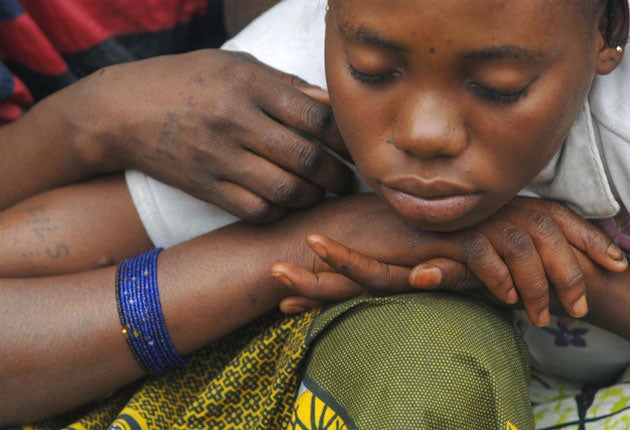
In the Democratic Republic of Congo, Guides are working to demilitarise child soldiers. Guiding – along with all youth movements – was banned by the former dictator Joseph-Désiré Mobutu. But now, said Alphonsine Kabakabo, the African director of girlguiding, the movement is at the forefront of work with the traumatised young fighters. "They are given food and encouraged to come back into the community and start guiding. The groups help them to learn new skills and live a normal life."
In the seven years they have been allowed to run, 11,000 girls have joined the guides in the DRC.
The apparently innocuous girls' group has been upset by political upheaval in countries other than the DRC; groups in Iraq which closed at start of the war in 2003 have just begun to reopen.
In Kenya, the Guides focus on education for women, something which is neglected in some traditional African communities. "It is not so bad in the cities, but in the Masai community a girl can be taken out of school as a young adolescent." said Miriam Otieno, 25, a senior Guide.
"We also have a project for girls who can't afford to go to school. We teach them IT, tailoring, and other skills they can use to survive." The group also works to educate young women about the dangers of HIV/Aids.
"Because of the stigma, it is not easy for people to disclose their HIV status. I know a young person who tried to talk about their status in church, and people feared them. The groups are a safe place to talk about this," said Ms Otieno.
But not everyone agrees. Andrea Cornwall, the director of the pathways of women's empowerment research consortium at the Institute of Development Studies, said: "For me, the core issue is that people are asked: what do you want? There is often a moral agenda behind intervention. A lot of these rehabilitation programmes don't do much good for sex workers. Many women don't make enough money from sewing or whatever trade they learn, and go back into sex work."
Subscribe to Independent Premium to bookmark this article
Want to bookmark your favourite articles and stories to read or reference later? Start your Independent Premium subscription today.
Join our commenting forum
Join thought-provoking conversations, follow other Independent readers and see their replies