'Our guns will exterminate them randomly,' pirates warn
Daniel Howden speaks to leader of Somali group holding British couple

For free real time breaking news alerts sent straight to your inbox sign up to our breaking news emails
Sign up to our free breaking news emails
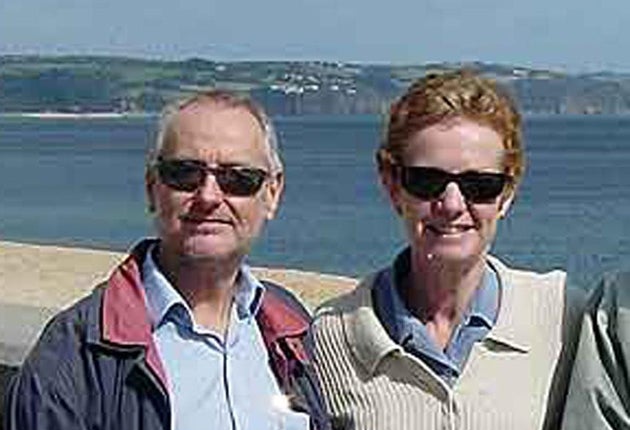
Somali pirates holding the British couple Paul and Rachel Chandler were last night considering their ransom demands – which will be made "soon" – and warned that any attempted rescue would result in the death of the hostages.
"Anyone who tries [a] rescue will kill the ones they want to rescue," said Nor Abdiwali, who claims to be the commander of the group holding the Chandlers, in an interview with The Independent yesterday. "Our guns will randomly exterminate them. We are not afraid and we [have] kept them in a safe place," he added.
The pirate leader confirmed that the pair, from Tunbridge Wells, Kent, were being held aboard a container ship that was hijacked earlier this month and is now anchored a mile off the Somali coast.
Mr Abdiwali said the couple had been allowed to speak to their family to confirm that they were well and that no negotiations had yet begun over the terms for their release. "We did not say any ransom demands yet, there is consultation on that among us."
However, a demand for $7m (£4.3m) was made last night by a caller to the BBC purporting to represent the pirates. "We only need a little amount of $7m," he said and added that it was so high because of damage to fishermen's equipment by Nato operations.
Ransom demands in similar cases typically start at £3m, but negotiations over private yachts and individuals have been more complicated than talks with big shipping firms and their tankers and crews, which are typically covered by insurance companies.
In a statement last night the British Government issued a stiff rebuff to the pirates. "Hostage taking is never justified," said a Foreign Office spokesman. "Paul and Rachel ... should be released immediately and unconditionally. The government won't make substantive concessions to hostage-takers, including the payment of ransoms."
The Government's Cobra emergency committee met at Whitehall yesterday, but no comment has been made on a possible rescue plan.
The hostages' family has stressed the retired couple, formerly a surveyor and an economist, are not rich and were sailing a basic yacht from the Seychelles to Tanzania when they were intercepted by pirates on 23 October.
The pirates' spokesman said that the group did not care who paid the ransom. "Let the ransom be paid by the family or other people. We want it and we will say the amount after consultations soon," said Mr Abdiwali.
He appealed for a "friendly negotiation" and gave assurances that Mr and Mrs Chandler, 59 and 55 respectively, were treated well: "We will take care of these old people like our own parents," he said. "Any bad word will make the situation worse. We prefer good word and friendship negotiation."
There was confusion yesterday over the whereabouts of the Chandlers after conflicting reports that they had been taken ashore and later claims they were aboard a container ship.
Mr Chandler said on Thursday they were being held aboard the Singapore-flagged Kota Wajar, a freight ship seized by pirates on 15 October. Local fishermen reported seeing white people being taken ashore later on Thursday to the village of Ceel Huur, north of the town of Haradheere, a base of operations for several pirate gangs. In a separate interview, yesterday, Mr Chandler said he could not reveal where they were being held, although his wife later said they were aboard the Kota Wajar.
Previously, pirates have moved hostages between different hijacked ships in order to keep potential rescuers guessing their whereabouts. Captives have also been taken to the mainland, but control over the interior is keenly contested and security sources said the gang would be unlikely to risk "high-value" targets while Islamic militias and the interim government are engaged in heavy fighting.
Mrs Chandler's brother, Stephen Collett, was able to speak with her yesterday in a conversation broadcast on ITV News. Asked about conditions for the couple, she said they were "managing" and asked friends and relatives "not to worry". She added: "They tell us that we're safe and we shouldn't worry, and that if we want anything they will provide it in terms of food and water and everything like that."
The surge in piracy off the Horn of Africa has become a major industry in its own right with hundreds of hostages ransomed. Rescue attempts in the Indian Ocean have had mixed outcomes with the US killing three pirates as they rescued Captain Richard Phillips in April, while French forces killed two pirates and one French hostage during a raid in the same month.
The decision to relocate the British couple to the container ship makes a rescue less likely, security sources said, as the 21-member crew of the Kota Wajar is also believed to be on board.
There are at least eight foreign vessels being held off Somalia with 174 crew being held hostage. The surge in piracy during the past two years came after clashes between Somalis and international vessels exploiting the local fisheries. Somalia has had no functioning central government since 1991 and therefore no coastguard.
Subscribe to Independent Premium to bookmark this article
Want to bookmark your favourite articles and stories to read or reference later? Start your Independent Premium subscription today.
Join our commenting forum
Join thought-provoking conversations, follow other Independent readers and see their replies