China first to win oil-hunt rights in the scramble for Afghanistan
China already has the biggest single foreign investment in Afghanistan – a £2.2bn copper mining deal

For free real time breaking news alerts sent straight to your inbox sign up to our breaking news emails
Sign up to our free breaking news emails
The war may be raging still, but the scramble for Afghanistan has already begun, and China is emerging at the head of the pack after it became the first foreign state to win the right to hunt for oil in the country.
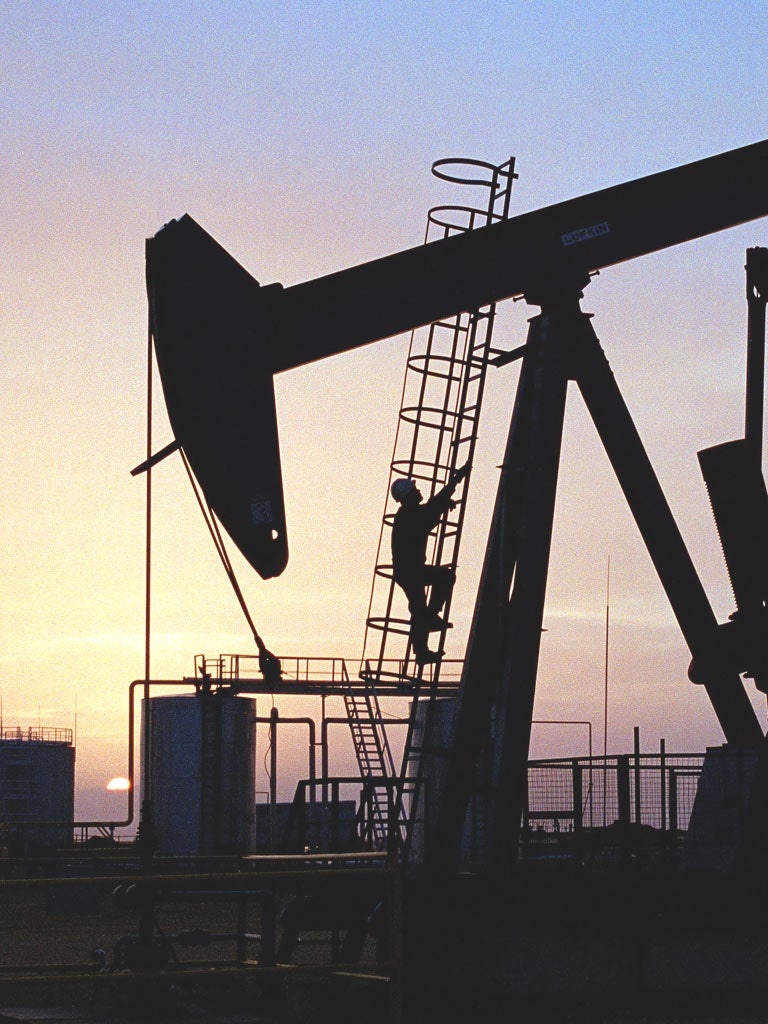
The state-owned National Petroleum Corporation (CNPC) will sign a deal with Afghanistan's Ministry of Mines today, which will allow the Chinese firm to work oil blocks in the north-eastern provinces of Sari Pul and Faryab.
The deal will give China access to the Amu Darya River Basin, which is said to contain reserves of about 87 million barrels of oil, a statement from the president's office in Kabul said yesterday.
"This is the first big contract for exploration and extraction of oil in Afghanistan," the statement said. Afghanistan is landlocked and needs to import its fuel from neighbouring Iran and from central Asian countries.
While this deal is relatively small, it sends a signal that Beijing is first in line for the potentially lucrative reserves that are yet to be drilled. China's rapidly expanding economy relies heavily on natural resources from abroad to keep going, and China has signed deals in some of the world's toughest markets to ensure its energy supply continues without a hitch. This has seen China sign deals with governments that the West sees as pariah states.
China already has the biggest single foreign investment in Afghanistan – three years ago the China Metallurgical Construction Coorporation signed a £2.2bn contract to develop the Aynak copper mine in Logar province.
Afghanistan is still seen as a good way off being stable enough to lure the mainstream international investor. However, Sari Pul and Faryab are many hundreds of miles away from the main conflict hotspots and are considered reasonably safe. The US-led Nato force has already transferred or is turning over responsibility for security in large parts of the region to the Afghan army and police.
Minister Wahidullah Shahrani will sign the accord with the director of the Beijing-based company, and the contract calls for CNPC to form a joint venture with a local partner, the Watan Group. Some 70 per cent of the profits from the joint-venture operation will be paid to the government.
The Soviets identified vast mineral resources in Afghanistan in the 1970s, including oil, copper and iron. However, roads and other infrastructure were underdeveloped to begin with and what was there has been badly damaged during decades of conflict, keeping Western miners at bay.
For China, the deal marks a first step in a country that could ultimately prove very profitable indeed. And for Chinese firms, poor infrastructure is as much of an opportunity as it is a challenge. All over Africa, Chinese firms are building roads and hospitals and schools and football stadiums, both to cement soft power in resource-rich African countries and also to build the infrastructure needed to move the resources out and back to China.
As well as significant expertise in building roads in developing countries, Chinese firms also build airports and other transport hubs, and are keen to sell the country's high-speed rail technology overseas.
Subscribe to Independent Premium to bookmark this article
Want to bookmark your favourite articles and stories to read or reference later? Start your Independent Premium subscription today.
Join our commenting forum
Join thought-provoking conversations, follow other Independent readers and see their replies