Killers of 'the father of Bangladesh' likely to hang
34 years after coup d'etat, officers convicted of killing Rahman lose their appeal

For free real time breaking news alerts sent straight to your inbox sign up to our breaking news emails
Sign up to our free breaking news emails
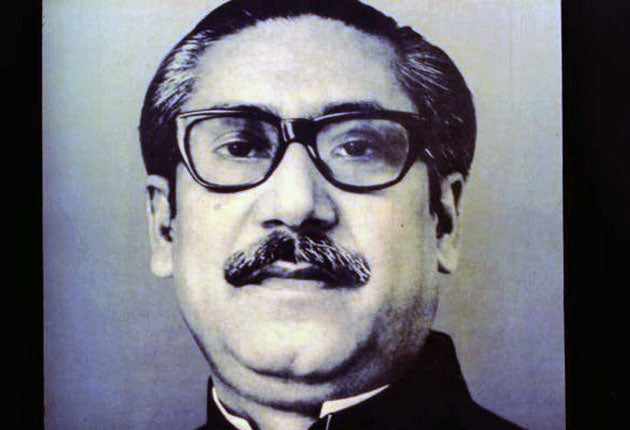
Five ageing Bangladeshi army officers face the gallows after their death sentences were upheld in Dhaka yesterday, bringing an end to a murderous saga that has racked the nation for more than three decades.
The killing 34 years ago of Sheikh Mujibur Rahman, the founding father of Bangladesh, traumatised his young nation and plunged it into political chaos. But yesterday, with the upholding of the death sentences against five leaders of the coup which ended Rahman's life, some Bangladeshis were hoping that their country can now finally turn the page.
"Executions of the Mujibur killers would relieve the nation of a great burden and restore rule of law," said Abu Yusuf Humayun, a senior state prosecutor. "We had been waiting so long for the final judgment. Today we have that and hope they will be executed soon." Unless the President pardons them, they could die within a month.
The court was packed with supporters of his daughter, Bangladesh's current Prime Minister Sheikh Hasina Wajed and her Awami League party, and when the sentence was announced they erupted with cheers and applause and chanted jubilant slogans. Mrs Wajed's spokesman said she was "overwhelmed with emotion" as Bangladesh's Supreme Court upheld the verdict and sentences. Syed Ashraful Islam, deputy leader of the Awami League, told the Press Trust of India, "This verdict has established justice and rule of law in the country. Our Government will act on the verdict."
Rahman led his nation, formerly called East Pakistan, to independence from West Pakistan in late 1971 but was assassinated four years later by disgruntled army officers and members of his own party.
He was killed along with his wife, three sons and 16 family members after senior officers went to his house in the Dhanmondi neighbourhood of Dhaka. The independence leader, who months before had controversially imposed one-party rule in the country, was shot on the stairs. The current Prime Minister and her sister, Sheikh Rehana, escaped the carnage because they were out of the country at the time, in West Germany.
The August 1975 coup ushered in chaos. After Mr Rahman's assassination, his one-time ally Khondaker Mustaq Ahmed became president, backed by the army officers who had carried out the coup, but in November, hewas ousted by General Khaled Mosharraf. Less than a week later, General Mosharraf was forced out in yet another coup.
Rahman's killers had originally been given indemnity by subsequent military rulers, and charges were only brought in 1996 after Mrs Wajed was first elected Prime Minister. The conspirators were sentenced to death by a court in Dhaka in 1998, but the legal process has suffered repeated interruptions.
Subscribe to Independent Premium to bookmark this article
Want to bookmark your favourite articles and stories to read or reference later? Start your Independent Premium subscription today.
Join our commenting forum
Join thought-provoking conversations, follow other Independent readers and see their replies