War in Afghanistan: The battle of Surobi
10 French soldiers die fighting their way back to base after patrol is ambushed by heavily armed Taliban militants

For free real time breaking news alerts sent straight to your inbox sign up to our breaking news emails
Sign up to our free breaking news emails
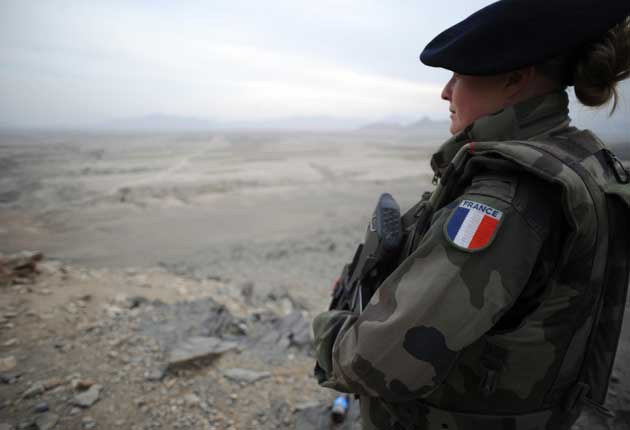
Ten French soldiers were killed and 21 injured in an "extremely violent" ambush near Kabul as Afghan insurgents staged attacks across the country yesterday.
Officials said 10 paratroopers died when their patrol was ambushed in Surobi, 30 miles east of the capital. Nato said they were attacked by more than 100 militants, while further east at least six suicide bombers tried to storm an American army base close to the Pakistan border.
French troops fought through the night on Monday, killing 27 Taliban militants, after they were pinned down by gunmen who attacked with roadside bombs, assault rifles, and rocket-propelled grenades.
French officials said the insurgents attacked an advance party on foot with extreme violence as the soldiers inspected a narrow mountain pass in the Uzbin Valley in Surobi district. They were part of a reconnaissance patrol with Afghan troops.
Nine of the 10 dead were part of the advance party, who had left the protection of their armoured vehicles. The 10th man died later in an armoured car when the road beneath it collapsed.
Military officials said most of the wounded were injured in the initial ambush. The French called in fighter jets and helicopter gunships to help the soldiers escape, after they were surrounded by heavily armed militants. Military sources said four of the dead were captured and then killed as prisoners after insurgents overran some of their positions.
The death toll, confirmed yesterday in Paris, is the single biggest loss of life for international troops since an RAF Nimrod crashed in Kandahar two years ago, killing 14 British servicemen. It was also the first time so many foreign soldiers have been killed in open battle since the US-led invasion in 2001.
For France, it was the worst loss of life since 1983, when 58 French paratroopers were killed by a truck bomb in Beirut, and it comes amid fierce political opposition against moves to increase the country's military presence in Afghanistan. The dead and wounded were from the 8th Marine Infantry Parachute Regiment, the 2nd Foreign Parachute Regiment and the Regiment de marche du Tchad, officials said.
France's President Nicolas Sarkozy flew to Afghanistan last night to take stock of the country's loss. He insisted that the deaths would not shake his resolve to send more troops. France has 2,600 soldiers in Afghanistan, after M. Sarkozy dispatched an extra 700 in response to appeals from Nato leaders who have accused some countries of failing to pull their weight against the increasingly powerful insurgency.
The Nato-led International Security Assistance Force said emergency troops and combat medics raced to reinforce the patrol, as they struggled to fight their way back to base.
Hours later, a Taliban suicide squad tried to overrun a large US base in Khost, just a few miles from Pakistan's tribal areas. Three bombers detonated their vests close to Forward Operating Base Salerno, shortly before midnight on Monday.
The militants killed themselves, but failed to hurt international forces, a US spokesman said. Three other bombers, and an accomplice, were later chased down and killed by US and Afghan troops backed by Apache helicopters, officials said.
Witnesses said that fighting in the city lasted more than 12 hours. The attacks in Khost came after a car bomber killed 10 civilians and injured 13 at the same base earlier on Monday. A second car bomb was later discovered and destroyed.
A US Army spokesman, Lt Col Rumi Nielson-Green, said that American forces were braced for more attacks.
Senior Nato officials said last week saw the highest levels of violence across Afghanistan, since records began in 2001. At least nine foreign troops, 19 civilians and 130 insurgents were killed.
Intelligence officials fear there are dozens of suicide bombers flooding into Afghanistan from Pakistan every day, while the Taliban have threatened to encircle the capital.
Nato insists that the insurgents will never take Kabul, but they have succeeded in closing off the "home counties" by killing three foreign women on the road south, and attacking the French on the road east. Pakistan's army chief, General Ashfaq Kayani, arrived in Kabul yesterday for talks on how to beat the insurgents on both sides of the border. His visit follows the resignation of the Pakistan president, Pervez Musharraf, to avoid impeachment.
In Pakistan yesterday, a suicide bomber killed 25 people protesting outside a hospital, while five soldiers and 13 militants died in clashes, officials said.
Subscribe to Independent Premium to bookmark this article
Want to bookmark your favourite articles and stories to read or reference later? Start your Independent Premium subscription today.
Join our commenting forum
Join thought-provoking conversations, follow other Independent readers and see their replies