Fears for Iranian Nobel peace laureate in regime crackdown
Human rights groups demand help for activists alongside nuclear talks

For free real time breaking news alerts sent straight to your inbox sign up to our breaking news emails
Sign up to our free breaking news emails
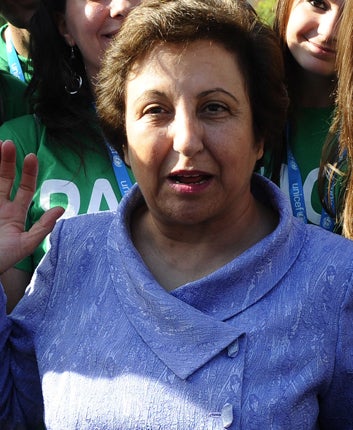
Iran's most outspoken human rights activist, Shirin Ebadi, whose Nobel prize has been seized by the Islamic regime, is in danger of being imprisoned or placed under permanent house arrest if she returns to Tehran, her supporters warned yesterday. They demanded that the international community place the Islamic regime's human rights violations at the centre of negotiations aimed at containing Iran's nuclear ambitions.
In a rare show of international unity Russia and China lined up yesterday alongside Britain, France, Germany and the US to demand that Iran halt work on a secret uranium-enrichment plant. The vote by the board of the UN's nuclear watchdog, the IAEA, warning of serious consequences if Iran fails to engage constructively to end the nuclear stand-off, could form the basis for a future UN security council resolution, leading to sanctions.
The vote represents a hardening in the approach of world powers who have been attempting to draw Tehran into comprehensive negotiations since the revelation in September of the previously undisclosed nuclear plant. Gordon Brown called the vote "a very clear warning" and said sanctions would be "the next stage" if Iran fails to respond.
But the International Federation for Human Rights to which Dr Ebadi's Tehran-based centre is affiliated, said the treatment of the 62-year-old Nobel laureate and thousands of other activists should not be separated from the nuclear negotiations and should be countered with punitive measures, including the withdrawal of ambassadors.
Emmanouli Athanasiou, head of the organisation's Asia desk, said Iran was using its nuclear dispute with the West to silence dissent at home. "This is pure intimidation. But Shirin Ebadi's situation is very serious, and we believe she is in danger if she goes back to Iran. Does the world really want another Aung San Suu Kyi?" Dr Ebadi herself has demanded that the UN Secretary General Ban Ki-Moon visit Iran and appoint a special UN envoy for Iran.
Tehran hit back at Norway yesterday following Oslo's condemnation of the seizure of Dr Ebadi's gold Nobel award. "We are surprised to see Norwegian authorities taking a tendentious stance and in a hasty attitude ignoring laws and rules which are respected by everyone," said Ramin Mehmanparast, Iran's foreign ministry spokesman.
The Norwegian foreign minister Jonas Gahr Stoere on Thursday described the removal of the laureate's medal from her bank deposit box as "shocking". The lawyer's bank account has also been frozen on the basis that she "owes" Iran $400,000 in unpaid tax. Mr Stoere summoned Iran's chargé d'affaires to protest about the treatment of Dr Ebadi's husband whom he said had been arrested and beaten.
Unlike many of Iran's dissidents Dr Ebadi still lives in Iran, although she travels widely in an attempt to raise awareness of the plight of Iranians under the law. One of Iran's first female judges, she was sidelined by the clerical regime after the Islamic revolution in 1979 and has devoted her career to seeking a fairer interpretation of Sharia law. She has been jailed several times and her Centre for the Defence of Human Rights in Tehran has repeatedly been shut down. She was awarded the Nobel Peace Prize in 2003.
Subscribe to Independent Premium to bookmark this article
Want to bookmark your favourite articles and stories to read or reference later? Start your Independent Premium subscription today.
Join our commenting forum
Join thought-provoking conversations, follow other Independent readers and see their replies