Syrian conflict creates sectarian pressures on Lebanon, Hezbollah

For free real time breaking news alerts sent straight to your inbox sign up to our breaking news emails
Sign up to our free breaking news emails
The Lebanese Shiite group Hezbollah has spent months trying to tread a narrow line, balancing its support for the Syrian government with its responsibilities as Lebanon's dominant political force. But increasing tensions inside Lebanon have underscored obstacles to having it both ways.
More than at any time in recent years, Hezbollah is facing scrutiny inside Lebanon, even from some once-loyal backers, mostly because of increasing signs that it has become a partisan in a Syria conflict that has become deeply divisive in Lebanon.
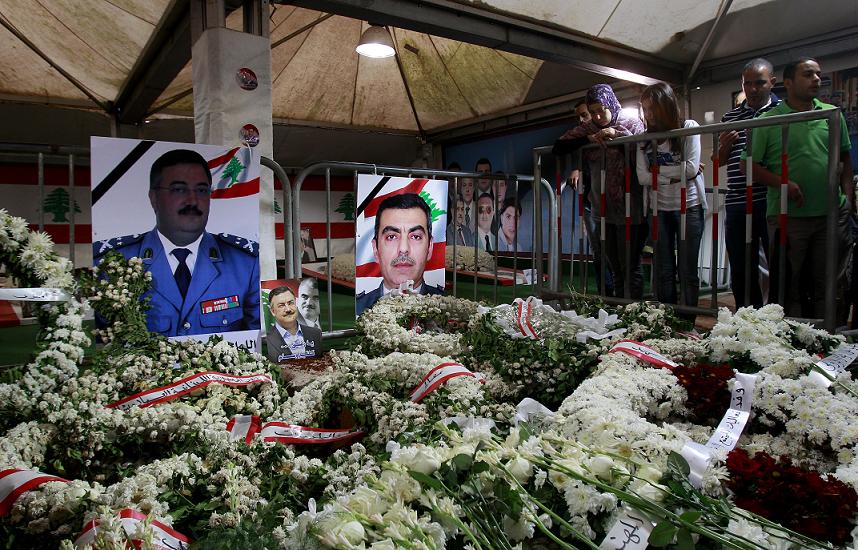
The sharpest criticism has come since the Oct. 19 car-bomb assassination of Maj. Gen. Wissam al-Hassan, a Lebanese intelligence chief aligned with the Sunni-led bloc that is opposed to the government of Syrian President Bashar Assad. While Hezbollah has denied allegations that it played any role in the attack, the incident brought shrill calls from its rivals for the toppling of the current Lebanese government in which Hezbollah and its allies hold a majority.
Some of the group's closest political allies, including Druze leader Walid Jumblatt, have appeared to be wavering in their support. And some Shiite Lebanese clerics have spoken out in recent weeks in favor of supporting the Syrian opposition, a position at odds with Hezbollah and its close ties to the Syrian government.
Hezbollah not only commands a well-trained and well-armed militia, which is widely seen as the best fighting force in the country, but also runs a strong political party with members in parliament. In the days following the assassination, however, Hezbollah kept a particularly low profile, even when enraged Sunni gunmen hit the streets of Beirut after Hassan's funeral.
It was a particularly muted response from a bombastic group.
"You know how we find out that Hezbollah is under pressure?" asked Hilal Khashan, a professor in the political science department at the American University of Beirut. "They remain quiet. They are keeping a very low profile during these days. There is already pressure on Hezbollah and the pressure is mounting."
Since the beginning of the crisis in Syria last year, Hezbollah has been in a bind. The group presents itself as the champion of the downtrodden, but as the conflict next door got bloodier and bloodier, with thousands dying, the group could not back down from its support for Assad. "Hezbollah right now is facing an existential threat in Syria," Khashan said.
Syria has not only given Hezbollah steadfast political support, but Syrian territory has also been used to send rockets and conventional arms overland to Hezbollah fighters in Lebanon. If the Assad regime goes, Hezbollah would lose its primary logistical chain for arms, leaving it isolated in the event of any conflict with Israel.
Not everyone within the organization agrees with the die-hard support for Assad or the bloody crackdown against Syrian civilians.
"Since the beginning of the Syrian crisis there have been some negative voices in Hezbollah that don't want to be so much identified with the regime" in Syria, said Timur Goksel, a political science lecturer at the American University of Beirut who was a member of the United Nations monitoring team in Lebanon for many years.
These dissenting voices will become louder within Hezbollah's ranks now that the Syrian conflict is spilling over into Lebanon in a serious way, analysts say.
At the same time, Hezbollah's political rivals in Lebanon are out for blood, especially a Sunni-led bloc still inflamed by painful memories of the assassination of former prime minister Rafiq al-Hariri in a car-bomb attack in 2005. The group has vowed to topple the government led by Prime Minister Najib Mikati, which could significantly weaken Hezbollah's political power.
"We are targeting Najib Mikati, but we mean Hezbollah," said Nouhad Mashnouk, a member of parliament with the bloc opposed to the Syrian government.
Both Hariri and Hassan were key leaders of the Sunni Muslim community, and their violent deaths have deepened the sectarian divide between Shiite and Sunni Muslims in Lebanon. Last year, a special tribunal indicted four Hezbollah members for the assassination of Hariri.
The conflict in Syria has similarly pitted the two communities against each other because many Lebanese Shiites support the predominantly Alawite Syrian government, while most Lebanese Sunnis support the Sunni-led Syrian opposition.
The key to the survival of the current government is Jumblatt, a notoriously unpredictable political figure who frequently switches allegiances. Jumblatt openly accused Assad of carrying out the assassination of Hassan, and the withdrawal of his support could lead to the formation of a new government in which Hezbollah does not hold a majority.
Hezbollah has shown little tolerance for governmental challenges to its authority in the past. When the government tried to shut down Hezbollah's private telecommunication network in 2008, their fighters hit the streets and took over most of Beirut.
It's not only the internal challenges that are a concern to Hezbollah. Naim Qassem, the deputy leader of the organization, warned last week that there should not be any international meddling in the investigation of Hassan's death.
"Any attempt to give this case an international dimension will not be of any help," Qassem said in an interview with Iran's Islamic Republic News Agency on Tuesday.
On Thursday, an FBI team landed in Beirut to assist the Lebanese government with the investigation of the bombing. And some Lebanese have asked that the case be referred to the Special Tribunal for Lebanon, although that would require a vote from Lebanon's Council of Ministers, a step that the current government is unlikely to take.
Subscribe to Independent Premium to bookmark this article
Want to bookmark your favourite articles and stories to read or reference later? Start your Independent Premium subscription today.
Join our commenting forum
Join thought-provoking conversations, follow other Independent readers and see their replies