Tom Sutcliffe: When sweetness is hard to swallow
The week in culture

Sign up for the View from Westminster email for expert analysis straight to your inbox
Get our free View from Westminster email
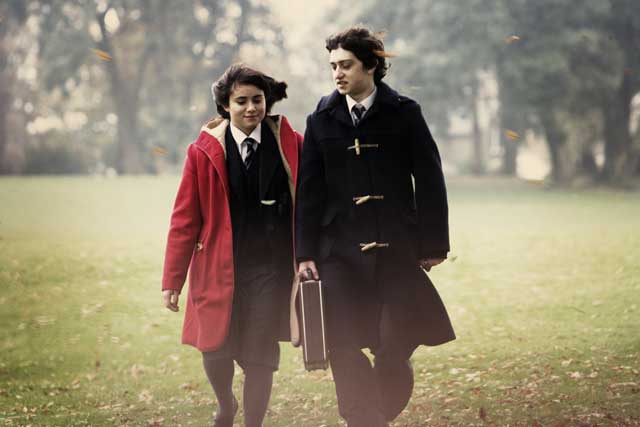
"Sweet," said my wife as the final credits of Richard Ayoade's film Submarine finally rolled. "Sweet," I agreed. Neither of us was in much doubt that it was the relevant critical adjective, or that it was meant to be approbatory. Ayoade's film – a quirky coming-of-age comedy set in Swansea, centres around Oliver Tate, an outsider figure with some dubious ideas about courtship (he thinks it's winning to issue his new girlfriend with a kind of self-improvement reading list, including Nietzsche and J D Salinger) and a self-image wildly at odds with the duffel-coated reality. It's Ayoade's directorial debut and he has a lot of fun with cinematic allusions and cinematic in-jokes, such as the moment when the movement of the camera bears out Oliver's musing reflection that the imaginary film in which he conducts most of his life wouldn't be able to afford a crane-shot and would have to make with a simple reverse zoom. Some reviewers didn't care for it much – including our own Anthony Quinn – but a lot did, writing of it with that slightly protective eagerness that the vulnerable artwork can generate in those that love it.
I found myself thinking about "sweet" though – and the implicit reservation it contained. It wouldn't, after all, be the kind of word you'd ever use of a truly great film. It has a hint of condescension about it, and of parental indulgence. It contains the notion, somehow, that you're withholding something more brutal because it would be inappropriate in this context. And that isn't, surely, because sweetness is never a quality of a great film. I found myself thinking of Lukas Moodysson's film Together, not entirely dissimilar to Submarine in some of its themes (the effect on children of parental troubles, first love etc). Together has one of the sweetest scenes I know in cinema, when most of the cast join together to play football to the sound of an Abba track. As I remember it it feels like a moment of grace in a film that has its fair share of grief, a recognition that connections between people can be repaired as well as broken. That might be one definition of "sweetness" really – an artistic mindset that says tribulations are survivable and that there can be a honeyed lining to even the blackest cloud. It isn't dim-witted or Pollyanna-ish. But it is essentially optimistic.
I don't think you'd ever really call Together a "sweet" film though, or croon the word appreciatively. And that's partly because – unlike some other critical terms of approbation – "sweet" has to be judged just right. It wouldn't really be possible to describe a film as being "too intelligent" (even though we know that films can be too clever by half). But it's all too easy for films to be over-sweet. As with condensed milk, the first spoonful is bliss but the next is already beginning to cloy. Together really can't be accused of that – it's just too painful in some passages – but Submarine is less securely exempt. While it includes difficult scenes – an overweight girl subject to nasty bullying, a sensitive boy finding out that his mother has been sexually involved with an old boyfriend – these moments are almost exclusively played as comedy, or with a detachment that holds deep feeling at bay. The songs in Submarine – by Alex Turner – are heartfelt, but Oliver's melancholy ultimately feels like a souvenir of adolescent angst, rather than the real thing. It is – as I said earlier – quirky, a term of art that often travels around with sweet and can arouse some of the same queasiness. You wouldn't want to be without quirkiness in life, but it can easily come to feel like an end rather than a means, just as sweetness does when it goes wrong.
What's really lethal about "sweet", I think, is its finality, the sense that it's a dismissive adjective, not because it wants to attack what it's attached to (I liked Submarine, even if I had misgivings) but because it implies that all that's been left behind is a flavour – and not a sufficiently complex one either. "Sweet" implies that biological receptors have been triggered but cultural ones left broadly untouched. It suggests too that you like the film-maker's sensibility more than you like the film they've actually made. I almost feel guilty I said it now.
More cherished song pauses for thought
Thank you for suggestions of cherished pauses in rock records – Sean McDermott offered 1.14 into Orange Juice's "Consolation Prize" as an example of "pure pop magic", and Jeremy Blakiston suggested a teasing hiatus in the Sex Pistols' "Bodies". "Just when the thing seems to have ground to a halt and you've had time to muse 'That was a uniquely nihilistic take on the sensitive topic of abortion'", he writes, "Master Rotten snarls back with a new verse". In conversation, Adam Mars-Jones offered the plangent pauses in Jacques Brel's "Ne Me Quitte Pas" – a good example of a pause that is integral to the song's narrative rather than a knowing and teasing suspension of it. I was a bit shaken, though, to realise that there is also a good example in that maddening Europop ohrwurm "No Speak Americano", which occurs at about 1.28 in. For two seconds (quite long on the ear) everything stops before bouncing back in at the same tempo (watch Cleary and Harding's hand dance to the tune on YouTube if you want to listen to it). And the pause works – perhaps not as plangently or emotionally as some others – but still delivering a little kick of restraint and release. It's a Fred Astaire trick I think – a kind of rhythmic freeze-frame, which makes the movement on either side of it seem even more jauntily alive than it did before, and which also reminds you that there is an artist in charge.
Time for a digital resurrection
As Jacqueline Howlett has recently proved, Kindle publishing might have its hazards for the under-talented and oversensitive (check out http://tiny.cc/9tjfs for her meltdown). But it also offers possibilities for conventionally published (and well reviewed) writers. I discovered the other day that the house next door had also become a publishing house, my writer neighbour John Man (who has written extensively on Central Asian and Chinese history) having taken his first steps into Kindle Editions. In 1982, he published a thriller about Haile Selassie and conspiratorial bankers called The Lion's Share. Since it's out of print the rights revert to him, which is where the story would usually end under a conventional publishing set-up. "Rights revert" used to be a kind of death-knell, since very few authors could take on the costs of printing and distribution to give a book another shot at the public. With Kindle Publishing they can – at no cost and only modest effort. Once the title is up there the author gets 70 per cent royalties (provided the price is within a certain range) and – just possibly – the long tail will wag in a lucrative way. One imagines it won't take long for publishers to put right a situation that gives authors choices while leaving them with none – but the loophole is presumably unfixable for a lot of titles. Even good books die, but there is at least a digital resurrection now.
t.sutcliffe@independent.co.uk
Join our commenting forum
Join thought-provoking conversations, follow other Independent readers and see their replies