Fawaz Gerges: Libyans must draw on the desire to rebuild their abused nation
Comment
Sign up for the View from Westminster email for expert analysis straight to your inbox
Get our free View from Westminster email
Muammar Gaddafi led Libya for more than four decades and in that time he destroyed everything.
The only thing he built was a culture of fear and brutality, and so, while it is possible to be squeamish about the way he was killed on Thursday, it should not be forgotten that he led a brutalised people.
Within hours, the National Transition Council will declare victory in the eight-month civil war, and it is at this juncture that the real battle for Libya begins. Gaddafi's death presents the new leaders of the country with an opportunity, and several significant hurdles.
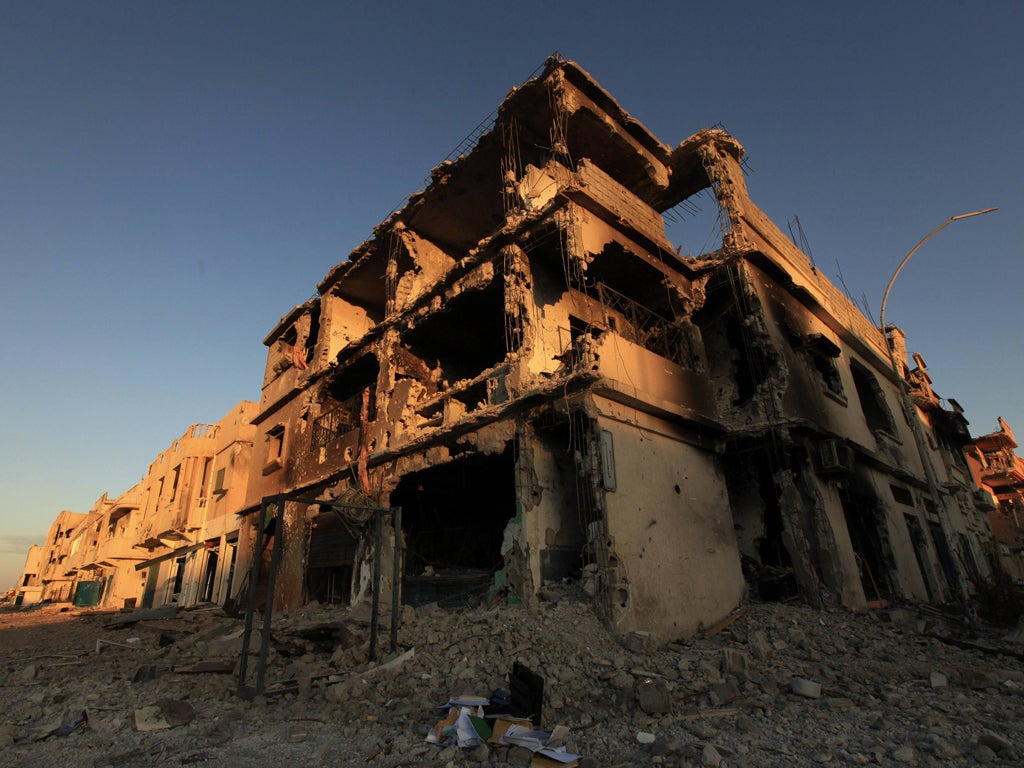
The NTC should be in no doubt that it will be an uphill task to transform Libya into a modern state. In his 42 years in power, Gaddafi destroyed all state institutions and led Libya through a cult of personality – he squandered the infrastructure of the country, failed to capitalise on Libya's plentiful oil resources and marginalised its people.
The success of the new administration depends entirely on the government's ability to reconstruct state institutions. If they do not begin quickly, they risk missing Libya's golden opportunity. The need to act quickly is paramount given the number of potential divisions that are endemic in Libyan society.
There are schisms that threaten to ruin the peace. Even in Gaddafi's demise we have witnessed a regional divide within the country. It was the Misrata Military Council that led the search for Gaddafi and, it would appear, is responsible for his death. The council is a different organisation to the NTC, which has its origins in Benghazi.
Without strong executive leadership, there is a real risk that this East-West split in Libyan society will overtake the effort for unity. If there is a struggle for power this schism will only grow. Libya is also a deeply tribal society – I have been struck by the resistance shown by fighters in places such as Sirte and Bani Walid, in what has always been a futile effort since Gaddafi lost Tripoli. Tribal loyalties in Libya must not be underestimated: the abrupt change of leadership is likely only to reinforce these differences.
The third crucial hurdle to achieving a lasting peace is overcoming the ideological differences that exist in Libya. There are the secular nationalists, the Islamists, the liberals and all the foreigners that have played a part in the uprising since March.
One huge advantage is that the Libya of 2011 is very different to the Iraq of 2003. Libyans, not international forces, own this revolution and its ultimate success will depend on their ability to see it through.
The revolution has the added advantage of widespread international backing – the UK, the US and France are longstanding sponsors, but now Russia and China are also behind the removal of Gaddafi. Of course, the backing of the other Arab states is also crucial, and Libya's plentiful oil will also be invaluable.
The greatest asset of all, however, is the will of the Libyan people. The last few months have shown that Libyans have that in abundance.
Professor Gerges is the director of the Middle East Centre at the London School of Economics. His latest book. The Rise and Fall of al-Qa'ida, was published last month by Oxford University Press
Join our commenting forum
Join thought-provoking conversations, follow other Independent readers and see their replies