Mary Dejevsky: Stop this fraternal feud and give us a real opposition
Labour, more than any other party, should understand the price of unresolved rivalry


Sign up for the View from Westminster email for expert analysis straight to your inbox
Get our free View from Westminster email
Let's hope, for his sake, that the Labour leader, Ed Miliband, is of an equable disposition, because in his place I would be hiring a posse of recidivist gang-members and sending them out on to the placid streets of Primrose Hill with a warning to big brother to "put up or shut up". Miliband D, as he came to be known during the long, drawn-out contest for Labour leader, has been turning up recently in all sorts of places – not just the ones he is now being paid rather tidy sums to visit – and contributing, as he might see it, to the national conversation.
The grotesquely patterned shirt that signalled an anti-aspirational pause after his defeat has gone back into the wardrobe, and out have come the dark suits, white shirts and starched cuffs of his three-year tenure at the Foreign & Commonwealth Office. Miliband D is back in serious, statesman mode, and he wants people to know that. Not everyone, you understand, but those who matter in the upper reaches of the Labour Party establishment.
As part of his managed return to society, he has just published an article in the left-wing weekly, the New Statesman. It is a long article by the magazine's standards, which suggests an understanding – shared by writer and editor – that this is a significant programmatic statement, a manifesto even. But you will also realise, as soon as you start to read it, if you do, that it is not intended for the casual reader, still less for someone seeking cheap thrills. It is a chapter, albeit an important chapter, in a debate that is already in train somewhere in the rarefied Labour-sphere. Positions have been staked out; the terms of engagement have been agreed, as – no less important – has the system of encryption. Not everyone has the key.
Given that Miliband D and his interlocutors seem so unconcerned about involving the rest of us – the rest of us, in the broadest sense, being the party's grassroots and the voting public – it might be tempting to flip over the pages and ask them to wake us up when it's over. Would it not be much less trouble to leave the temple of Labour ideology to its high priests and wait patiently until the skies part to reveal the tablets of revised policy inscribed in language the uninitiated can understand?
Well, we could do that, and David Miliband's article offers every encouragement to leave the cognoscenti to their own devices. If benign neglect were the general response, though, several conclusions would be lost – conclusions which could be pertinent both to the future of the left in British politics and to the course of the next election.
The first is that David Miliband, for all his widely touted intellectual strengths, has still not learnt to speak or write "human". He is not even bilingual. His facility for communicating with those inside the temple is evident. There was much fluttering in Labour and parliamentary lobby circles yesterday after the New Statesman appeared on newsstands.
But references to Roy Hattersley, to the Political Quarterly, and a call for "serious and comradely debate" – all in the first paragraph – are no invitation to perseverance. The elder brother's "communication skills" are what lost him the leadership election, quite as much as any trade union-biased arithmetic. David might just be able to win over his party, especially if it is on the rebound from never really loving Brother Ed. But the country? Winning elections is, as every French politician knows, about "seducing" the electorate. Enough said.
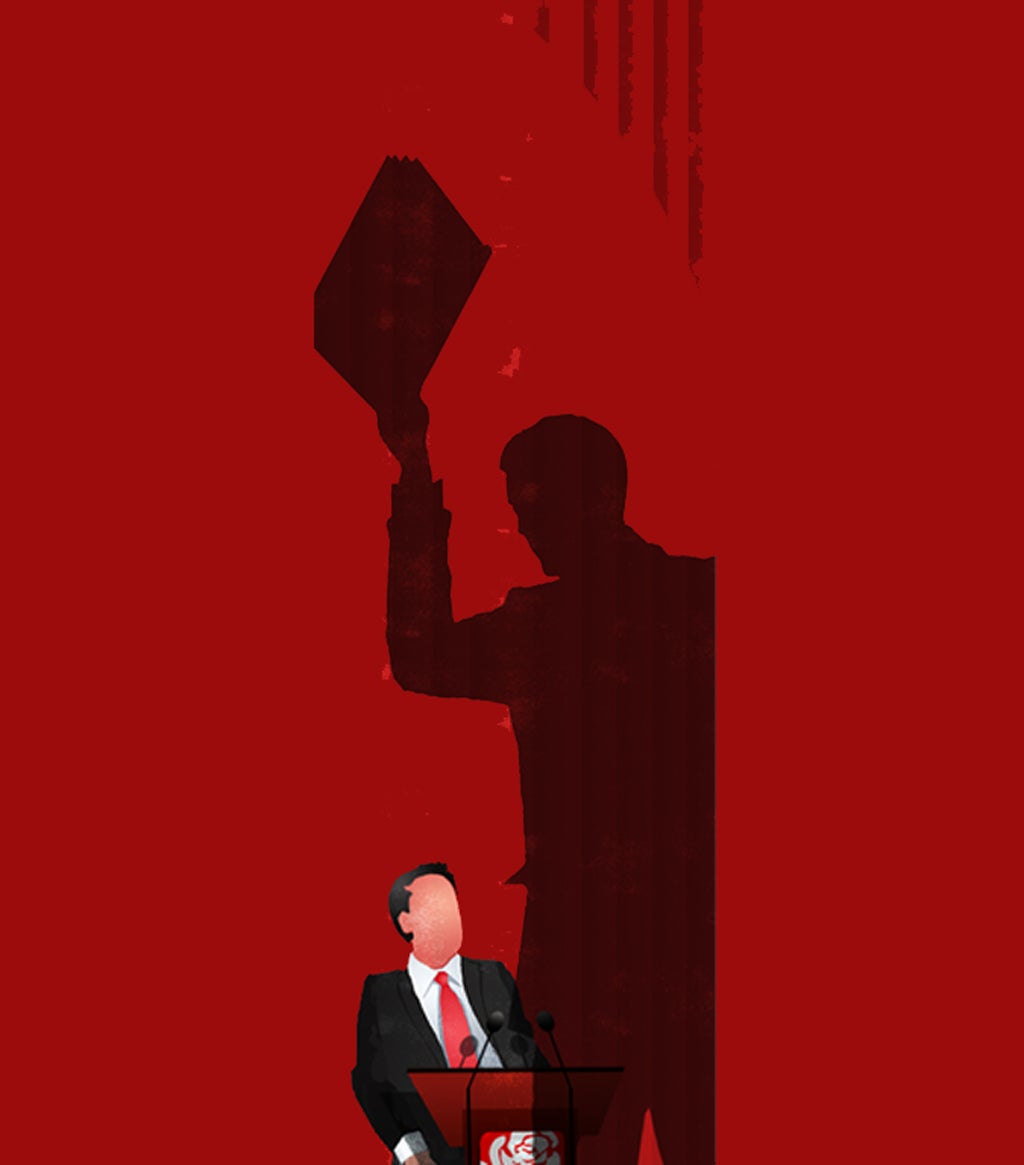
The second is that the fraternal feud is still not over. In a nod to his brother, the elder Miliband says the policy review Ed has embarked upon shows he understands that "now is a time for restless rethinking, not reassurance". (Note the speechifying alliteration.) Behind that sentence, and the article as a whole, however, lies the demand that this restless rethinking has to include "me". What does that mean? It means that Miliband D, despite – it is said – turning down a seat at the Shadow Cabinet table, has not really accepted that his brother won. Almost 18 months on, he remains buoyed by those who still accuse Ed of "fratricide" and whisper that the party chose the "wrong" Miliband.
Labour, more than any other party, should understand the price of unresolved leadership rivalry. David has shown that he can more than make a living outside politics – though, of course, he might find himself in less demand as the gap between his time in government and next year's diary lengthens. If, as it appears, he still hankers after Labour's top job, he owes it to the party to declare himself now. He should mount an open leadership challenge against his brother – and risk the accusations of "fratricide" being thrown back against him – or, as would have been advisable earlier, forever hold his peace.
But the third reason why Miliband D's article should not be ignored is that, through the coded thickets, the Labour Party's internal battle-lines in opposition can just about be discerned. And from this dim outline it is possible to appreciate, even at a distance, the cumulative damage that the legacy of Blairism, the defeat of 2010, and the populist appeal of the Coalition have wrought. David Miliband may be calling for "big ideas" – a swipe at the technocratic governments that straitened times have brought forth (including in Britain) – but what his article really shows is how far, a year and a half into the life of a Conservative-led coalition, every left and leftish principle is being questioned.
One reading of these runes is that Miliband D is setting himself up as a latter-day Blairite against Miliband E, as though the period 1997-2008 had not happened, or at least had not ended as it did. The additional complication for Labour here is that much non-Blair Blairism is now incorporated into the Coalition's thinking, and the rest – the profligacy, the green light to "getting filthy rich", the minimalist regulation, the wars of choice – is thoroughly discredited.
Miliband D and his former colleagues may indeed feel sore that the government they served is remembered mostly for the bad, not the good – but that's politics. History, as the professor's son will know, is written by the victors. If they want to be seen in a better light, and if they believe, in the fluid politics of today, that they have something to offer their party and the country, they should come out and tell us. All of us, not just their own self-absorbed coterie. Let's hear the competing arguments in real English, for the benefit of real voters, and let everyone with a view have their say.
Join our commenting forum
Join thought-provoking conversations, follow other Independent readers and see their replies