"/>

Leading Articles

8° London Hi 9°C / Lo 6°C

Leading article: A timely warning on our finances
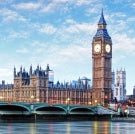
Are Britain's public finances becoming unmanageable? The ratings agency Standard & Poor's certainly judge them so, downgrading the UK's credit worthiness with a warning of further humiliation to come if the nation does not mend its ways. Although the news startled the markets, perhaps the most surprising thing was why it took Standard & Poor's so long to state what has been perfectly apparent for some time – that Britain's public finances are out of control. They will remain so until a government is returned after a general election with a clear mandate to tackle the underlying structural problems that have developed in the years since Gordon Brown left the taps running on public spending. To vary the metaphor, we should have left the boom and entered this recession with a war chest – a surplus on the public finances that could now be used to protect the poorest from the effects of the downturn. It is difficult to avoid the conclusion that Mr Brown decided such prudent provision was no longer necessary because he had started to believe his own silly claim that he had abolished "boom and bust".

The recession, the cost of rescuing our faltering banks and the emergency stimulus to the economy administered in last November's Pre Budget Report have all added to the scale of the debt. Perhaps without those expensive complications, Standard and Poor's would have left the UK's debt rating unmolested. Perhaps not, though. For S&P joins the Institute for Fiscal Studies, the National Institute for Economic and Social Research and scores of City economists in highlighting the political as well as the financial issue we face: that no political leader has yet summoned the guts to tell the British people the ugly truths about what will have to be sacrificed if we are not to end up in a situation where the very size of the burden of public debt prevents the economy from growing fast enough to begin paying it off. Whatever else, an early general election fought around the absurdities of MPs' expenses would be an exercise in distraction. A measured debate about the generosity of public pensions, the state's role in health and education, and the fairest way of raising tax must wait for a less fevered time.

Post a Comment

View all comments that have been posted about this article.

Offensive or abusive comments will be removed and your IP logged and may be used to prevent further submission. In submitting a comment to the site, you agree to be bound by the Independent Minds Terms of Service.

Comments

Writing on the wall
[info]findempire wrote:
Saturday, 23 May 2009 at 07:24 am (UTC)
S&P's downgrade means that Britain is no longer a member of the ratings aristocracy whose AAA ratings remain invariably sunny however mountainous their national debt and cavernous their current accounts deficit. Even the Yanks have seen the writing on the wall: As economic and political power shifts east the profligate Anglo-American couple can no longer count on the ratings agencies to loyally maintain the interest on their ever-mounting debt at AAA-rock-bottom, while allowing them to gouge emerging market economies by downgrading them at the drop of a hat.

Geithner Vows to Cut U.S. Deficit on Rating Concern


The dollar extended declines today after Treasuries and American stocks slumped on concern the U.S. government?s debt rating may at some point be lowered. Bill Gross, the co-chief investment officer of Pacific Investment Management Co., said the U.S. "eventually" will lose its AAA grade.

Of course both Geithner and this editorial are in lala land: Neither the UK nor the US can ever dig themselves out of the hole they are in. Think about it, the US current accounts deficit and its national debt have risen steeply without a break since 1970 (when the country bankrupted itself in its attempt to destroy Vietnam). Even the golden age of Bill Clinton's bubbles failed to stop the relentless decline. The US money supply, OTOH, increased exponentially, to such a mind-boggling extent that the Bush administration stopped reporting it. How is Geithner going to improve things when the 9 administrations before Obama's failed in far better circumstances?

The UK is in a similar terminal decline. Thatcher tried to stop the rot by attempting to impose the sort of savage capitalism - 12-hour-6-day-work weeks and no social expenditure whatsoever - that the Asian tigers were practicing, but the problem is that you can't turn your working population into coolies in a democracy, even one as flawed as Britain's. Nulabour tried something else: Get rid of manufacturing (and thereby also those greedy, expensive workers) and bet everything on building a world-class betting-casino-cum-confidence-scam-cum-tax-haven on Canary Wharf. Well that sure worked. Then Crash Gordon blew all the cash he had left as well as the family silver on shoring up his banker pals, who instead of using the money to finance some sort of recovery, paid off their bottomless debts to hedge funds & PE firms, which promptly used it to short the market, driving the economy even deeper into the hole.

So now the UK is left completely bankrupt, its manufacturing base long gone, its financial flim-flam racket also up in smoke, with no possible way of earning its way out of its crushing debt, and now also abandoned by the rating agencies, which can no longer afford to compromise their already tattered credibility by letting this derelict country keep up the pretense of complete and utter creditworthiness.

The US & UK have two options: Join Argentina to live under an overpass and eat out of dumpsters or join China by slashing wages, increasing working hours, and bringing the critical sectors of the economy, like finance and energy, under state control in order to prevent further speculative bubbles and financial rackets. Either way, both countries will have to toss out democracy even more than they have done already.

Perhaps the Anglo-American ruling classes saw this coming long ago. Perhaps they knew that their debt addiction would hit the wall sooner or later and that they would be forced to curb civil liberties along with their populations' living and working standards. Perhaps that explains why both countries are so intent on fostering a permanent state of panic with fake terror scares in order to railroad through new and ever-more draconian police state measures. When the riots that are tearing up the poor Eastern cousins of the EU reach London and New York, all that police state muscle will come in mighty handy.

Columnist Comments

andrew_grice

Andrew Grice: Enough of the philosophy, Mr Cameron.

Think-tanks play an important role in politics. But they have their limits.

christina_patterson

Christina Patterson: Very nice - but forgiveness is overrated

Sometimes, as Lydon sang, in his post Sex Pistols band, 'anger is an energy.'

mary_dejevsky

Mary Dejevsky: Why not call Blair now and wrap it up?

The enquiry already seems like a sideline as the queues dwindle.


Loading...


Most popular in Opinion