Davos: Come on, corporate giants. Open up to us
If our Government wants to tackle avoidance, it should compel big businesses to publish exactly how much corporation tax they pay. Luckily Labour support the idea

Sign up for the View from Westminster email for expert analysis straight to your inbox
Get our free View from Westminster email
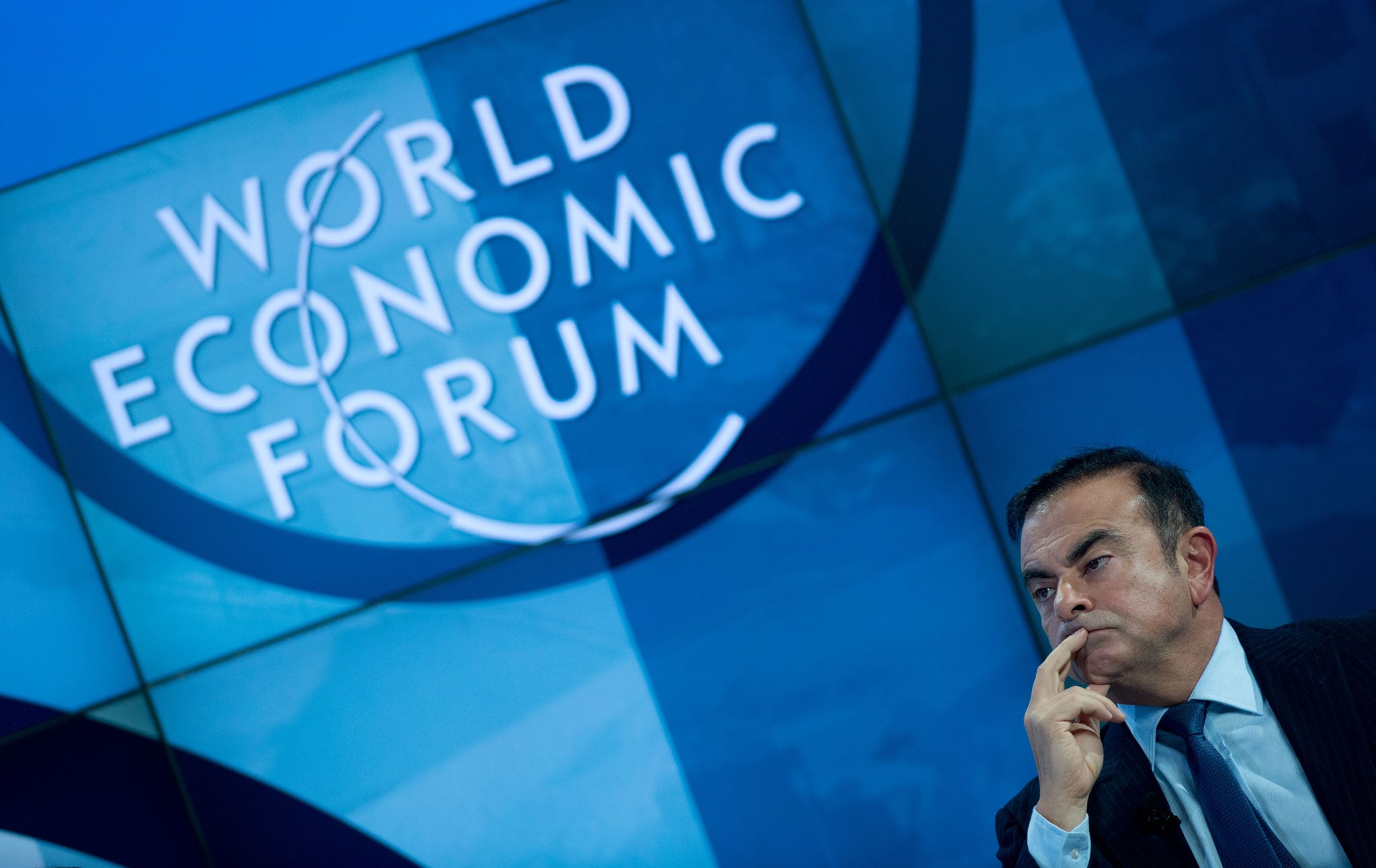
Davos is a rather absurd jamboree – so important to those who attend it and so irrelevant to the rest of the world. But over the past couple of days, amid the coffee and croissants and ceaseless chatter, we have heard the opening shots ricochet around the Alpine slopes of a potentially epic struggle over tax and power.
On the one hand are politicians, struggling to make public finances add up at a time of austerity and riding a tide of righteous anger from activists and taxpayers. On the other are corporate titans determined to keep their profits rolling in as they shift paper assets around the globe to avoid paying fair dues to national exchequers.
In the wake of detonating political dynamite over Europe, David Cameron jetted in to the Swiss resort to reveal he would use Britain’s G8 presidency to enforce tough action on tax avoidance. “Businesses need to wake up and smell the coffee,” he said, in a clear jibe at Starbucks, the highest-profile offender in this country.
Fight for control
The Prime Minister was prodded into action by backbench and media pressure, but this does not diminish his arguments about the immorality of avoiding tax. Yet instantly the public relations machines of the multinationals rolled into action, bleating about red tape and blaming everyone but themselves for their failures to pay. Leading the way was Goldman Sachs, which did not seem the smartest move in a fight for public sympathy.
This battle has been a long time coming. It goes beyond finance: it is really a fight for control of our globalised world. In recent decades, the powers of these profit-chasing behemoths have grown in inverse proportion to any sense of local responsibility. As they flit around the planet buying influence and selling their products, national borders are seen as little more than an irksome irrelevance.
I am not among those seeing multinationals as irredeemably malign influences. Many have been progressive forces through their development of new technologies and services, their readiness to adapt to social change and their role in spreading prosperity. But when it comes to tax, their behaviour is often indefensible.
We have learned the tactics used by Starbucks, Google and Amazon – ironically three brands that sold themselves as ethical capitalists. How hollow that pledge to do no evil now sounds. But they are far from alone: an ActionAid study in 2011 found 98 companies in the FTSE 100 had at least one subsidiary in a tax haven.
Or take Microsoft, whose creator is now hailed a hero for giving so much money to charity. A Harvard law professor revealed it has three units in the low-tax nations of Puerto Rico, Ireland and Singapore that in 2011 booked more than half the company’s total worldwide profits. If it paid more tax around the world, there might be less argument for aid.
Politicians are being forced to act, given pressures on family finances and public purses. In the United States, profit-shifting costs $90bn annually, which would help its fiscal black hole. France is looking at an internet tax. The Dutch parliament has been debating the country’s role as a relay-station in the global tax-avoidance network, which helped Google to cut its tax bill by more than £1bn.
In an ideal world, there would be unified action to shut down tax havens, close loopholes and end aggressive tax avoidance. But this is likely to be compromised by the need for international consensus. Meanwhile, it is hard to have faith in our Inland Revenue, which seems so ready to cut deals with dodgy corporations and wealthy crooks while clamping down fast on small fry.
A simple solution
But there is a simple solution – one in keeping with the Coalition’s drive for transparency and belief in “nudge” theories. Instead of waiting for international agreement, why not just insist every company doing business in Britain publishes precisely how much it pays in corporation tax? This idea is supported by Labour so could be passed in days, is simple to enforce and might prove transformative.
Brands are, after all, the most precious thing companies possess – and they are surprisingly fragile in the social-media age. Starbucks may be opening hundreds of new stores each year and seeing worldwide profits soar, but it was so rattled by public opprobrium over tax that it rapidly offered to hand £10m a year to the Exchequer. It was surely no coincidence that rivals reported soaring sales after the furore.
If such information is public, firms are free to decide whether to keep paying armies of accountants and lawyers to manipulate profits and corporate structures – or to cough up a bit more tax. Equally, the public is free to decide if it wants to keep consuming their products.
Some say this might drive firms to pack up business in Britain. Unlikely – but even if true, would that be such a disaster? If Starbucks had shut its shops rather than responding to public pressure, there would have been plenty of other firms ready to sell us overpriced buckets of milky coffee. It might even be the making of some new national champions.
There is something profoundly wrong with permitting arrogant global companies to flout national tax rules, gaining unfair advantages over smaller and local rivals. It insults their customers, protects their position and entrenches their power. Politicians must flex their muscles to show who really runs the country.
Join our commenting forum
Join thought-provoking conversations, follow other Independent readers and see their replies