Tall buildings and low flying do not mix
The helicopter accident in London is a warning


Sign up for the View from Westminster email for expert analysis straight to your inbox
Get our free View from Westminster email
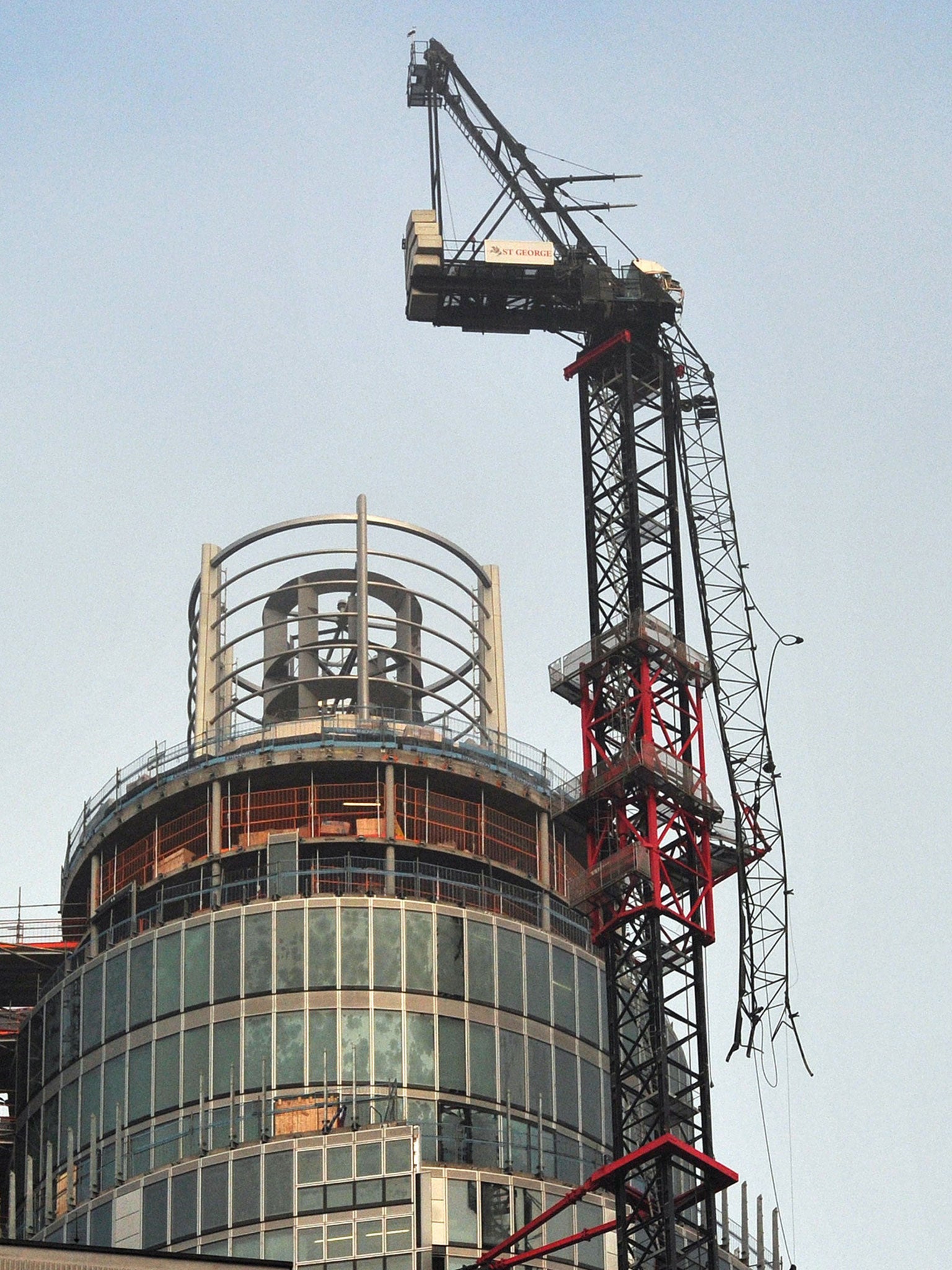
When I heard that a helicopter had just crashed into a crane in central London, I guessed at once which crane was being talked about, and rushed to the window. One possible cause was immediately apparent: the top third of the 44-storey tower, destined to be Europe's highest housing complex, was completely hidden by fog.
The tower beside the Thames at Vauxhall, known as 1 St George's Wharf, has been a preoccupation of mine since it first nudged above the skyline. It was almost a relief when its tapering crown appeared – proof that it would not be rising higher. At night it is illuminated, like a layered, monster candle. The lights on the tower, though, still shine far more brightly than those of the skeletal, even taller, crane.
The investigation into the crash is expected to take six months. But I fear that the mercifully small number of fatalities – the helicopter pilot and a pedestrian – and central government's fear of appearing too London-centric mean that it is already being treated as an isolated, albeit spectacular, accident from which no wider conclusions need be drawn. That would be dangerously complacent.
It is true that this is the first such accident since records of helicopter flights over central London began in 1976. But consider: the stricken craft narrowly avoided not only the still unoccupied tower, but numerous blocks of flats and offices, a big supermarket with a petrol station, Vauxhall bus and railway stations and the Tube. And scarcely a day has passed when at least one of my fellow bus passengers has not mentioned Skyfall, saying they thought that what they heard was an assault on MI6.
This accident needs to be treated as a salutary warning. Planning permission for the tower was opposed both by Lambeth council, in whose territory it sits, and – in a rare act of co-operation – by Westminster on the other side of the river, too. They were overruled by the then Environment Secretary, John Prescott. The chief objections were aesthetic, relating to style and height.
I do not have any objection in principle to distinctive skyscrapers for London. My greater concern is the trend for councils to allow standard height and bulk regulations to be breached under pressure from construction companies. In fact, as seen from my seventh floor window, the new tower has the great merit of making the truly execrable St George's Wharf development beside it look smaller.
But its proximity to the Battersea heliport and its Thames flight path should surely have clinched the argument that Vauxhall is not big enough for the both of them. If planning permission depended more on context and safety, not just on the aesthetics of the intended building, the decision might have been different. In my experience, council planners rarely co-ordinate the wider implications of planning applications even when they relate to adjacent sites. This is a failing.
One option should be the closure of the heliport, which would be hard, given its influential constituencies in the police and the super-rich. The heliport, though, is not the only problem. The crash should highlight the danger of so many flights being permitted over such densely populated areas. From my windows I can also count the aircraft on their approach to Heathrow. Huge numbers of people are disturbed; they are also at risk.
The proliferation of very high buildings close to the river and the frequent over-flights of helicopters are a recipe for catastrophe. As long as the Thames remains the route-finder for commercial aircraft of all kinds, the danger remains.
Join our commenting forum
Join thought-provoking conversations, follow other Independent readers and see their replies