Justin Cartwright: If banks have values, they are greed, hubris and sheer brass neck
The cry that goes up in dealing rooms when a trade is bad is ‘OPM’ – other people’s money

Sign up for the View from Westminster email for expert analysis straight to your inbox
Get our free View from Westminster email
Bob Diamond, the CEO of Barclays, said not so long ago: "There was a period of remorse and apology for banks, and I think that period needs to be over." It was a strange pronouncement, both self-serving and ungrammatical, and its message was "business as usual".
After the scandal of manipulation of the Libor rate by Barclays, the hair shirts may have to come out of the cupboard again. Bob Diamond has said that the practices in his bank "fell well short of the standards to which Barclays aspires in the conduct of its business. When we identified those issues, we took prompt action to fix them and co-operated extensively and proactively with the authorities".
This sounds to me like a roundabout way of saying when they were caught out they decided to come clean. The bank has, apparently, given plenty of information to the FSA and the SEC, the regulators in the US, presumably in hopes of leniency. I don't know if the £290m fine is considered lenient, but these offences took place between 2005 and 2009 when Bob Diamond was head of Barclays Capital, which was supposed to oversee these practices.
Diamond and three top executives are giving up their bonuses. It turns out, however, that Diamond may be giving up only one of his bonuses. Despite shareholder protests he took home £17m in 2011 alone. In that period the bank's share price and the return on equity had fallen dramatically. Investors were particularly angry about the £5.75m Barclays gave Diamond on the grounds that his move to Britain entailed a tax disadvantage.
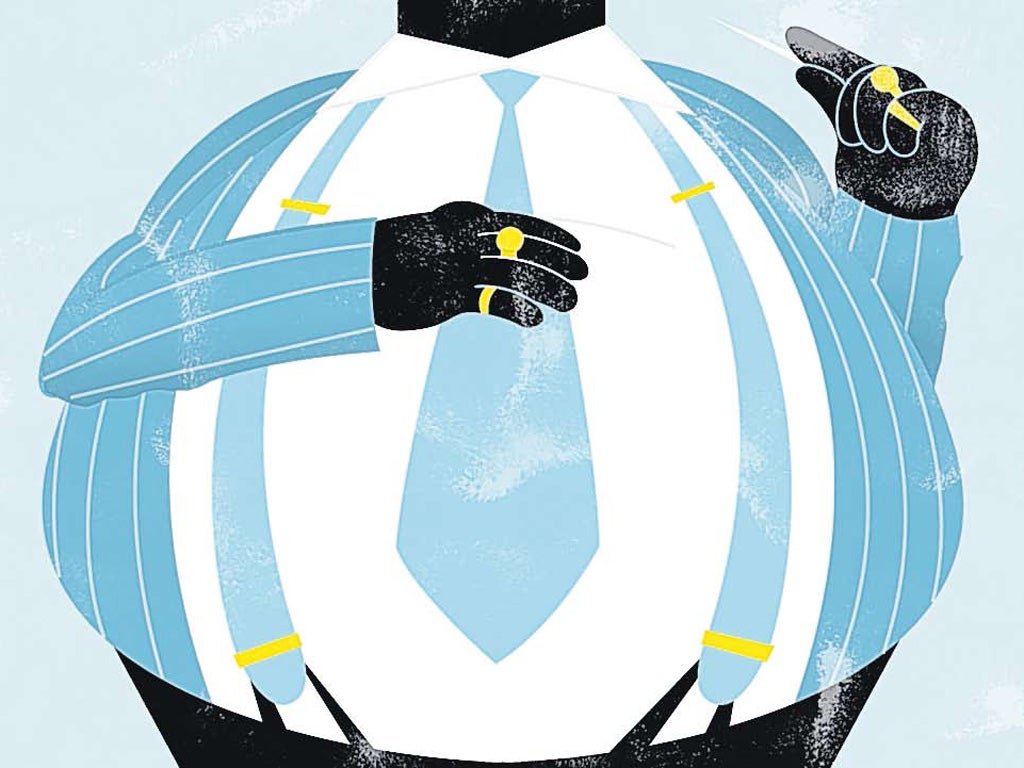
The greed, the hubris, the sheer brass neck of some of these bankers are almost beyond belief. They seem to see the banks they work for as existing primarily to make them money. The bonus is a sort of manna from heaven that falls on them after Christmas, often without regard to their achievements. What they have forgotten in the rush to the trough is that banks and banking are there to serve their customers.
When Bob Diamond says, "I am sorry some people acted in a manner not consistent with our culture and values", we are free to ask what exactly this culture and these values might be: the single most important aspect of the "culture" of Barclays (and many other banks) is greed, and the prime beneficiaries are the senior executives.
When I wrote my novel, Other People's Money, I was thinking of the cry that went up in dealing rooms around the world as a trade went bad: "OPM," the dealers shouted derisively. Banking, once the most staid and cautious of professions, has turned itself into a casino, playing with investors' and customers' chips. One whole day I watched television, amazed, as Lloyd Blankfein, the CEO of Goldman Sachs, gave evidence to a congressional committee: he tried to justify creating a fund to fail so that money could be made by a select group shorting this fund.
He appeared to be unable to see that this might harm people who weren't informed that this was a fund expressly designed to fail. While he was CEO of Goldman Sachs Group in 2007, Blankfein earned $53,965,418, which included a base salary of $600,000, a cash bonus of $26,985,474, stocks granted of $15,542,756 and options, also granted, of $10,453,031.
Until the 1980s, banking in this country was the domain of the Captain Mainwarings. It was also relatively simple. Big Bang – the deregulation of the City in 1986 – and the lowering of income tax changed all that and led to a tide of greed.
Adam Smith was frequently quoted; he understood that self-interest powered capitalism. In The Wealth of Nations, in 1776, he wrote that the self-interest of the butcher, the baker and the candlestick maker benefits the rest of us. But those who quoted Adam Smith conveniently failed to mention The Theory of Moral Sentiments, a book about the moral dimensions of life: "How selfish soever man may be supposed, there are evidently some principles in his nature, which interest him in the fortunes of others, and render their happiness necessary to him, though he derives nothing from it, except the pleasure of seeing it."
John Maynard Keynes was deeply concerned about the effects on a society obsessed with money. He believed, wrongly as it turns out, that by about now we would have enough to live a good life without needing to work more than 15 hours a week. Perhaps he was thinking of his chum Virginia Woolf with a room of her own and £500 per annum. Keynes understood – he was a Bloomsburyite after all – that a love of art and literature and music is way more important than a love of money. In fact, he thought that the accumulation of money as an end in itself was absurd, like eating solely to grow fat.
As it happens, obesity is on the rampage: in 1960 less than 5 per cent of the population was overweight or obese: now over 60 per cent of adults and 31 per cent of children are officially overweight or obese. Insatiability is a characteristic of our times. It speaks of existential angst and a loss of a moral compass.
When I was writing Other People's Money, I came to a conclusion which seemed to explain certain mysteries: it was that important people in banking and finance see themselves as the agents of huge forces that power the world, that these forces are morally neutral and that they are above the constraints that apply to lesser people. It is a dangerous myth leading to a disastrous culture of entitlement for the rich. Bob Diamond has come to personify this myth.
Justin Cartwright's novel 'Other People's Money' is published by Bloomsbury. It was the winner of the Spears Book of the Year award, 2011, and judged by Kirkus Reviews as one of the top 25 novels in the world of 2011
Join our commenting forum
Join thought-provoking conversations, follow other Independent readers and see their replies