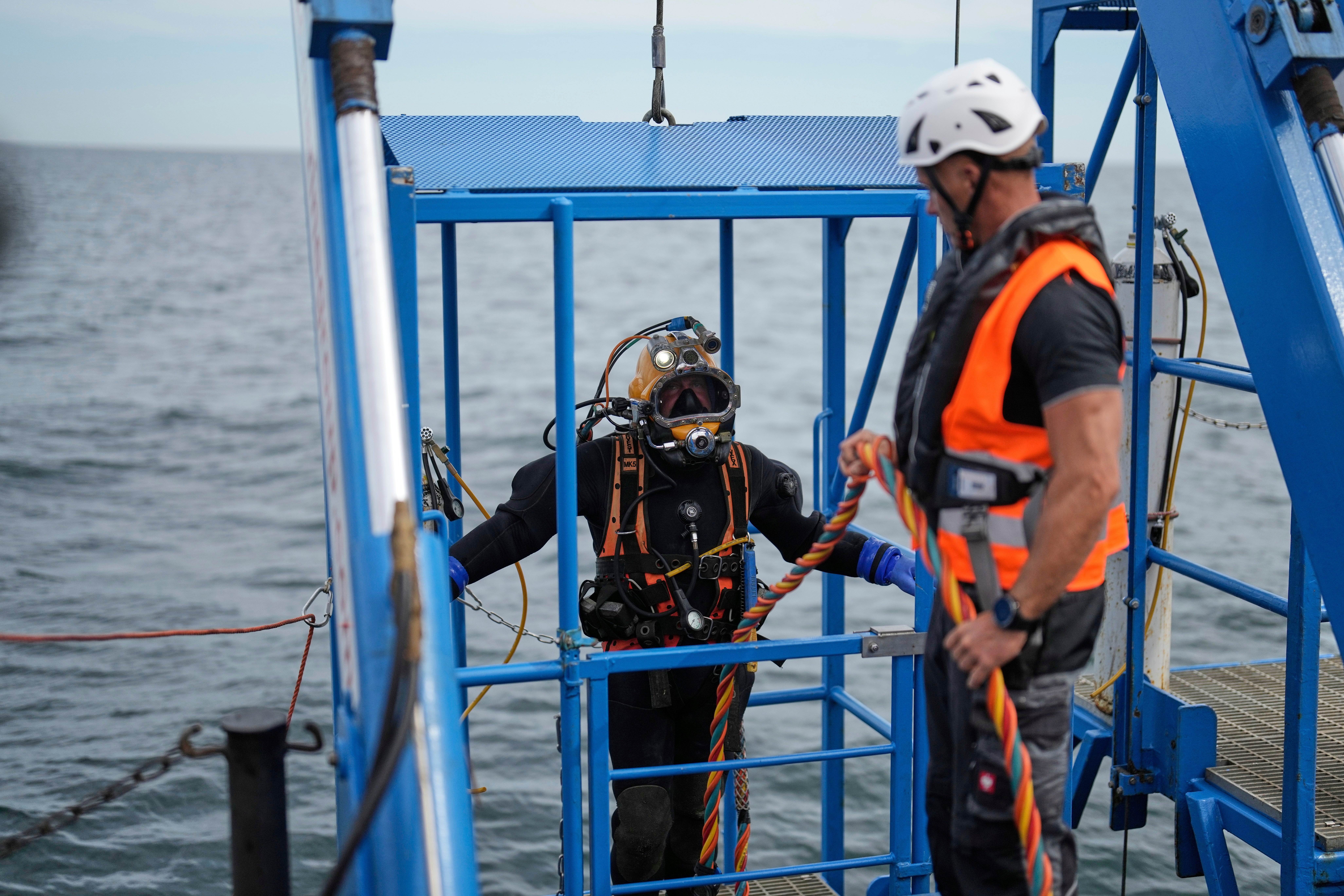
Finding surprised researchers, who had anticipated significantly lower numbers of animals in the former weapons dump (Copyright 2025 The Associated Press. All rights reserved)
An undersea submersible discovered crabs, worms, and fish thriving on World War II explosives in the Baltic Sea, a location previously considered toxic to marine life.
Scientists found a greater abundance of marine creatures, including anemones and starfish, living directly on the warheads, such as V-1 flying bomb pieces, than on the surrounding seabed in the Bay of Lübeck, Germany.
This finding surprised researchers, who had anticipated significantly lower numbers of animals in the former weapons dump.
The marine life may be attracted to the hard surfaces provided by the munitions, which are scarce in the Baltic Sea, and the chemical contamination could create a somewhat protective, isolated environment.
The study highlights nature's remarkable ability to adapt and flourish in human-altered environments, with future research planned to assess contamination absorption and reproductive capabilities.



Bookmark popover
Removed from bookmarks