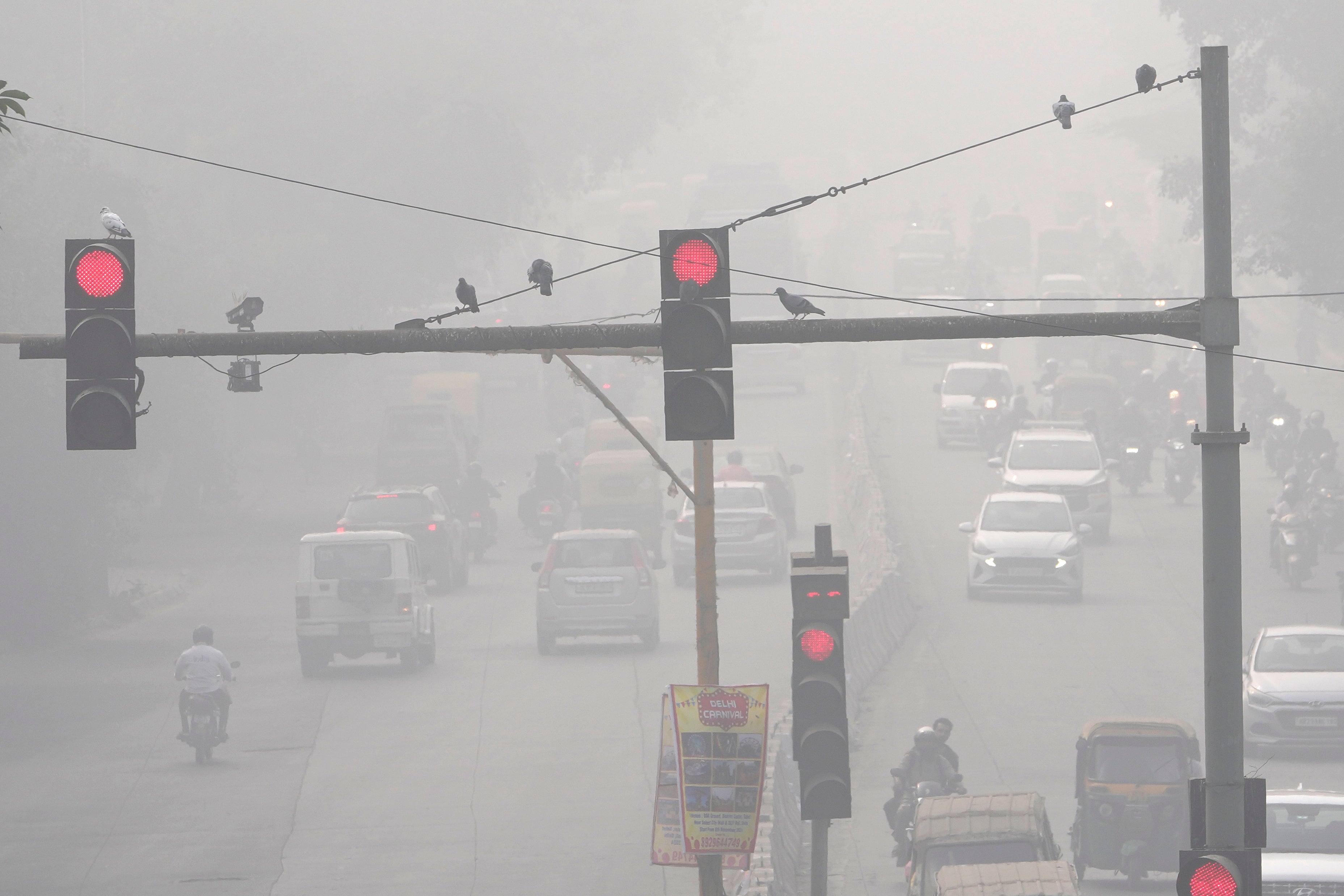
Traffic moves through thick smog in Delhi (Copyright 2024 The Associated Press. All rights reserved)
Delhi's severe air pollution is causing black crusts to form on the 17th-century Red Fort, threatening its intricate carvings and accelerating its decay.
A study by researchers from multiple institutions found fine particulate matter and nitrogen dioxide are responsible, with crusts up to half a millimetre thick on walls exposed to heavy traffic.
These crusts are composed of gypsum, bassanite, weddellite, and heavy metals such as lead, zinc and chromium, primarily originating from vehicle emissions, cement plants and construction activity.
The findings include blistering of plastered walls, dampness, flaking sandstone, salt deposits, and a loss of detail in carvings, with black crusts causing visible discolouration and diminishing the site's cultural value.
Researchers recommend regular cleaning and the application of protective coatings to mitigate the damage, warning that thicker deposits bond to the stone and risk permanent loss.



Bookmark popover
Removed from bookmarks