New findings show that nearby moon could be habitable, scientists say
Bookmark popover
Removed from bookmarks
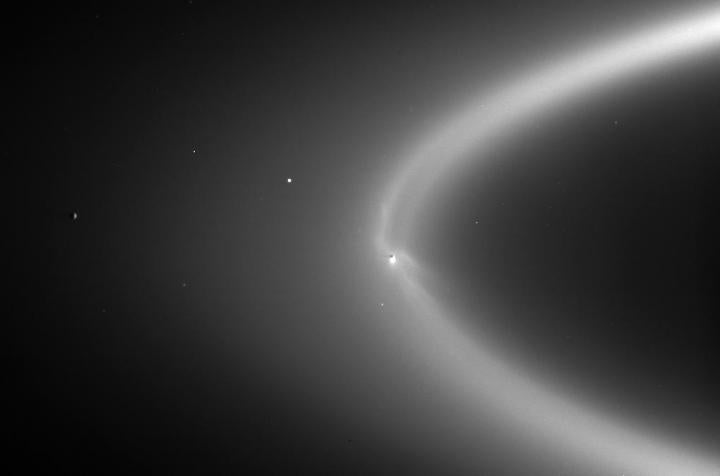
A Nasa image of Enceladus in orbit around Saturn (NASA/JPL-Caltech)
Scientists have detected fresh "complex organic molecules" emanating from Enceladus, an icy moon orbiting Saturn.
These molecules are similar to those on Earth that are fundamental to life, significantly increasing the likelihood of the moon being habitable.
The discovery confirms that the complex organic molecules are actively produced within Enceladus's underground ocean, rather than being altered by prolonged exposure to space.
The Cassini spacecraft previously identified an active underground ocean and organic molecules in jets spewing from cracks in the moon's surface.
The new findings are yet more evidence that Enceladus could be habitable, the researchers behind them say.



Bookmark popover
Removed from bookmarks