Van Dyck and Britain, Tate Britain, London
Marvellous, but not at all moving
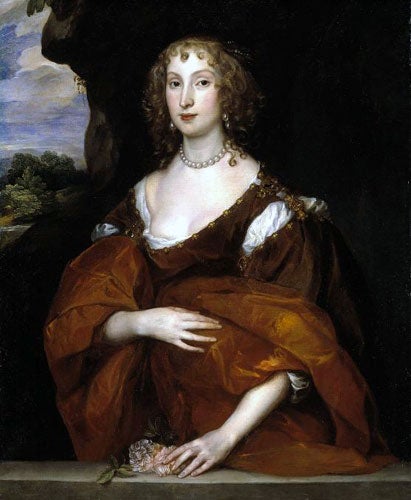
It was in the 1620s that artist immigrants came to this country from the Netherlands. Their role was to give brilliant visual definition to an English court that would soon collapse. The painting of royalty before this time had had a strange stiffness and unreality to it. It had specialised in wooden, rather doll-like images. With the advent of Van Dyck and others, a new style, much more dashing, robust, supple and loose was struck, which persisted, in various different manifestations, for centuries. Even John Singer Sargent, as this fascinating exhibition demonstrates, was still painting à la Van Dyck at the beginning of the 20th century.
As with so many talented immigrants, Van Dyck, who had started out as a pupil of Rubens, soon learnt to play the game of being every inch the Englishman. You can see this happening in the gallery, which shows off his great formal royal portraits of King Charles II and his aristocratic retinue. And Charles rewarded him handsomely for his talents. Van Dyck became a courtier, a knight, official court painter, with ready access to the king. He lived in a fine house at Blackfriars. The king had a set of steps built up to the house from the Thames so that he could pay his courtier regular visits. All was set fair in a world of marvels.
And so it seems, in part, when we look at these portraits. The largest and most celebrated shows the king on horseback, bursting through a triumphal arch as if into your own living room. It is a magnificent piece of political theatre. The king looks as kingly as you could ever imagine – a glacial aloofness proclaims the degree to which this armoured warrior is set apart from the mortals who can only stand and stare, awestruck. Look around this room, and you see the same kind of atmosphere. The aristocracy of Britain stand here for our delectation, striking poses, supported and enhanced by objects of huge symbolic significance. You wonder. You marvel.
But, alas, you do not feel a great deal other than sheer admiration at the calculated, studied deployment of so much raw talent. Yes, this is the tragedy of Sir Anthony Van Dyck, and even of those who came after and thirsted to emulate him. There is little intimacy here. There is an atmosphere of glacial, opulent brilliance, but we are not touched as we were, say, by the portraits of Holbein that were exhibited in these very same galleries relatively recently. With Holbein, we are in touch, always, with the vulnerable, beating heart of the person behind all the pomp and the mask of dignity. This is seldom so with Van Dyck. It is the look in the eye that so often defines the nature of the problem. The eye has no wish to engage us at all. It says: I am not you, and you will never be who I am.
There is a tremendous coldness and aloofness in the eyes of so many of Van Dyck’s sitters, that glitter of the eye of the fish on the fishmonger’s slab. And Van Dyck has put it there. His role was to flatter, to raise up, to set apart a court that would be so magnificently aloof that it would soon be on a par with God himself. This king was God in human form. And so the flattery is unrelenting. We see it in the way the women are represented. We know they were not like this in life, that they were rendered shapeless by too much child-bearing and pitted by the pox.
And this is why, finally, Van Dyck fails as a great portraitist. He was too keen to reflect back at his self-satisfied clients the image of themselves they yearned to believe was true. He was, in short, a political animal, serving his master to the best of his tremendous abilities.
To 17 May (020-7887 8888)
Join our commenting forum
Join thought-provoking conversations, follow other Independent readers and see their replies
Comments