Female contenders rule out 'archaic' post of Poet Laureate
Tuesday, 10 June 2008
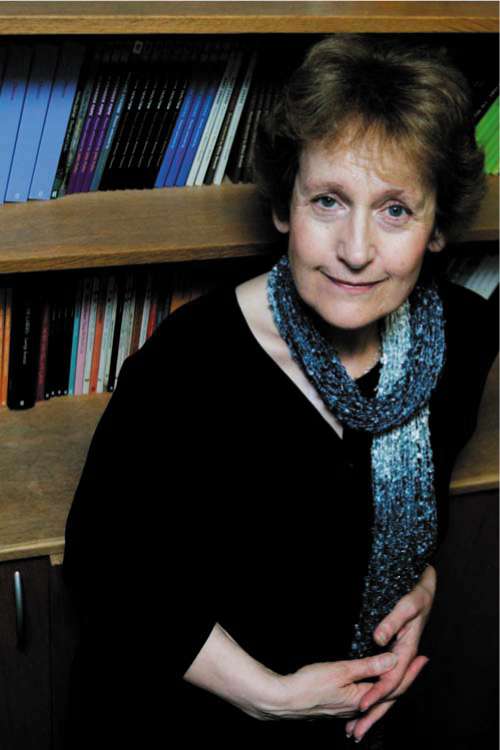
Wendy Cope, a favourite for the post of poet laureate, said: 'It means nothing. It is not important'
Three of the leading contenders to be Britain's first female Poet Laureate have ruled themselves out of contention for the post.
The ancient role, currently held by Andrew Motion and remunerated by 630 bottles of Spanish sherry, is due to be reappointed next year.
But hopes that the 10-year tenure, whose previous incumbents have included Ted Hughes and John Betjeman, could go to a woman look set to be dashed.
Almost none of the leading female poets are interested in the position. Wendy Cope, who had previously been a favourite for the role, has poured scorn on it, saying that she "never wanted" to be laureate. "Personally I feel it is an archaic post and means nothing. It's simply not important," she said.
"It comes from the media this idea of writing royal poems," added Cope, who has attracted an ardent female fan base for her down-to-earth outpourings on relationships and men. "Andrew Motion had been doing a very good job writing royal poems without making a fool of himself, but he should not be in that position," she said.
And Cope is not alone in her distaste for the high-profile post, which will become available when Motion's 10 years in the seat come to a close next year.
Award-winning poets Fleur Adcock and Ruth Padel, who have both been tipped for the role, agree that writing for the Queen was probably more trouble than it was worth. Adcock said that quite apart from the extra work it involves, the role continues to command a very meagre salary.
"It's terribly hard work for very little pay," she said. "The poet laureate is fine as an institution, as long as I don't have to do it."
The fee for taking on the grand title is still just £5,000 a year, although the ancient tradition of a "butt of sack per annum" has been reinstated by Motion. But even 630 bottles of Spanish sherry – no matter how fine – is not enough of an incentive to abandon literary integrity and solitude, said Adcock, whose work has earned her an OBE and the Queen's Medal for Poetry.
"There's no way I'd do it, I like a quiet life; I like to be in the garden or visiting my children," she said. "When I started poetry it was something you did in private, not in public."
Ruth Padel, the chair of the UK Poetry Society, said she thought most talented writers would give the post a wide berth.
"I think every good poet would have the same answer: that you'd be wary about your work," she said. "My impulse would be to turn it down," adding that wider factors might affect her decision. "There are other things to consider, such as what it would mean for a woman to do it, and what it could do for poetry in the community to make it more loved, but you'd be worried you wouldn't be able to write what you wanted to."
Another frontrunner, Lavinia Greenlaw, would not comment on whether she would take the post. "I don't know, I haven't been offered it," she said. But Greenlaw added that she was saddened by Cope's rejection of the role. "I think it's a real shame that Wendy doesn't want it, as I think she'd be really good at it," she said.
Ledbury Poetry Festival's director, Chloe Garner, who delivered her impassioned appeal to the Queen last month to break with tradition and appoint a female laureate, rejected Cope's assertions that the job was outdated. "I don't agree with that," she said. "I think it's really good that the job exists as it's the one high-profile job as a poet."
Garner continues to be optimistic that the role can be filled by a woman next year. "If it went to a new upcoming poet, that would be just as good; it doesn't have to be a big name," she said.
The position was last vacant when Ted Hughes died in 1999, at which point Tony Blair took the opportunity to change the role from a life appointment to a decade-long posting.

It would have been interesting to find even a brief comparison between the role of Poet Laureate in the UK and its counterpart in the US, where the poet in question can and does convert what might else-wise be a hollow office (or worse, a reactionary one) into a project-generating means of outreach/education. See the Poet Laureate track records of Robert Hass, Robert Pinsky, Rita Dove, e.g. This carping about having to write poems for the queen seems a bit short-sighted to this (half-English/half-American) reader. Agreed, this obligation might well compromise one's "literary integrity," but in view of the great good that could be done (for the public!) on the other side of this gilded hoop, I would reckon it a small price to pay.
Posted by Sarah Gridley | 13.06.08, 14:52 GMT
ha! I love how Carol Ann Duffy, the actual female frontrunner, isn't even mentioned! Got to be a shoe-in, then.
Posted by fiona | 12.06.08, 21:04 GMT
I thought Motion was just keeping the seat warm for Simon Armitage.
Posted by Ruth | 12.06.08, 16:54 GMT
Clearly it should go to a woman. Obviously it should go to somebody at some remove from the fustian establishment, because establishment poetry makes no sense. Since the monarchy's made successful efforts to bring a dash of youth to its image, it shouldn't go to someone ancient. As the Union is in peril, it should go to someone Scottish. As the planet's in peril and the monarchy's not done a bad job of leading opinion on this, someone whose poetry brings clear environmental passion, perspective and language to the job of heightening our awareness of where we live should be appointed. So the next poet laureate has to be Kathleen Jamie.
Posted by Martin Goodman | 12.06.08, 08:42 GMT
My husband, James Plaskett, was kind enough to nominate me for the post of poet laureate. My poems are no dirtier than those of many past laureates, e.g. Ben Jonson and Dryden, plus I have written many totally clean ones on the subject of English history in my younger days. I would be happy to accept the post, drinks included, as long as I could continue to reside in Spain and send the poems by email... Alternatively, a grace and favour flat and a few free air fares could persuade me to come over for many a weekend...
Posted by Fiona Pitt-Kethley | 11.06.08, 22:32 GMT
Please-- somebody good accept it. So many fine female poets, appreciated in their day, disappear when the "official list' of the era is cut from 100 best to 10 best to one or three. By becoming part of "history" there is an increased chance that our great-granddaughters will be able to read you and make up their own minds if what you wrote is "universal" or "good enough".
Posted by GLHorton | 11.06.08, 19:09 GMT
Poet laureate means Nothing?
I beg to disagree. With all due respect, of course. There is the matter of the future, for where are young girls and young women to find role models except from older women of great accomplishment? How are the young to know the great women except through the established channels of public recognition? This is an ancient argument, I realize, but unfortunately, not an archaic one so long as the general public assumes that "human" and "adult" apply to males first and only then, as an afterthought (a kind of footnote in thinking), to females. Until society has freed itself from the baggage of gender assumptions, gifted women must accept the official position of Trailblazer in whatever field it is offered.
Best wishes from across the pond. We are parsing the same tangled inheritance!
Posted by Elizabeth York Enstam | 11.06.08, 14:34 GMT
Give it to my wife.
The pos needs some invigoration, and there could be no dirtier Poet Laureate than Fiona Pitt-Kethley!
Posted by James Plaskett | 11.06.08, 00:30 GMT
Hello my dear.
Behind a melody
the close of the
day resembles the
north wind attending
a field, and this
water-course appears
in my mind like
a delicate sadness
at the height of
the season: I wait
for a pleasure, I dream
the sunflower.
Francesco Sinibaldi
Posted by Francesco Sinibaldi | 10.06.08, 17:29 GMT