War poet Robert Graves 'stole work from his mistress'
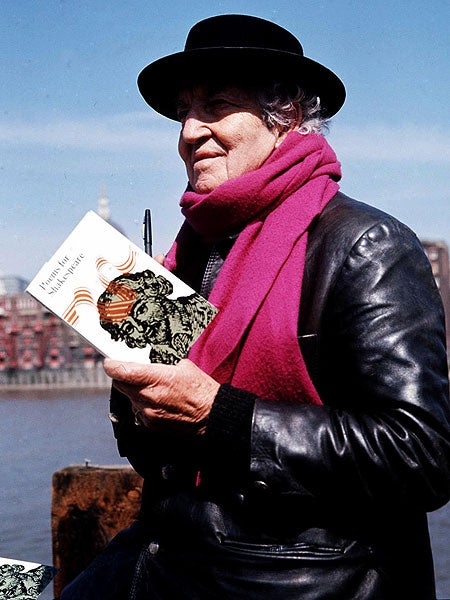
Few would doubt the brilliance of Robert Graves, a man considered to be one of Britain's foremost war poets whose verses on Greek mythology and frontline conflict cemented his name in literary history.
But one academic has accused the poet of stealing ideas, literary criticism and poetry from his one-time American mistress and passing them off as his own.
Dr Mark Jacobs, a research fellow at Nottingham Trent University who has spent two decades studying 700 letters he received from Laura Riding Jackson as well as her literary works, said when she discovered the uncanny similarity in his texts she condemned her former lover as a "robber baron".
Dr Jacobs, who is writing a book which will reveal the full extent of the couple's relationship, credits Jackson for having been a major influence on Graves's work and has called for a reassessment of his writings in the light of the revelations.
Jackson's chagrin at Graves' alleged "lifting" of her work is described in her letters to Dr Jacobs, who began writing to her as a PhD student 30 years ago. Their correspondence continued until a year before her death in 1991 and the letters were this week placed in the university's research archive.
The couple became lovers in the 1920s, when Graves was still with his first wife, Nancy Nicolson. Jackson moved into the couple's home for some time before the marriage ended after Jackson's failed suicide attempt when she threw herself out of a window, an event she describes in her letters. The couple's literary and romantic partnership was the inspiration for Miranda Seymour's 1998 novel, The Summer of '30.
Dr Jacobs said Jackson accuses Graves of "robbing" her of key ideas which he appropriated as his own for his seminal study of poetic inspiration, The White Goddess, published in 1948.
He claimed that the inspiration for the work, which equates God with women, related to an early essay Jackson wrote in the 1930s called The Idea of God and her book, The Word Woman, which preceded Graves's magnum opus.
The couple moved from Britain to Spain, where Jackson left her manuscript for The Word Woman when the pair fled the country on the outbreak of the civil war in 1936. Dr Jacobs claims it was this manuscript – which Jackson had asked Graves to burn – that the poet used as the basis for The White Goddess.
"Between 1926 and 1939, he was learning from her what she was doing and thinking," Dr Javcobs said. "He was taking her ideas, her research, he was simply shovelling it in to his own books.... She left her manuscript in Majorca. She later wrote to him [Graves] and told him to burn the manuscript. We now know that he didn't. It all appeared in dribble form in The White Goddess. He used it for his own ends without mentioning it to her. She only found out in the 1950s."
Graves also used four lines of a poem Jackson had published at least two decades earlier about the Greek mythological hero, Hercules, in his own poem, Ogmian Hercules, Dr Jacobs added. "He wrote the poem and stole about four lines in his 12 line poem. Her poem was published by the private Seizin Press that they had set up in the 1920s."
In her letters to Dr Jacobs, Jackson accuses Graves of having "sucked, bled, squeezed, plucked, picked, grabbed, dipped, sliced, carved, lifted the body of my work" after their relationship broke down in 1939."
Professor Dunstan Ward, president of the Robert Graves Society, said there was a host of textual evidence proving that Graves was developing his theory for the White Goddess even before he met Jackson and that a poem called A History, written before the two met, contains "clear references" and the reproduced lines of poetry in Ogmian Hercules was a "homage to her".
Join our commenting forum
Join thought-provoking conversations, follow other Independent readers and see their replies
Comments
Bookmark popover
Removed from bookmarks