Bomber County, By Daniel Swift
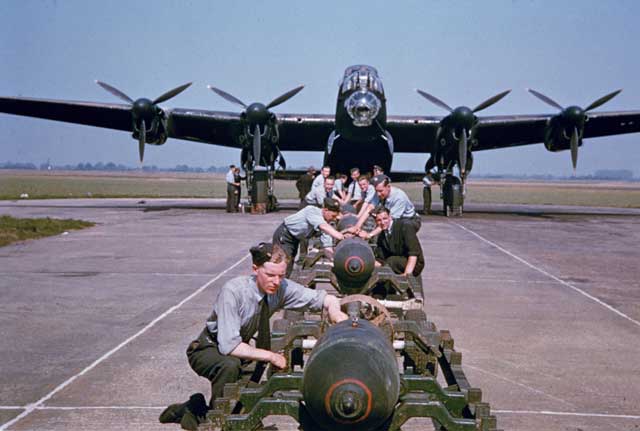
On 17 June 1943 the corpse of a bomber pilot was washed up on a beach in North Holland wearing RAF uniform, a heavy blue shirt and a grey jumper. His plane had been brought down one week before by a German fighter and he had died when, hitting water, his body was thrown through the glass and metal roof of his plane, crushing the right side of his skull. He was not wearing a parachute. He was 30 years old and grandfather to Daniel Swift, whose book is a detective story. We discover how this relative whom he never met lived and died. He dedicates his book to his father, three years old when the airman - his father - died.
Swift wanted to tell a story and this grandfather was available; but he has other, literary ends. Robert Graves once gave a radio talk on why there were no good Second World War poets. Swift agonises over this. Why did the First World War produce greater poets – Wilfrid Owen, Siegfried Sassoon, Rupert Brooke - than the Second? Geography played a role: the immobile trench warfare on the Western Front was new, terrible and resulted in a fearsome concentration of suffering. Its landscape of mud, shell-shock and gore has penetrated the collective unconscious as a universal nightmare, immortalised first by its poets.
The Great War was a war of stasis, the Second by contrast one of movement, scattered widely over Europe, North Africa, the USSR, Asia and the Pacific. If its terrors have one single emblem, it is the bombing of cities and the murder of their civilians. What the trenches are to the First World War, the Blitz was to the Second: a shocking new form of warfare, wretched and unexpected, and carried out at a terrible scale of loss. The Holocaust – most obscene icon of suffering in that war - Swift does not mention.
Trench warfare had about it an appalling intimacy: the two sides could not merely see one another but fraternise in no-mans-land over a bottle of Schnapps at Christmas. No such connection could exist between those bombing from 20,000 feet up and those being bombed. When Swift claims that the bombers and the bombed "shared" this war, his rhetoric of what he terms a "split reckoning", or "thinking in two places", seems far-fetched.
"The Lost Airmen of World War Two" is Swift's misleading sub-title. In fact, many mini-biographies here are not of airmen but poets and novelists, each struggling to understand this new warfare. When Virginia Woolf drowned herself in March 1941 some blamed the bombing. Yet Somerset Maugham, anxious for Woolf's safety after a dinner party and so following her home, saw her lit up by flashes of gun-fire, standing in the road and raising her arms to the sky. She was beckoning the destruction: "Come closer!".
Exhilaration at survival was a common reaction to danger and Swift devotes a whole chapter to the "terrible beauty" revealed by the bombing of London, and celebrated by its writers. The bombed city was quick with literary imagining, and most of all with poetry. Six major bookshops in central London each described a marked rise in the buying and reading of poetry during the periods while London was being bombed.
Was that true of German cities too? If not, why not? Swift is vexingly silent here: a significant omission. Somewhere between 300,000 and 600,000 Germans, mostly civilians, were killed by RAF and USAF bombs. Swift does note that WG Sebald's On the Natural History of Destruction (2003) charged German writers with silence about the terror-bombing of their cities and blamed them for keeping secret the corpses built into the foundations of the modern state. Probably they were as ashamed at their own defeat as we were by our victory: there is no memorial in central London to Bomber Command.
This is a magpie collection of a book. Swift gives an excellent reading of TS Eliot's Four Quartets as a poem about the Blitz, rather than research into the meaning of time or of redemption. There are fresh appreciations of the careers of Dylan Thomas, who was haunted by burning cities and falling bombs, and Randall Jarrell, a flying cadet and navigator in the USAF, to appeal to American readers. Jarrell wrote : "In bombers named for girls, we burned/ The cities we had learned about in school –/ Till our lives wore out."
You learn how many dials there were in the cockpit of a Lancaster bomber: 38. There are disquisitions on war graves, on grief, on the terrible suspense both of those being bombed and of those doing the bombing, on the reunions of old wartime comrades. There are moving episodes set in contemporary Münster and Cologne where Swift visits survivors to ask what being bombed felt like; and in Holland where he finally uncovers the missing details of his grandfather's last hours. There are essays about the lives of RAF men, their foibles and superstitions. What holds this all together is his own sensibility, through which all the facts and pictures and conversations must pass. He is an excellent reader and literary critic, and this, his first book, is accomplished and moving.
Peter J Conradi's 'Iris Murdoch: a Life' is published by HarperCollins
Join our commenting forum
Join thought-provoking conversations, follow other Independent readers and see their replies
Comments
Bookmark popover
Removed from bookmarks