Greater London: The Story of the Suburbs, By Nick Barratt
An epic account of how Britain's capital city became the behemoth of greater London
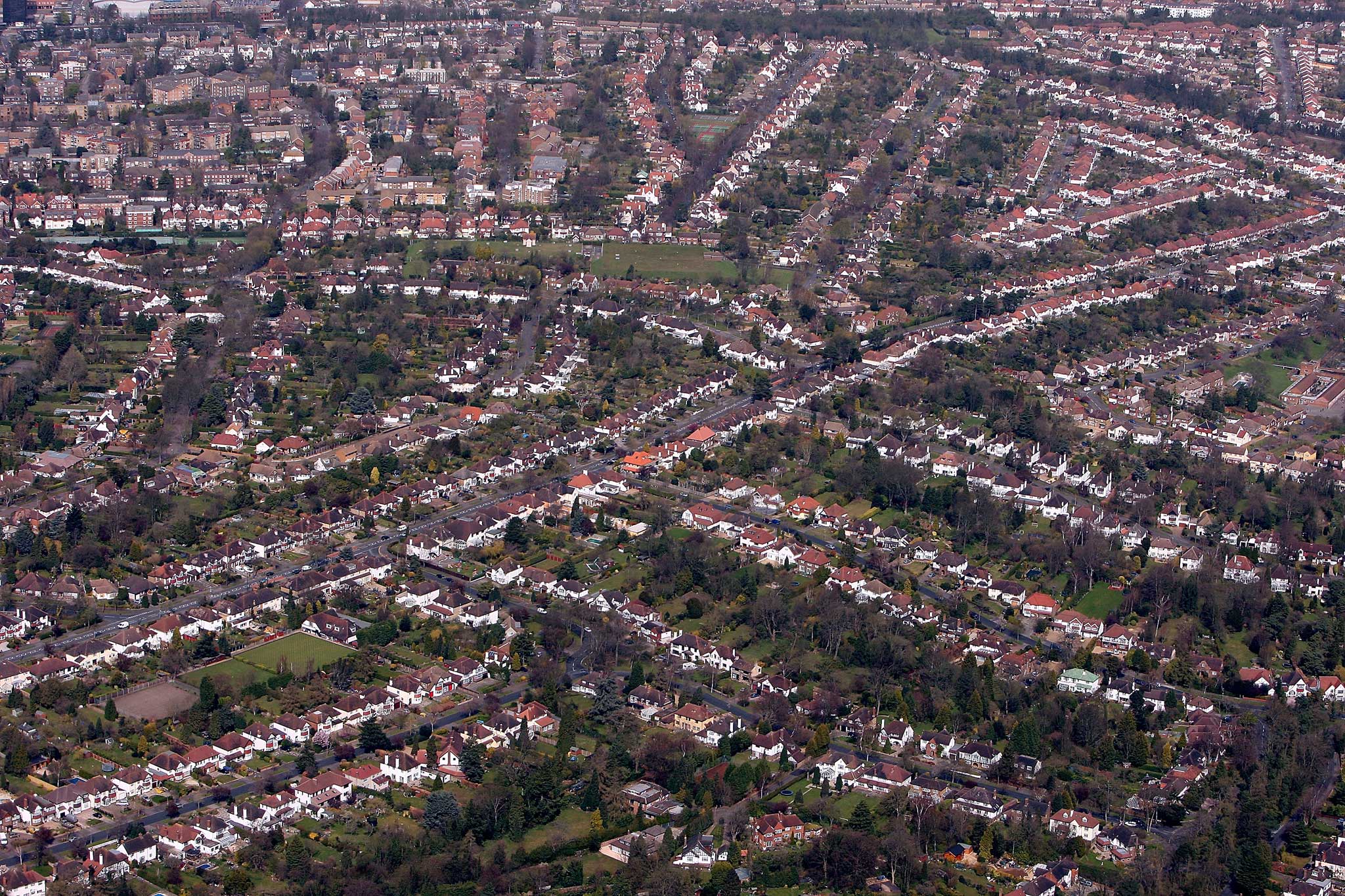
My copy of Nick Barratt's exceedingly stout book was picked up by a number of my colleagues as I wrote this review. They flicked through the pages looking for mentions of their manor and seemed proud when they came across a line on Muswell Hill's cinema, say, or East Sheen's almshouses. Had they looked beyond their own postcodes, they might have been surprised to learn that the London suburb is really very relative: at the end of the Middle Ages, Westminster was a suburban centre of around 3,500.
The fact that anywhere that wasn't originally encircled by the City walls was a suburb quickly makes you realise Barratt's undertaking. Despite the disclaimer that "this is a history of the suburbs and the capital's relationship with them, not a broadly based history of London", his book does an excellent impression of a far-reaching, in-depth yet broadly-based history of London. Whether you've ever wondered about how Joseph Bazalgette's sewer system was rolled out, or why certain districts of London look the way they do, or how the railways changed the way the capital ate, you'll find the answer here – and a great deal more.
One of the many fascinating things about Greater London is the way it reveals that concepts we might think of as thoroughly modern are anything but. Take commuting. "As London and Westminster grew in size in the centuries after the Norman Conquest, they inevitably acted as a magnet for aspiring artisans and professionals. Many moved within the cramped city walls." Some, by contrast, preferred the open spaces. "These were essentially the ancestors of the modern commuter, and one of the earliest we can trace with certainty is recorded in the Domesday Book".
Similarly, the cycle of people moving into the City, moving up in the world, and moving out had been going on for centuries before the Huguenot weavers of the 18th century were replaced by Jewish immigrants in the 19th and the Bangladeshi community in the 20th. "Ultimately, though, there was a limit to just how far out most people could move if they needed ready access to the City and Westminster". Until the coming of the railways, Londoners relied on the old Roman road system but mainly people let the Thames take the strain.
As his epic account of how the capital became the behemoth of greater London unfolds, Barratt reveals the everyday details that turned a Roman trading post into the place we know. While the Great Fire in 1666 gave the city fathers the chance to rebuild the medieval city, it changed more than the buildings. As the displaced flocked to the slums beyond the walls and as an army of "masons, builders and carpenters" flooded in to repair and rebuild, the East End "was transformed. In came the poor and moderately prosperous; out went the nobility." One poorly extinguished fire and a neighbourhood's social standing was wiped out for generations.
You don't have to be a Londoner to enjoy this heroic tale of people – and bricks and train-tracks – triumphing to the detriment of green space. You might need to be more enamoured than I am of local politics in order to relish the ever-shifting status of the Metropolitan Board of Works/London County Council/Greater London Council, but even with this material, Barratt gives an overview of 150 years of bureaucratic spats with a relatively light touch. You certainly don't have to like the suburbs - they have always divided even as they conquered. One of the book's anecdotes sticks in the mind. "Each evening the children's writer E Nesbit would produce models of factories and suburban villas out of brown paper and cardboard and then ritually set fire to them." What Londoners will enjoy is finding their borough in the historical gazetteer at the end. Despite knocking much of the stuffing out of the old aphorism that London is a series of small villages, a brisk account of one's home turf brings out the territorial feelings in most, I'd wager.
Join our commenting forum
Join thought-provoking conversations, follow other Independent readers and see their replies
Comments