Pitt the Elder: Man of War, By Edward Pearce
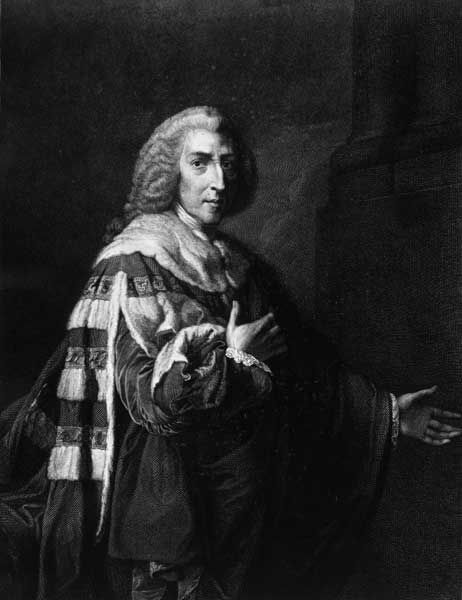
The 18th century is confusing. There were too many people with the same name – at least one William Pitt too many, with almost everyone else apparently called George or, again, William. Conversely, the same people had too many different names, changing them as they acquired peerages. To make identification just that bit trickier, all the men wore wigs, and in formal portraits usually seem to be in some kind of uniform: even if, like this book's main subject, their actual military service was brief, leisured and risk-free. There were far too many wars and battles, some also bearing several different titles, and involving too many European countries which no longer appear on the map and were some of them too small to find even when they did exist...
Edward Pearce's style seems to be infectious, if hard to emulate. Often breezy and flippant-sounding, it nearly always has a very serious intent just below the surface, and works hard to make distant, complex events and obscure characters accessible to the modern reader. Pearce turned historian after a long career as political journalist and parliamentary sketch-writer, and the ways of his first career inform the second.
Indeed, his books have moved steadily back in time, from the politics of our own day to the early 20th century, then the 1830s and now the 18th century. His biography of the Whig politician William Pitt "the Elder" (1708-1778), joint leader of the country and director of its military strategy for most of the Seven Years War of 1756-1763, follows an equally vivid and opinionated study of his predecessor, Robert Walpole. This is certainly not academic history-writing, but in the main is all the better for that – though few popular historians have read as widely, or delved into primary sources or unpublished theses to the same extent as Pearce.
He constantly, often illuminatingly and sometimes wittily, draws parallels between the English politics of Pitt's time and more recent events or personalities. Actually, he does not have to strain very much to make Pitt sound as though he were a 21st-century politician. The near timelessness of his type leaps out at one.
He can so readily be imagined as one of the more unattractive members of a recent, present or future cabinet. The opportunism, the constant back-stabbing and back-scratching of colleagues, the ostentatious parade of belligerent patriotism whose real purpose was so utterly self-interested, the facility in turning an eloquent but empty phrase, even the mental imbalance and borderline psychosis, are all very familiar. So is the pretence – for which Pitt, in his pre-democratic age, may have been a true pioneer – at being a man of the people, always responsive to the desires of the masses.
As that implies, Pearce's idea of Pitt is far from friendly. Even apart from all the personal flaws and dubious motives, he was on this view less grandiose and world-changing a figure than a long-dominant understanding had held. Pearce suggests, I think rightly, that this overblown as well as uncritical image of the man and his career was a distinctively imperial one. Pitt was seen as a, if not the, founder of the British empire. So long as belief in, then nostalgia for, imperial greatness persisted, so did (or does) near-veneration of Pitt's memory.
The true measure of the man is smaller in almost every way. The family letters of his youth, Pearce argues, already give much of that measure. They reveal a man whose patriotism shades into blanket xenophobia, utterly lacking in curiosity or a sense of humour, "an intelligence without an intellectual life". This low opinion of Pitt is not, naturally, something Pearce comes to in splendid isolation. Historians Marie Peters and Richard Middleton, among others, had earlier gone a fair way towards debunking the image, as Pearce acknowledges; though they lacked his verve and wit, or his sharp eye for present-day analogies.
Nor is Pearce's portrait just an exercise in demolition: he recognises some decent qualities and genuine achievements, though insisting that the latter were most often collective efforts, not products of Pitt's lone genius. And he shows some real sympathy for Pitt's public and private disasters, and the travails of his health both mental and physical. Harold Macmillan once said that if anti-gout pills had existed in the 18th-century, Britain might have kept North America, since Pitt was too distracted by his constant pain to realise how badly wrong things were going there. The picture of a statesman too wrapped up in his own troubles effectively to run a country, let alone an empire, is another whose echoes are not only 18th-century ones.
Stephen Howe is professor of post-colonial history at Bristol University
Join our commenting forum
Join thought-provoking conversations, follow other Independent readers and see their replies
Comments
Bookmark popover
Removed from bookmarks