Task Force Black: the Explosive True Story of the SAS and the Secret War in Iraq, By Mark Urban
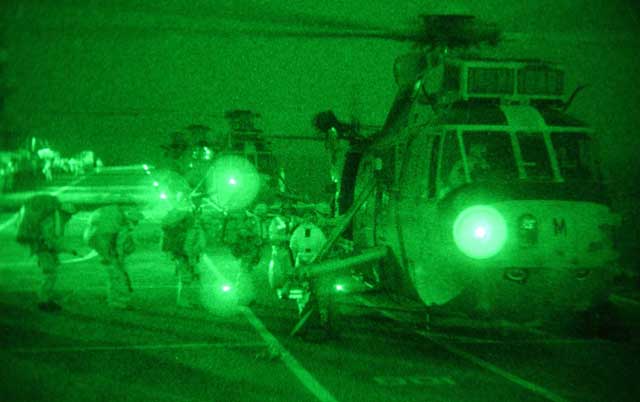
It was quiet, too quiet. The tension was palpable as Mark Urban waited for the inevitable attack. He knew too many secrets and had to be silenced. This, after all, was 'Big Boys' rules, the code of the shadowy and deadly world he had dared to enter - the world of the SAS.
At the end, the Ministry of Defence decided not to take out an injunction to stop the book by Newsnight's Defence and Diplomatic editor on Special Forces operations in Iraq. But the publicity over their attempt to suppress much of the work should boost sales nicely.
Even without that bonus, Urban's book, Task Force Black, deserves to do well. It is the first account, as full as it can be under the circumstances, of the clandestine war waged by the SAS and their Royal Marines equivalent, the SBS, alongside US Delta force in the height of that murderous war.
Mark described the frustrations of trying to get his book cleared with the Ministry of Defence when we were both reporting on an operation alongside the US Marines in Naw Zad, in Helmand, last December. I ran into him two days ago, back here in Helmand, where I am writing this review now, a far happier man with all his hard work at last seeing the light of day.
There is an intrinsic link between the subject of Urban's book and the current Afghan conflict. The man who orchestrated the secret war in Baghdad at the time was the American General Stanley McChrystal, now head of Nato forces in Afghanistan. Some of the lessons he learned in Baghdad are now being applied to Helmand in what is now being described as the defining phase of the conflict.
The reason for the attempts to stop the book from being published, or have eviscerated, to the extent that it became pointless, is long held antipathy to almost any publicity by the hierarchy of the British Special Forces. They have, over the years, battled authors and publishers with varying degrees of success, one of the most notable against a former commander, General Sir Peter De La Billiere, after the first Gulf War.
The reason given is that revealing too many details of Special Forces (SF) operations would compromise security and would also dent the mystique built around the " Who Dares Wins" image. It was hoped that the current Director of Special Forces (DSF) a thoughtful and astute Major-General before his posting, would have brought more openness. But he too appeared to have embraced the prevailing culture and was exercised by Urban's book.
There are, however, some in the ranks of the SAS and SBS who are increasingly of the view that there should be more candour, to get public recognition and plaudits for their triumphs and also to bring some transparency to a set-up where cock-ups are hidden under the cloak of national security.
There is also another reason why the Government would have preferred to have kept a lid on SF activity in Iraq, especially in support of the Americans.
With the rising unpopularity of the war, the British were keen to distance themselves from the perceived excesses of US troops. There was a constant mantra that things were different, less violent, in the UK controlled south of the country. Disclosing that British troops in Baghdad were not only fighting alongside the Americans, but taking part in some of the bloodiest operations, undermines the thesis of British 'moderation'.
Enough SF personnel, most of them retired, but a few also serving, spoke to Urban for him to chart the role of the SF in Baghdad and the killing fields of the Sunni Triangle. It is a world of nightly raids, targeted arrests and killings, a particularly brutal scenario, but all too familiar to those of us in Baghdad at that time of mayhem.
From the outset of the war, the SAS were determined to be positioned in Baghdad. Tony Blair was at first pleased, in the hope that the action men would, at last, turn up Saddam's WMD, the justification given for the invasion by the UK and the US which was becoming a matter of public mirth.
The SAS soon realized the futility of pursuing the mythical WMD arsenal and spending their time hunting down Saddamist officials. The real enemy, ironically brought into Iraq by the US-British invasion, were al-Qa'ida and other Islamist jihadists responsible for the remorseless tide of indiscriminate car bombings and suicide attacks. General McChrystal was going after them and the British troops joined in with gusto.
It is not clear how much of the gory details were passed up the Whitehall chain. However, Urban points out, the British government did prevent the SAS from taking part in one mission -the siege of Falluja, a centre of the Sunni insurgency in 2004. It was deemed that their involvement in the violent images from the protracted fighting, lasting many days, would not be helpful to the propaganda line still being held, that it was the Americans doing the fighting while the British were busy engaged in positive activities like reconstruction elsewhere in the country.
In the end, the policy of buying peace in Basra by turning a blind eye to the excesses of the Shia militias unravelled. The SAS were sent south to help in the planned arrest of a militant leader who had become a policeman and was now running a seditious force within a force. The operation ended in the full glare of embarrassing publicity when two troopers carrying out undercover surveillance were spotted and arrested by the police, necessitating a full scale rescue.
Urban's book catches the tensions which surfaced between various branches of the military and government departments during that crisis and other ones. He also described the internal politicking and personality clashes within the SF ranks and how this shaped the course of operations. This, again, may not be to the liking of the SF hierarchy, but, in reality what it does do is give human faces to a bunch of remarkable men. The mystique still persists, it is just made a little bit more accessible.
Join our commenting forum
Join thought-provoking conversations, follow other Independent readers and see their replies
Comments