The Future, By Al Gore
Office bore he may be, but the former vice-president's policy prescriptions still merit a hearing
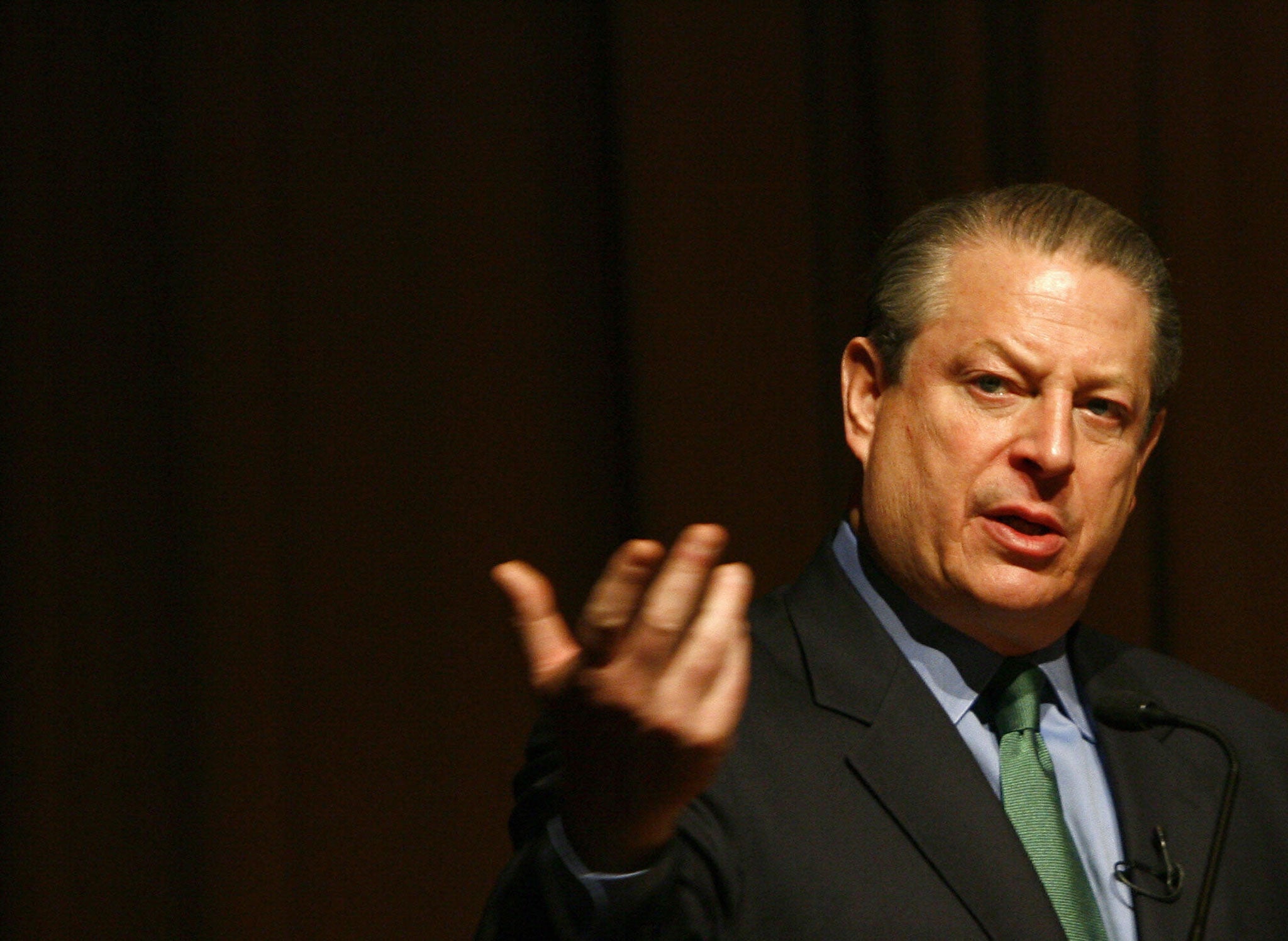
It was with a slightly sinking heart that I picked up Al Gore's 550-page tome, only to realise that it has more than 160 pages of notes and bibliography. This turned out to be good news and bad – good because the book itself is all the more manageable, bad because the former US Vice President has tried to synthesise everything he has ever read about the sorry state of the world. It makes an urgent and important debate just a bit – dull.
Still, despite having unkindly tagged Mr Gore as the office bore, I'm wholly in sympathy with his belief that modern societies have been living for too long on the planetary never-never and the time has come to pay off some of the debts. It's also surely right to try to join the dots between different areas of policy in order to change what an Occupy protestor would call "the system".
The book starts with a summary of six trends that together explain why a moment of choice is looming for policymakers and people. These are: global economic links; modern communications and computers, connecting everything; a new geopolitical balance of power; environmentally unsustainable growth; the development of radical new technologies; and climate change. Each one is developed in subsequent chapters.
The discussion is framed in terms of a timescale far, far beyond any normal policy horizon. "Roughly a quarter of the 90 million tons of global warming pollution... each day will still linger there – still trapping heat – more than 10,000 years from now." That's quite a contrast with the usual focus on tomorrow's headlines or even the next minute's tweets. Given the scale of the challenge, it is hardly surprising, as Gore notes, that so many people feel powerless, even the powerful. Where do you start?
That sense of powerlessness is only intensified by the detail of the individual trends. We are taken through inequality, outsourcing, the rise of China, financial trading by computers, trade policy, agricultural subsidies, nanotechnology, 3D printing, privatisation and the crisis of capitalism in chapter one – and the torrent continues.
Gore repeats the much-loved but untrue factoid that economic growth does not make people happier once a certain income level is reached. On the contrary, there is a strong correlation between GDP growth and well-being, just as between growth and height or life expectancy – it just isn't a one-for-one relationship, otherwise we would be 20 metres tall and deliriously joyous all the time. Accepting the inconvenient truth that we do like growth does not undermine the case for sustainability.
The most interesting parts of the book are about introducing policies to address the multiple problems. Gore does not pull his punches about US politics, with government decision-making "feeble, dysfunctional and servile" to corporate interests. He notes that the provision of public services is the last part of the institutional landscape to benefit from the efficiencies and opportunities offered by digital technologies.
I would have liked more from somebody who has been a very senior politician about the difficulties of introducing, in our hyper-media democracies, policies requiring sacrifices. Top of his to-do list is the need: "To restore our ability to communicate clearly and candidly… about the difficult choices we have to make." He envisages, "Vibrant and open 'public squares' on the Internet". Surely this is someone who hasn't been on Twitter lately? How on earth can people functioning every day on internet time be persuaded to focus on the next 10,000 years?
The other proposals are hugely sensible: a carbon tax, sustainable use of forests and natural reserves, better education for girls, a halt to most of the arms trade, and so on. Reasonable people will agree; we just don't know who will do these things, or how. Let's hope Gore can turn his new book into a hard-hitting documentary that will change the intellectual climate and prepare us all to make sacrifices for the sake of having a future.
Diane Coyle's most recent book is 'The Economics of Enough' (Princeton University Press)
Join our commenting forum
Join thought-provoking conversations, follow other Independent readers and see their replies
Comments