Why Nations Fail, By Daron Acemoglu and James A Robinson
A penetrating analysis of social organisation argues that the West's 'inclusive' states show signs of a relapse.
This is the age of the bold intellectual synthesisers. This book, by two US economists, comes garlanded with praise by its obvious forebears – Jared Diamond, Ian Morris, Niall Ferguson, Charles C Mann – and succeeds in making great sense of the history of the modern era, from the voyages of discovery to the present day.
The essential message is simple: that there are two kinds of states: extractive and inclusive. Extractive states are locked into a vicious circle of kleptocracy, suppression of technological innovation and economic and personal freedom. Consequently, they are extremely poor. Inclusive states have no single centre of power but are innovative and prosperous thanks to the jostling of competing interests under the rule of law and secure property rights.
The reason that inclusive states are far more successful than extractive ones is the concept popularised by Joseph Schumpeter and recently misappropriated by Mitt Romney: creative destruction. Of course totalitarian societies are good at destruction – the kulaks can be liquidated. But creative destruction means challenging vested interests to develop a better way of doing things. It means replacing canals with railways, steam engines with electric, typewriters with word processors. It means that once-proud companies and sometimes whole industries go to the wall when the mode of the technology changes but the overall result is more widespread wealth.Poignantly for this reviewer, the hero of the book is England: the pioneer inclusive state.
Inclusive states virtually all stem from just two models: Britain and France. Together, they ensured that Western Europe would eventually become inclusive and British colonialism spawned inclusive states in North America and Australia. These are still pretty well the only such large states, with the exception of Japan, which began the process in the late 19th century and joined the club after the Second World War. The dirty secret of the inclusive states is that they are only inclusive at home: the authors mercilessly expose the viciously extractive economies they instituted in their colonies. One of the starkest lessons is that even when independence or revolution comes to extractive states, the new regime merely appropriates the corrupt power structure for its own ends.
The one weakness in an otherwise even-handed account is a blind spot with regard to the US treatment of South America. The legacy of the plundering conquistadores is repeatedly cited as the cause of South America's failure to develop fully inclusive societies. You will find no mention here of the Monroe Doctrine whereby the US claimed the right to regulate life in South America, or the Bay of Pigs invasion, or the Nicaraguan Contras, or the CIA and Pinochet, or exploitative US corporations. Over all recent books proclaiming the virtues of the Western Way hangs the question: why does it appear to be going wrong?
The frontrunners of the inclusive society, Britain and America, are showing worrying signs of lapsing into extractivism. Whereas a Henry Ford knew that there was no point in making cars by the thousand if people like his own workers couldn't afford them, the gap today between the very rich and the rest has widened to the point that the elite don't need incomes to be widely spread to enhance their own riches.
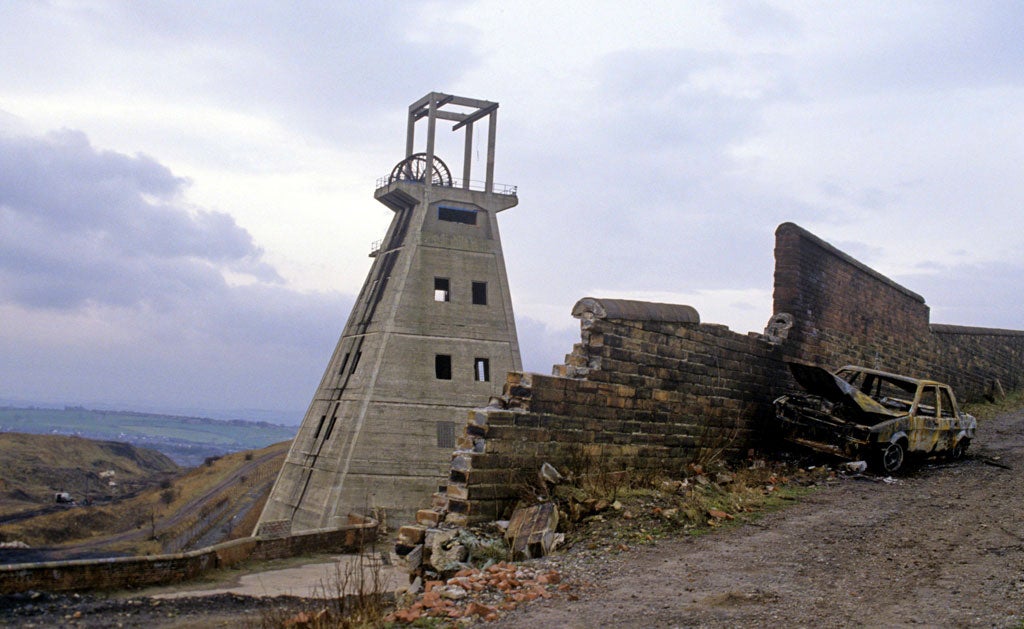
What is the shadow banking economy with its mega-bonuses and dodgy financial instruments but an extractive economic system, warping the inclusive economy for the benefit of a few? In Britain: the era of growth in our inclusive structures came to an end with Mrs Thatcher, who undermined sections of the economy – coal, steel, railways and other heavy industries – that produced a culture (ie Labour voters) that she deplored. She put nothing tangible in their place.
Why Nations Fail deserves to be hugely influential: it has what the physicist and philosopher David Deutsch calls reach, meaning that it can be applied to areas beyond its initial terms of reference. Acemoglu and Robinson's ideas could be applied to the questions of why the wars against drugs and gang-related knife and gun crime have also failed. These are microcosms of the big picture, very powerfully painted.
Join our commenting forum
Join thought-provoking conversations, follow other Independent readers and see their replies
Comments
Bookmark popover
Removed from bookmarks