Yundi Li: 'I think I'm not a normal artist'
Two young Chinese performers are taking the world of classical music by storm. But while the international superstar Lang Lang thrives in the spotlight, Yundi Li prefers to let the purity of his pianism do the talking
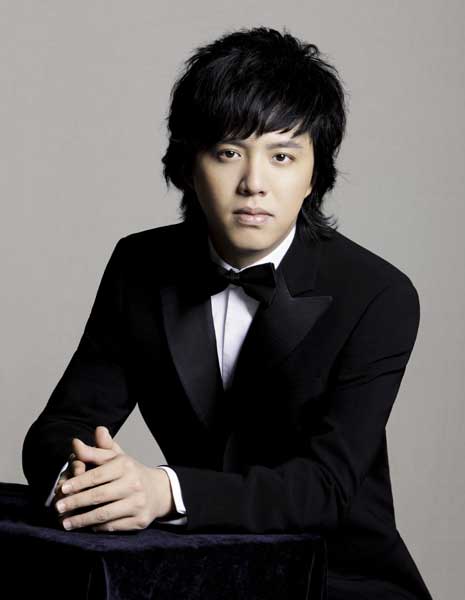
Which famous Chinese pianist was born in 1982? Easy: Lang Lang. But another Chinese pianist was also born in that year, whose victory aged 18 in the Warsaw Chopin competition earned him the title in China of "Prince of the Piano". Step forward Yundi Li, gracefully reserved where Lang Lang is punchily ebullient: this pair are now Chinese pianism's sun and moon. And like those spheres, they have never met (apart from one chance encounter in an airport lounge). They are signed to different labels: Lang Lang is proudly championed by Deutsche Grammophon, while Yundi Li – formerly brandished by that company in the same way – will this month make his debut as a star for EMI. But while Lang Lang's publicity machine has broadcast his story to every home in the Western world, Yundi Li's is virtually terra incognita.
The way Western classical music took root in Yundi's infant soul was as mysterious as its start-stop-start implant in the Chinese national psyche. That story began in 1601, when an Italian Jesuit named Matteo Ricci sailed into Beijing with the gift of a clavichord for the emperor. It was designed to win hearts and minds for Jesus, but the emperor found the music it embodied intriguing: when other Jesuits installed church organs and set up string ensembles, Western music took root.
A century later, Emperor Kangxi learnt to play the harpsichord, and a century after that, Emperor Qianlong found an ingenious way of melding the traditions, by having his home-made eunuchs sing the castrati roles in an Italian opera. For the next 100 years, missionaries, traders, and diplomats continued this musical imperialism, but what gave Western music its real lift-off was the influx of Russian refugees – Jews and Tsarists – after the Bolshevik revolution: in the 1930s, the Shanghai Municipal Orchestra was one of the smartest ensembles in the world. The communists first smiled on their home-grown "Western" musicians, then persecuted them for championing the music of capitalism: Debussy and Beethoven were decadent, so those who played them were decadent too. Violinists and pianists had their fingers and wrists broken; conservatory professors were induced to commit suicide. Only when Western music was deemed to symbolise "modernity' did Chinese communism smile on it once more.
As the son of a steel worker in provincial Chongqing, Yundi Li was born into a world permeated by Chinese folk music and pop, but at the age of three, he was suddenly entranced by the sound of an accordion. His parents bought him one, and two years later he won a competition with it. Then he chanced to hear someone practising the piano. "I had never heard a piano before," he says. "And this sound, with its rich range of colour, was instantly very special for me. I hung outside the window for half an hour, drinking it in."
His words tumble out quickly and eagerly, with self-deprecating charm. The contrast with Lang Lang – for whom an interview is a tiresome formality prior to the more serious business of a photo-shoot – could not be greater.
Had he been raised in Britain, Lang Lang would have been put on the abused-child register for the way his raveningly ambitious father treated him – throwing his toys out of the window when he was five, and at one point ordering him to jump to his death from a balcony when he'd been rejected by a teacher. Yundi Li's parents, on the other hand, were devotedly supportive: his mother gave up her job to look after him while he studied at the Sichuan conservatory, but she and his father seem to have put him under no pressure: "They just tell me to enjoy my life." He stayed from eight to 18 with the same teacher, Professor Dan Zhaoyi, during which time he won a string of competitions, including the Stravinsky Youth Competition when he was 13, the Utrecht Liszt competition at 17, and the Warsaw one the following year.
Meanwhile, Deutsche Grammophon had signed him and began to spend a fortune marketing the CDs he was now starting to record, of Liszt, Mozart, Schumann, Prokofiev, and above all Chopin to critical acclaim. America and China were the big promotional targets, with DG's imagery first styling him as an androgynous virgin, then as an Asian drug baron; his likeness has been installed in the Shanghai Madame Tussaud's, and he has been appointed "image ambassador" for Super Boy – China's answer to Pop Idol. "They want to hold me up as an example of what Chinese children can achieve, so I play for them, to show that the dream is not so far off," he says. "With talent and hard work, your dream can come true."
He is also sponsored by Rolex, adding the virtuous proviso that, for their side of the bargain, they must subsidise music teaching in rural China. "I told them I did not want to do promotions for them – I just play the music I love. I am more interested in communication than promotion. That is why I am now happy to talk to journalists." At one point, he says, interviews were a trial, as he couldn't bear the "misrepresentations" which resulted. "Sometimes I just don't want to talk." Is this, I wonder, why Deutsche Grammophon dropped him? "No, that was simply a business decision by my management." He pauses, then offers an amused observation: "I think I'm not a normal artist. My moods are not always the same." Perfectly normal, I would have thought, but at this point his EMI publicist, who has been monitoring the conversation, eyes him beadily. I sense a backstage story here (only room for one Chinese piano superstar on the DG list?) which later enquiries fail to elucidate.
But Yundi sounds relaxed about his ubiquitous rival: "He is very warm, a very shining boy. But we have different philosophies, and we are made in a different way. He likes playing in big stadiums, but I like small gatherings, small details." Chopin, he says, is his chief role-model. "He did just one thing – writing for the piano – and was the best at it. And his life was very high quality too – everything elegant, with fine clothes and beautiful apartments." Like yours? "Maybe. I must have the right designs for the height of my rooms. And I like powerful cars." Big Mercs and Ferraris, to be precise. Would Chopin have had a Ferrari? "I think so." Do you seek solitude as he did? "Quite a lot. Alone in my flat, I like to drink tea in the Chinese way – with all the right details, and the right ceremony, to give myself quiet focus, with maybe some jazz in the background. And I like listening to Verdi, with good red wine."
As the picture of this aristocratic young man becomes clear, one senses the problem he poses for his would-be promoters. He presents reason rather than pizzazz, and restraint at the keyboard rather than the sighing, eye-rolling histrionics of a Lang Lang; Yundi Li's disdain for the publicity game is all too apparent. Is he a better pianist than Lang Lang? The latter has a wonderful talent, but he's in danger of dissipating it with his 100- Steinway stunts in the showbiz stratosphere. As Yundi Li's fine new CD of Chopin's Nocturnes demonstrates – and as we shall doubtless discover in his forthcoming Chopin recital at the Royal Festival Hall – what he has to offer is exquisite pianism, pure and simple.
Yundi Li plays the Royal Festival Hall on 16 March; his Chopin Nocturnes are released by EMI.
Play it again, Qian: China's brightest stars
Yundi Li and Lang Lang head a growing number of outstanding Chinese pianists, including Wu Qian, 25, and Yuja Wang, 22. Both began their training in Chinese conservatories but spent their teens in the West – Wu at the Menuhin school and Royal Academy, Wang at the Curtis Institute – and their approaches to music are Westernised and intellectual. Both are articulate about art and literature, as well as music, and both have notably independent minds. Their recorded repertoire overlaps in Liszt, but Wang tends towards the translucency of Ligeti, and is currently recording Stravinsky and Ravel, while Wu is most expressive with Schumann.
Join our commenting forum
Join thought-provoking conversations, follow other Independent readers and see their replies
Comments
Bookmark popover
Removed from bookmarks