How to dub a film
Subtitling and dubbing dialogue are vital skills. Get them wrong and you could mangle a classic scene, says David Crookes
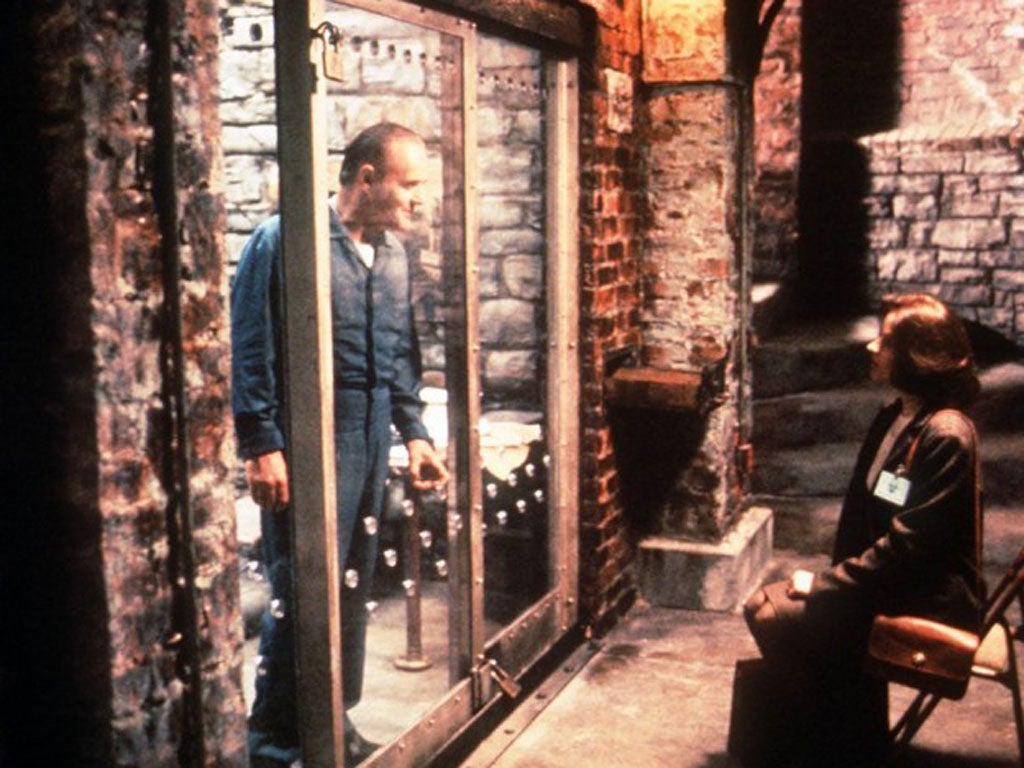
Not even a dub could save The Girl with the Dragon Tattoo from falling prey to one of Hollywood's raids on foreign language films. Just as Insomnia, The Ring and even True Lies were respun with English-speaking actors, so the Swedish-language film version of Stieg Larsson's novel is being repackaged for a worldwide audience as movie-makers hope to better the US gross of $10.1m and the paltry £1.5m it made in the UK.
The English-language remake has already caused something of a stir, with fans believing Neils Arden Oplev's original to be a definitive screen adaptation. They say giving English speakers the option of watching with either subtitles or dubbing has made the film accessible enough.
Certainly dubbing is rather unusual. UK and US audiences tend to be shown foreign films with subtitles and dubbing is generally left for movies and television series aimed at children. The reason being that, as audiences grow older, they prefer to hear a film's original language which gives a sense of place and adds to the atmosphere of a film.
There have been notable exceptions – spaghetti Westerns had international casts that would act in their own languages so studios would dub Italian voices into English and vice versa – but even when English-language dubbing is available, such as with the Mandarin film Crouching Tiger, Hidden Dragon, movies tend to be subtitled when shown in cinemas or broadcast on television in the UK.
"There is clearly an established market for subtitled foreign-language films, and research by theatrical distributors has concluded that the audience responds better to films in their original language," says Sue Deeks, head of programme acquisition at the BBC, who has brought foreign-language hits such as The Killing and Spiral to UK audiences.
"If a film is released commercially in a dubbed format we would certainly consider transmitting it in that version, but in our experience, while dubbing has undoubtedly improved over the years, audiences still prefer to experience the authentic voice and language of the actors and the real flavour of the culture or country they are from."
Although the number of dubbed foreign productions in the UK is low, the reverse is the case in some other countries. In Italy, France, Spain, Turkey, Hungary, Ukraine, Czech Republic, Slovakia, China, Iran, Russian-speaking countries and Francophones in Quebec, dubbing is so commonplace that some voice artists are even assigned to specific actors.
Dominique Paturel has replaced Michael Caine's London twang with French in 40 of his films, starting with The Ipcress File in 1965, and he is well-known in his own right.
Some want greater recognition. German voice artist Marcus Off, who regularly dubs actors such as Ralph Fiennes, Sean Penn and Michael Sheen, felt so under-appreciated in his work dubbing Johnny Depp in the German release of Pirates of the Caribbean that he sued Disney. Off wanted €180,000 – 10 times what he was paid for the work, claiming that his voice had been key to the film's success in Germany.

Watch Apple TV+ free for 7 day
New subscribers only. £9.99/mo. after free trial. Plan auto-renews until cancelled.
ADVERTISEMENT. If you sign up to this service we will earn commission. This revenue helps to fund journalism across The Independent.
Watch Apple TV+ free for 7 day
New subscribers only. £9.99/mo. after free trial. Plan auto-renews until cancelled.
ADVERTISEMENT. If you sign up to this service we will earn commission. This revenue helps to fund journalism across The Independent.
"Often the production companies retain the same voice talent to ensure continuity unless the talent is sick or demands more remuneration," says voice actor Mohd Sheikh, who works for the dubbing company Media Movers. "Dubbing is a tricky art. Emoting with more focus on matching the lips can be an arduous task."
The decision over whether to dub or subtitle sometimes goes beyond creative preferences. Foreign languages were banned in Mussolini's fascist Italy so films were dubbed into Italian. Since the early 1960s, foreign language films have been prevented from being dubbed into the Kannada language in India to protect the domestic film industry.
Dubbing was also prohibited in Portugal in 1948, again for protection, but subtitling was allowed. Films were also censored so that some sensitive words – such as communism or colonialism – were replaced.
Dubbing does not always follow take original dialogue and translating it literally into another language as with Japan's cult television hit Monkey, for instance. Actor Eric Thompson took the French animation The Magic Roundabout (Le Manège enchanté) and narrated it using the visuals alone, discarding Serge Danot's original scripts, which would have cost the BBC more money.
This is common in Germany, which has more foreign movie dubbing studios than anywhere else in the world. The Persuaders television series added humorous elements to the original English version and it is not unusual for sexually explicit gags to make their way into German dubs.
"Germany has a lot of such readaptions," says Sameer Bhardwaj, a foreign language dubbing consultant. "Intellectuals tend to go on internet forums saying how the jokes are badly translated or the entire story and concept has changed but most viewers never knew about the original language, joke or concept and them it's always a new dish to be tried and appreciated."
There are many examples of bad dubs and not necessarily regarding foreign language conversions. Films re-dubbed for television often have swear-words removed ("That guy's a serious asshole" in Robocop was replaced with the softer "airhead"). The characters of Honey Rider, Blofeld, Goldfinger and Marc-Ange Draco in the James Bond movies were dubbed by British actors.
Some dubs are performed to make them more attractive in particular countries. In Shrek 2, Doris, the ugly stepsister, was voiced by Jonathan Ross in the UK and Larry King in America. Miramax, the distributors of Trainspotting, feared that American audiences would find the Edinburgh vernacular incomprehensible, so asked its British producers to dub parts of it.
"Dubbing in general is a regional thing," says Jane Crowther, acting editor of Total Film. "While we don't have a history of it in the UK, other regions systematically dub English language films, television and games into their native tongue, making celebrities of the voice actors who exclusively dub the stars and tweaking the material to reflect the sense of humour and culture of the country. It's expected and accepted."
Hollywood movies are dubbed for around 90 per cent of non-English-language territories, according to Variety. It has put pressure on the thriving dubbing studios especially given blockbuster films are dubbed into more than 30 languages. In India alone, a film such as Spider-Man 3 can be dubbed into as many as four languages: Hindi, Tamil, Telugu and Bhojpuri. Constant production tweaks to movies and late shipping puts causes greater stress.
How much work is involved depends on the type of dub. "Some prefer voice-over dubbing instead of lip-sync dubbing," says Ken Lorber, CEO of dubbing studio The Kitchen. "This where the original dialogue is lowered but still maintained under the voiced over dialogue. Others prefer a lector approach whereby a narrator describes what is being said in a story description, spoken over the original dialogue. This is common in Russia and some eastern European countries."
Studios have increasingly turned to technology. Media Movers and The Kitchen have software which can automatically sync dubbed tracks. "At best, dubbing is an imperfect art," says Lorber. "Regardless of the efforts, transferring dialogue from one language to another will always yield lip sync issues, as different languages require different lip movements to form each word. What is critical is that when an actor on screen begins to speak, the dubbed words begin to be spoken."
Christoph Bregler, associate professor of Computer Science at New York University, has worked on a system called Video Rewrite which hopes to solve the lip-movement issues. It changes the on-screen lip and facial movements of actors depending on the dub. The original actor looks as if they are saying the dubbed version.
"I grew up in Germany and was used to seeing all the Woody Allen movies in German," says Bregler. "When I moved to the US 21 years ago, I was surprised how Woody Allen really spoke. Video Rewrite aims to have a more perfect dubbing so it has wider acceptance."
Human intervention is still vital. "Lip syncing is difficult and time consuming," says Nikolay Ivanov, CEO of Bulgaria-based Graffiti Studios. "There are software programs that semi-automate the process but the final touch is always human. A bad dub is able to ruin even the greatest content. Bad translation, bad casting, poor quality control – these all lead to a bad dub.
"Things are changing, though. Although offering both subtitling and dubbing is double expensive, modern technology is enabling that to become cheaper." The message from the dubbers is clear, read our lips, we're only getting better.
How dubbing works
Typically a dubbing studio will view an entire film. A project manager will review the material, the translation department will find the best translator and the artistic director will be made responsible for the production process.
Once the script has been written – it is adapted and timed for the recording process – auditions are held for dubbing actors. Studios like The Kitchen uses technology to record each actor individually with the artists viewing the original video on screen and listening to the foreign dialogue via headphones ("Sometimes the dubbed lines need to be rewritten in order to achieve this in a session if the timing is off," says voice actor Trish Basanyi).
The artists are able to see and hear the dialogue surrounding their segment in order to get into character and once the recordings have been made, they are sent to be lip synced and reviewed. Care has to be taken to create the ambiances of the voice quality too, ensuring, for example, that a character in a gym sounds doesn't sound as if he's in a small office.
Join our commenting forum
Join thought-provoking conversations, follow other Independent readers and see their replies
Comments
Bookmark popover
Removed from bookmarks