The greatest docu-show on earth
This is a key moment for film documentary. As the global players gather in Sheffield for the Independent-sponsored Doc/Fest, it is clear that Britain leads the field – but, warns Simon Usborne, the hits may dry up if funding falls foul of the credit crunch
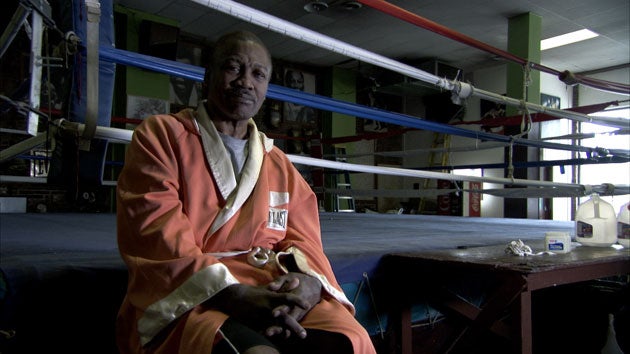
In 1969, a fresh-faced university student from London takes a train to Liverpool. Armed only with a borrowed Bolex wind-up film camera and a pile of "short ends" – the unexposed off-cuts of used film stock – he spends three months recording the slum clearances of Liverpudlians from inner-city terraces to suburban high-rises. For the next two years he works nights to turn his footage into an 18-minute cut. And then comes the hard part for any film-maker – finding cash.
"I just needed 200 quid and the use of an editing room to get the film finished," says Nick Broomfield, who, almost 40 years after shooting that film, Who Cares, has become one of Britain's foremost documentary-makers. Help for Broomfield came after a meeting with the grandee of British documentary, the late Sir Arthur Elton, who directed the student to the doors of the British Film Institute. After a series of meetings, Broomfield had his money and his studio. A career was born.
Today's documentary film industry has changed almost beyond recognition since Broomfield cut his teeth. Some say we are enjoying a golden age of British documentary. If they are right (and others think the art form is in peril), then boom town is surely Sheffield. Next Wednesday, the South Yorkshire city will open its doors to the biggest wigs and brightest hopes in international documentary-making, providing a platform for the budding Broomfields of today to share their work with audiences and industry leaders.
"There was no such thing as Sheffield back when I was starting out," Broomfield recalls. Indeed, it wasn't until 1994 that the British documentary film industry got its own festival. Now in its 15th year, Sheffield Doc/Fest, as the five-day event is now called, has become the most important entry in the calendar of film-makers, producers, directors, buyers, commissioners and distributors, not only from Britain but all over the world.
For Nick Fraser, editor of the BBC's lauded documentary strand Storyville, Sheffield offers something other festivals don't. "The Edinburgh television festival has become fantastically corporate," he says. "The bulk of people who go there come from marketing departments of big independent film companies or the networks. They're not so interested in discussions about serious TV and factual film and what they're supposed to do. Sheffield has taken over that role."
Broomfield and Fraser are not alone in singing the praises of Doc/Fest. And if it is an industry barometer, this could indeed be called a golden age. Excitement surrounding British documentary-making probably peaked earlier this year when Man on Wire, a documentary about the quixotic performer Philippe Petit's 1974 wire-walk between the two towers of the World Trade Centre in New York, became a hit. Last week the film, which swept the awards when it premiered at this year's Sundance Film Festival, had taken a healthy $4.3m (£2.8m) worldwide. Critics on both sides of the Atlantic heaped praise on the film, which was directed by Cornish-born James Marsh and produced by another Briton, Simon Chinn.
"This is a really exciting time for British documentary," says Jess Search, head of the Channel 4 British Documentary Film Foundation and the BritDoc Festival, where Man on Wire won best film last summer. "We have no problem getting top US buyers coming to BritDoc because they know we've got the best film-makers in the world right now. The Brits are taking over."
Mark Cousins, the film-maker and co-author (with Touching the Void director Kevin Macdonald of Imagining Reality: Faber Book of the Documentary) says it is "no accident" that the industry is thriving. "Britain is a good training ground for this kind of work," he says. "There's something about the modesty of film-making ambition here; they think that if they keep close to the contours of the real world and stick to real stories, then they can do something splendid. I think that's what's happening here. Man on Wire or Touching the Void are stories from the real world."
Touching the Void, the heart-stopping account of two climbers' fateful (and near-fatal) Andean expedition, is the film to which Man on Wire is most often compared. Both were low-budget films with big-budget qualities that told uplifting tales of the deeds of extraordinary men, using a mix of reconstructed footage and interviews. Both were hugely successful, and are held up as the shiniest British nuggets of this supposed golden era.

Watch Apple TV+ free for 7 day
New subscribers only. £9.99/mo. after free trial. Plan auto-renews until cancelled.
ADVERTISEMENT. If you sign up to this service we will earn commission. This revenue helps to fund journalism across The Independent.
Watch Apple TV+ free for 7 day
New subscribers only. £9.99/mo. after free trial. Plan auto-renews until cancelled.
ADVERTISEMENT. If you sign up to this service we will earn commission. This revenue helps to fund journalism across The Independent.
But not everyone is convinced that those taking the pulse of the industry are listening in the right place. "I'm delighted by what Man on Wire did, but you have to realise that this is a niche of a niche," says Nick Fraser, who helped to fund the film (Storyville, the UK Film Council and the US studio Discovery Films split the bill). "It will make money and be shown in God knows how many countries, but I still say that documentary as a whole is up against it. It's a very tough environment."
And Fraser knows a tough environment when he sees one. Storyville, which he founded more than 10 years ago, started its latest run on BBC4 last week with the first of 25 films to be shown over the next year rather than the usual 40. A year ago, the BBC cut Fraser's budget from £2.2m to a little over £1.5m.
The move outraged viewers and the industry. Thousands signed a "Save Storyville" petition, and Macdonald called the cuts "nothing short of vandalism". The director Werner Herzog said it would be "a catastrophe".
The episode showed two things: first, that Storyville, whose more than 340 films (they include Hoop Dreams, The Fog of War and When the Levees Broke) have won five Oscars and two Emmys, has become one of the most respected names in the industry and a byword for cutting-edge documentary; and second, that if such a big hitter should come under threat, the art form is indeed facing a serious funding crisis.
"I think there was a moment, about four years ago, when I thought it would become less difficult. But it hasn't," says Fraser. "Getting hold of enough cash to do that enormous film about Polanski [Roman Polanski: Wanted and Desired opened the new Storyville run last week] was very difficult. You can still do it and we're not at death's door; it's just that each year it gets slightly harder." And it's tougher for people without Fraser's name or experience. "Young people who are quite talented give up because they think they can't do it, and that's sad," Fraser says.
There's no doubt a recession will be bad news for documentary, but some say there's more to the funding shortfall than the credit crunch. Broomfield believes that much of the money is still there; it's just harder to get at. "In the earliest days, documentaries were much more part of our culture and were funded largely by the government or by public institutions – the classic Night Mail [1936] was made by the Post Office which, like most institutions, had its own film unit. Today, the UK Film Council doesn't seem to think documentary is its responsibility. It's happy to put money into Man on Wire, which is obviously a commercial film, but what about the small documentaries?"
Broomfield says institutions that used to give a leg-up to budding documentary-makers now look to television to foot the bill. But the TV companies are also making cuts as falling advertising revenues lead to dwindling budgets across the media. And, Broomfield says, they have other priorities: "TV is a big hungry beast, but reality shows, which are cheap, charlatan shows masquerading as documentary, have taken over. Film-makers coming out of film school are offered rubbish to do by TV that is way under their training."
This, Broomfield and Fraser say, is why Sheffield Doc/Fest has become so vital. "It helps people to get in touch with potential backers," Fraser says. "They have a thing called the MeetMarket where you can meet overseas funders. It's also about finding out what people are thinking and what they want to do. I get to meet a lot of people who desperately want to tell me about V C their films and even if I can't help, I can suggest someone else."
This new approach to funding has resulted in far more collaborations than there used to be. Cash-strapped networks club together and, if their money turns out to be well spent, they share the plaudits.
Lean times are leading to other innovations, including a return to the sponsored feature. Classics such as Karel Reisz's We Are the Lambeth Boys (1958) and Humphrey Jennings's Listen to Britain (1942) were sponsored (by Ford and the government respectively). Though not a documentary, Shane Meadows's recent feature Somers Town was sponsored by the Eurostar train service. A special session at Sheffield will discuss what role sponsorship might play in the future of British documentary.
Heather Croall, director of Sheffield Doc/Fest, is the person credited with breathing new life into the event. For her, it's about much more than money. "In general, film-makers go a few years between productions and the survival rate is quite low. You have to do whatever you can when you're not getting the chance to make the documentaries you want to make. Sheffield is the one time when they can walk away feeling re-energised, invigorated and inspired."
But inspiring young film-makers to keep going is one thing; engaging young viewers is quite another. Croall is tackling this challenge with missionary zeal. She's right to be concerned; according to a survey carried out for the BritDoc festival, 60 per cent of TV documentary viewers are aged 55 to 64. "Where are the audiences of the future?" Croall asks. "Today, you're competing with thousands of different things appealing to young people. We have to be innovative to capture them."
Innovation at Sheffield comes in the form of DigiDocs 360, the festival's attempt to match traditional documentary-makers with people from the digital world. "Sometimes they take some convincing, but when the industries come together you get innovative work," Croall says. She admits that nobody knows exactly where this marriage will take the industry, but cites one recent project run by the BBC's Natural History Unit. A group of schoolchildren were given hand-held units that showed images of the African savannah. As the children roamed their playground, they discovered new beasts and were quizzed about them. The only way to get better at the game was to go back into the classroom to learn more.
The DigiDocs scheme might be far removed from the kinds of films that define the genre, and Croall is keen to promote those as well. At every festival, a youth jury selected from applicants at road shows across the country give their verdict on a handful of films from the line-up. Before the festival the 12 jurors, aged 17 and 18, go to a summer workshop attended by some of the big names in the industry. "It's an amazing opportunity," Croall says.
Just what Croall and Sheffield can do to address the crisis in funding and the apparent disengagement of young people remains to be seen, but those who work in the industry do not doubt that it is vitally important to protect the genre. "We sometimes forget that the true purpose of documentary is to record the history of our time and country," says Broomfield, whose most recent film, Battle for Haditha, is among the 100 films showing in Sheffield. "These things might not always be the most obviously entertaining, but it is nonetheless incredibly important to record our national heritage."
How to book for Doc/Fest 2008
The 15th Doc/Fest at The Showroom in Sheffield next week is set to screen a wealth of inspirational documentary films from around the world. All screenings are open to the public. This year, the festival (from 5 to 9 November) is scheduled to coincide with the result of the US presidential election; it will present several films and panel discussions on the theme of regime change.
Doc/Fest, in association with The Independent, also offers an industry programme and marketplace, providing pitching opportunities, discussion panels and film-maker masterclasses to those attending as delegates. Online registration for delegates closes at midnight tonight.
Advance ticket reservation is advised for all screenings (see https://sheffdocfest.com/ or call the Showroom box-office on 0114-275 7727).
Join our commenting forum
Join thought-provoking conversations, follow other Independent readers and see their replies
Comments
Bookmark popover
Removed from bookmarks