Mystery behind Hitchcock's Birds is solved at last
Scientists link eerie avian suicides of 1961, which inspired cinema classic, to poison in the food chain
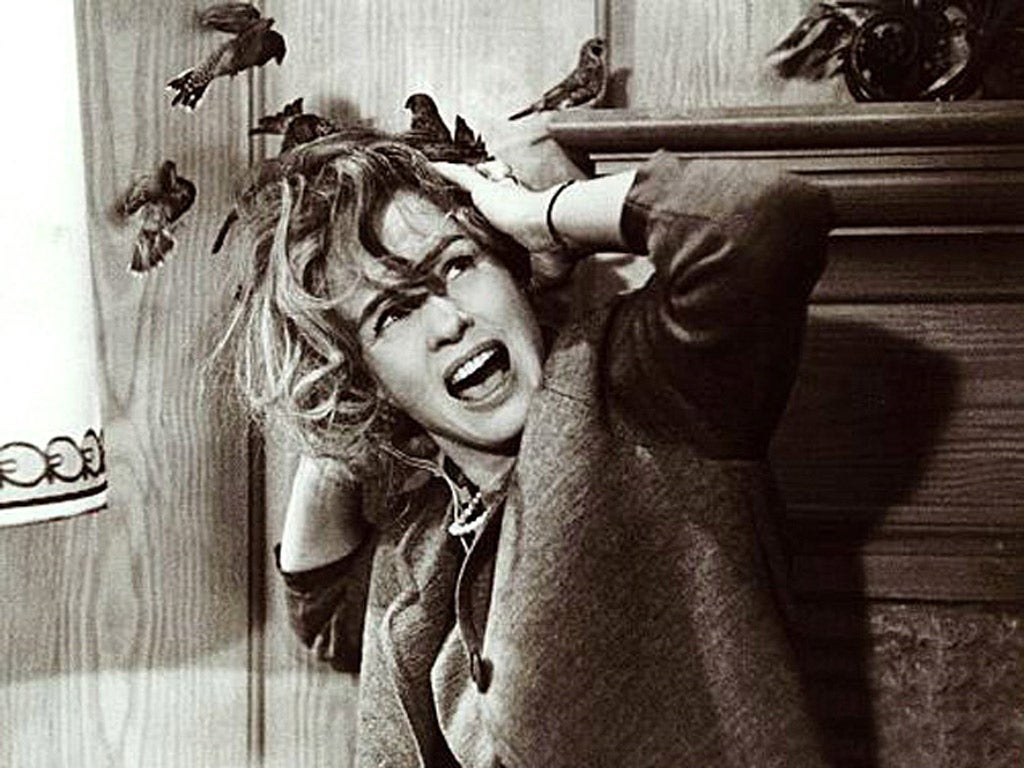
It has taken 50 years, rather than the shorter running time of one of his famous horror films, but Alfred Hitchcock's most enduring whodunit appears to have finally been solved.
Scientists at Louisiana State University claim to have discovered why thousands of seagulls began killing themselves along the coast of northern California in the summer of 1961.
The mysterious avian deaths, in which many of the birds flew, Kamikaze-style, into houses along the Monterey Bay shore, south of San Francisco, were cited as one of the major inspirations for Hitchcock's 1963 film The Birds.
Now a team of marine biologists, who have been conducting post-mortems of seabirds killed during the1961 incident, have reached a credible conclusion about their deaths: the creatures were poisoned.
Writing in the latest edition of the journal Nature Geoscience, the researchers say that they examined the stomach contents of seagulls and turtles collected during the period, and discovered unusual quantities of a nerve-damaging toxin called domoic acid. The acid, which most likely came from anchovies and squid which formed part of the birds' natural diet, can sometimes cause brain damage. In severe cases, it leads to them becoming confused, suffering seizures, and dying.
Sibel Bargu, leading the research, said domoic acid was found in 79 per cent of the plankton ingested by anchovies and squid. Over a short period, that would become sufficiently concentrated to cause fatal injuries to predators who ingested the creatures.
Although this theory has previously been cited as a potential explanation for the 1961 event, Ms Bargu writes, no direct evidence has been obtained by scientists to support it. Until now. "Here we show that plankton samples from the 1961 poisoning contained toxin-producing Pseudo-nitzschia, supporting the contention that these toxic diatoms were responsible for the bird frenzy that motivated Hitchcock's thriller," she writes.
A similar toxic bloom is already known to have caused avian deaths in the same area in the 1990s, while in 1989, domoic acid was found to have contaminated mussels which killed four people on Prince Edward Island in Canada.
The spectacle of the dying birds was witnessed by Hitchcock, who took other elements of the film's plot from a Daphne du Maurier novel called The Birds.

Watch Apple TV+ free for 7 day
New subscribers only. £9.99/mo. after free trial. Plan auto-renews until cancelled.
ADVERTISEMENT. If you sign up to this service we will earn commission. This revenue helps to fund journalism across The Independent.
Watch Apple TV+ free for 7 day
New subscribers only. £9.99/mo. after free trial. Plan auto-renews until cancelled.
ADVERTISEMENT. If you sign up to this service we will earn commission. This revenue helps to fund journalism across The Independent.
Confusion still reigns about what caused the toxins to become present in seawater in the first place, however. The usual culprit would be pesticides from farmland. But researchers note that there was a house-building boom in the area at the time, and wonder if leaky domestic septic tanks were instead to blame.
Join our commenting forum
Join thought-provoking conversations, follow other Independent readers and see their replies
Comments
Bookmark popover
Removed from bookmarks