Stream-age kicks: Is Spotify a musician's friend or foe?
As sales of records decline, are streaming services helping artists survive or short-changing them?
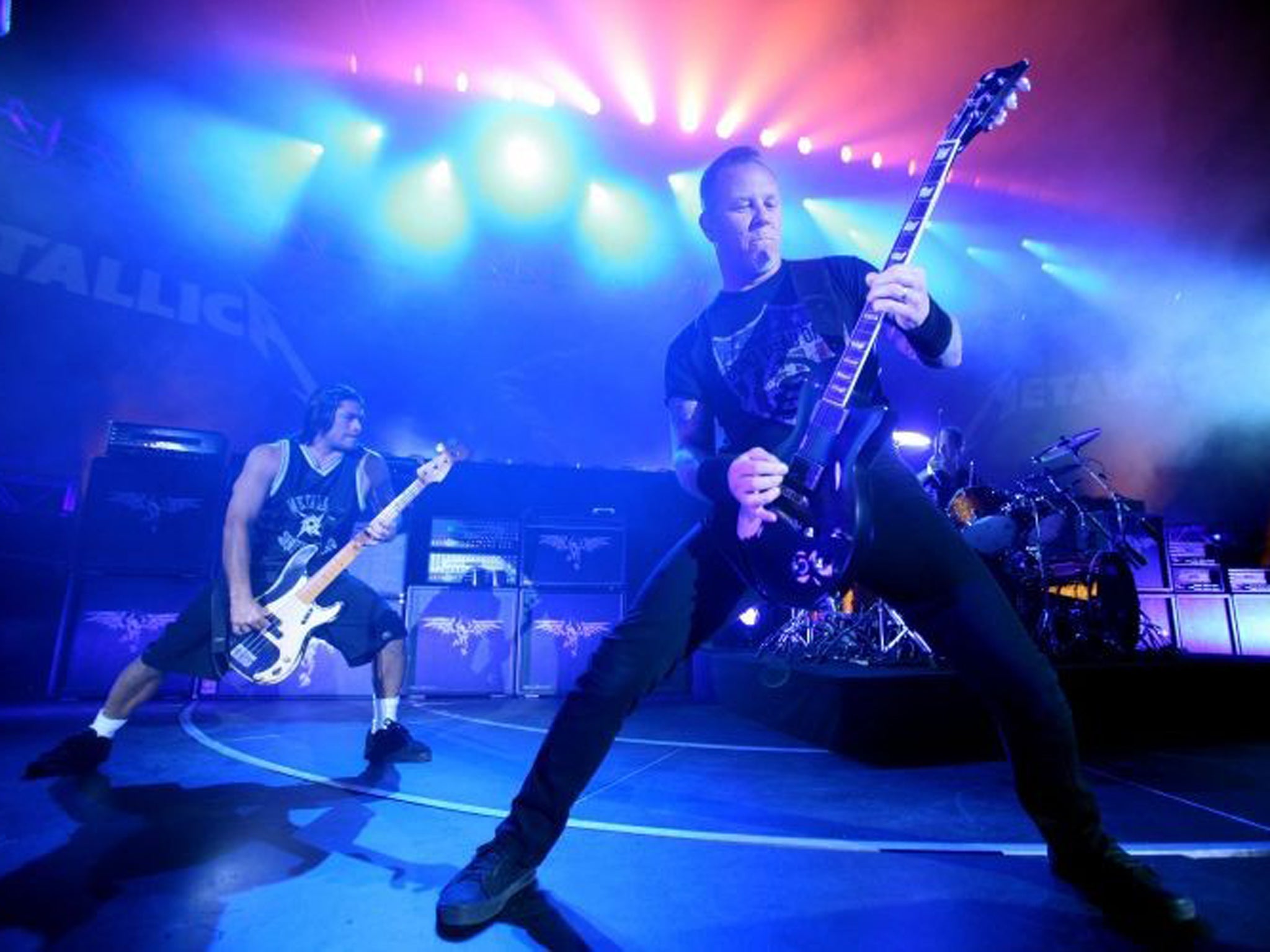
Last month, monsters of rock Metallica put their considerable back catalogue on Spotify. It was a landmark day not just for metal fans and partygoers with a sudden urge to headbang, but also in the history of the war between the sheriffs of the traditional music industry and the once wild west of internet music consumption.
The band's 2000 court case against the filesharing client Napster helped harden the respective positions of the old world and the new. "We take our craft – whether it be the music, the lyrics, or the photos and artwork – very seriously," asserted firebrand drummer Lars Ulrich, "as do most artists. It is therefore sickening to know that our art is being traded like a commodity rather than the art that it is."
Strange, therefore, to see Ulrich singing Spotify's praises on a stage alongside its founder Daniel Ek, former CEO of µTorrent (a platform that could be used to download copyrighted material), and Spotify board member and investor Sean Parker, also the co-founder of Napster. Parker even walked on the stage to The Clash's "I Fought the Law". But who's really won here?
Spotify's model, where listeners can either tolerate adverts or sign up to a £4.99 or £9.99 a month subscription, is a clever legitimation of the ease of illegal downloading. Metallica's announcement seems to have finally rubber-stamped it as a viable way of earning a living. Yet there's still plenty of dissension among artists who don't own the master rights to their recordings and so receive royalty payments filtered through the contracts they have with their labels. Spotify gives 70 per cent of the money it makes back to the industry, of which artists receive, estimates Music Week editor Tim Ingham, around 20-25 per cent. The small scale of those payments compared to more traditional sources of income has led indie artists such as Lower Dens, Grizzly Bear and The Black Keys to grumble eloquently about the number of Spotify plays needed to equate to the sale of one album in cold hard cash terms. Jana Hunter of Lower Dens argued in an impassioned blog post that, "Music shouldn't be free. It shouldn't even be cheap. If you consume all the music you want all the time, compulsively, sweatily, you end up having a cheap relationship to the music you do listen to."
Higher up the commercial pecking order, Rihanna's latest album was kept off the service as was Taylor Swift's, with the head of Swift's label Big Machine, Scott Borchetta, declaring: "We're not putting the brand-new releases on Spotify. Why shouldn't we learn from the movie business? They have theatrical releases, cable releases. There are certain tiers. If we just throw out everything we have, we're done."
Others argue that the exposure that Spotify offers drives sales; the phenomenal success of Mumford & Son's second album, Babel, which had record US first-week sales alongside record US streams, was held as proof of this.
It's not like it's a streaming/sales either/or. A vast amount of music can still be found on the internet illegally for free. Will Hope, Spotify's director of label relations in the UK and Europe, says: " That's why Spotify exists. We want to come up with a solution and a counterpoint to that." It's a counterpoint that is still striking a wrong note for some artists, but perhaps it's just a matter of holding out.
"For Spotify to succeed, and by succeed I mean for it to get to the point where artists are paid an amount of revenue that they can live off, it needs to reach a certain scale," explains Ingham. "It's a bit of a chicken-and-an-egg situation in that people say it needs to get to 10 million or even 100 million [streams] before artists start seeing the revenue that they're used to . And in order to get there Spotify need the biggest catalogues on their service. By having Metallica, it means that in future, other artists and Metallica themselves will start to see revenues that they would consider fair recompense for their material."
Hope and Ingham both believe that the artist payment process will become better and more transparent as it and other streaming services grow. Already, Spotify has five million paying subscribers, and more than 20 million active users in total. Over the past five months their royalty payments to artists have doubled – to $500m dollars.
It is essential to keep the artists' interests in the public mind, but for now, Spotify's model seems the best we have. As physical sales decline, streaming is the fastest-growing part of the industry's income. When even Metallica are laying down arms, maybe it's time for us all to get on board.
Join our commenting forum
Join thought-provoking conversations, follow other Independent readers and see their replies
Comments