Robert Tressell: Return of the working-class heroes
As a stage version of The Ragged Trousered Philanthropists opens, Andy McSmith praises the great socialist novel
When the writer Alan Sillitoe, who died two months ago, was in the RAF at the end of the war, a wireless operator handed him a dog-eared copy of an abridged version of an old novel, claiming that "among other things, this is the book that won the '45 for Labour".
Before Ricky Tomlinson reinvented himself as one of Britain's finest comic actors, he was a union militant with a fat special MI5 file, who served time in 14 prisons. One of the influences that changed his character was a copy of the same novel, given to him by a prison governor.
George Orwell called it a "wonderful book." When I worked in a radical book shop in Newcastle upon Tyne, years ago, it was our best-selling title.
Yet it is difficult to imagine that anyone has ever settled down to read the unabridged version of The Ragged Trousered Philanthropists from cover to cover for sheer pleasure. It is long, it is by an author about whom so little is known that he bordering on the anonymous. It is a story of a bunch of people doing a job they do not enjoy much, painting and decorating.
But it is an astonishing creation for all that. Before it was published, just a few working-class characters had turned up in English literature, such as Jude the Obscure, in Thomas Hardy's novel of that name, or some of Charles Dickens's creations, but they were being observed from the outside by writers who had never had to do manual labour.
It is also extraordinary how little work intrudes upon pre-20th century literature. You could spend a lifetime studying great novels in which no one is depicted doing any paid work at all. In English literature, there seemed to be an unspoken convention that work – particularly menial, monotonous work – made people less interesting.
Some of the author's comments on his characters are notoriously scathing, but that is because he is berating them for undervaluing themselves. He calls them "philanthropists" because they allow themselves to be exploited. He wishes that they would stand up for themselves. It is a novel that celebrated the dawn of working-class consciousness.
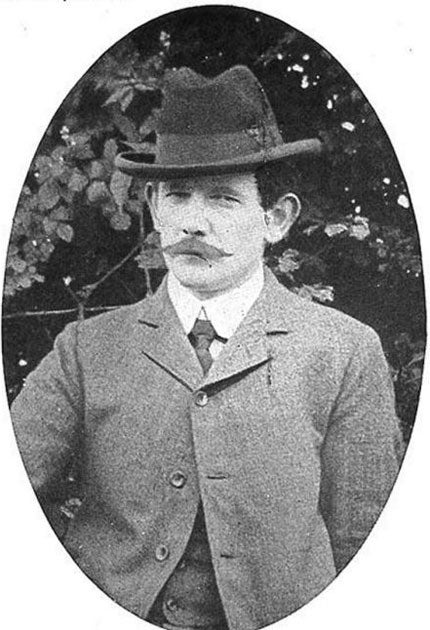
Though over a million copies have sold across the world, one person who never made money from the book was its author. He was originally named Robert Croker, and was born in Dublin in 1870, the illegitimate son of a retired policeman. He completed the novel in 1910, by which time he was ill and having difficulty finding work. Fearing that the novel would make his position even more precarious, he signed it "Robert Tressell" but could not find a publisher. He died from a lung disease in February 1911, and was buried in a pauper's grave, which was undiscovered for nearly 60 years.
And that could have been the last anyone heard of Robert Croker, aka Noonan, aka Tressell, except that an enterprising publisher had the manuscript edited, to make it shorter and more palatable to a liberal middle-class readership by removing most of the politics. The first edition appeared in April 1914, but four months later, war broke out, and the novel's readership vanished under a tidal wave of patriotism.
After the war, socialism came back into fashion, and a yet more foreshortened version of the novel was published, with a working-class readership in mind. That version was reissued in a sixpenny edition by Penguin after the Soviet Union entered the war with Germany in 1941, and was widely read in the armed forces, which is why it is credited with being the novel that won Labour the post-war election. A "complete" version did not appear until 1955, 44 years after the death of the near-anonymous "Robert Tressell".
'The Ragged Trousered Philanthropists', Everyman Theatre, Liverpool (0151 709 4776) to 10 July; Minerva Theatre, Chichester (01243 781312) 15 July to 26 August
Join our commenting forum
Join thought-provoking conversations, follow other Independent readers and see their replies
Comments
Bookmark popover
Removed from bookmarks