Lorca was censored to hide his sexuality, biographer reveals
Decades of silence by family and Spanish literary establishment broken
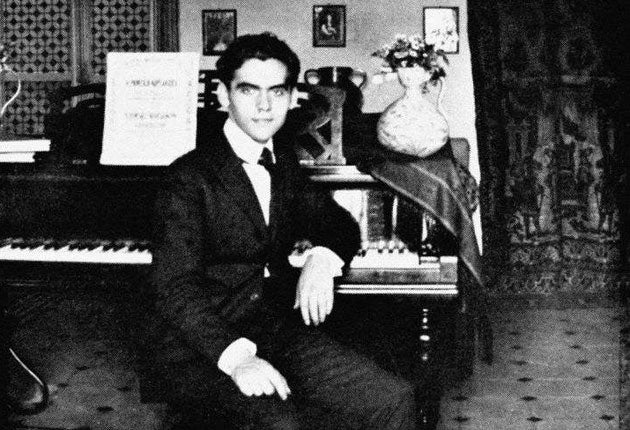
Many recognised his homosexuality from the start, but for decades Spain's literary establishment, and even his own family, refused to acknowledge that the country's best loved poet, Federico Garcia Lorca, was gay. Now his biographer, Ian Gibson, has conclusive evidence that Lorca's poetic achievements sprang from his lifelong frustration at concealing his homosexuality.
In Lorca y el mundo gay (Lorca and the Gay World), published in Spanish on Monday, Gibson describes how the poet's works were censored to conceal his sexuality. It was not until the late 1980s that Lorca's sexual identity became grudgingly acknowledged, in the face of denials and evasions. Gibson blames the decades of silence on a deep-seated Spanish homophobia. "Spain couldn't accept that the greatest Spanish poet of all time was homosexual. Homophobia existed on both sides in the civil war and afterwards; it was a national problem. Now Spain permits same-sex marriage that taboo must be broken."
Some academics who recognised the truth "suggested the poet's homosexuality was alien to his poetic creativity", Gibson writes of the man he's studied for 40 years. Scholars colluded in the cover-up for fear of losing access to the poet's archives, or antagonising the family, he says. "All his poetry turns around frustrated love. His tormented characters who can't live the life they want are precisely the metaphor for his sorrow. He was a genius who turned his suffering into art."
After Lorca was assassinated by death squads in August 1936, at the start of Spain's civil war, his brother Francisco and sister Isabel made every effort to expunge any trace of homosexuality from his life and work, Gibson claims.
A family spokeswoman, Laura Garcia Lorca, says they never talked of her uncle's homosexuality when her father was alive. "We didn't want his murder to be considered a sexual crime but to stress it was a political crime. It was difficult for my father to accept the homosexuality of his brother. However my Aunt Isabel [who died in 2002] spoke openly in her later years about homosexuality, and came to accept it as something natural. I imagine my father spoke of it among friends, but never publicly," she said recently.
As late as 1987, a long introduction to a standard textbook of Lorca poems, The Poet in New York, contained not a word about his sexuality. But that US trip in 1929, which produced an explosion of anguished creativity, was the result of a failed love affair with the sculptor Emilio Aladrén, Gibson reveals. The beautiful sculptor abandoned the poet to marry an English woman, Elizabeth Dove, which plunged Lorca into a deep depression.
Poems written shortly before his death were finally published in the mid-1980s. But the title, Sonnets of a Dark Love, was softened to Love Sonnets, even though the verses clearly referred to a man: "You will never understand that I love you/ because you sleep in me and are asleep./I hide you, weeping, persecuted/ by a voice of penetrating steel." The masculinity is clear in Spanish, in which nouns have gender.
Gibson says he went back to the beginning and re-read all of Lorca's earliest poems for this latest book. "I discovered an anguished, tortured – gay – love ... Those who deny his homosexuality must now shut up, or at least question their prejudices. It's a relief after so many decades of obfuscation and silence, to reveal the truth."
Join our commenting forum
Join thought-provoking conversations, follow other Independent readers and see their replies
Comments