British polar explorer Hadow takes on Arctic Ocean trek
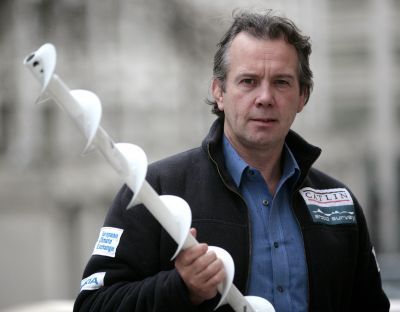
British polar explorer Pen Hadow on Thursday unveiled his latest challenge, leading a team of scientists to investigate rising acid levels in the Arctic Ocean that threaten marine life.
Hadow and leading international researchers will probe the effects of rising carbon dioxide emissions on the acid levels of the ocean when their arctic adventure gets under way next month.
The two-month Catlin Arctic Survey 2010 will included a trek hundreds of miles long across floating sea ice in extreme conditions, facing freezing temperatures and polar bears.
Results from the expedition will be made available to scientists in Europe, Canada and the US.
Believed to be one of the first expeditions of its kind, it will collect samples to shed light on rising acidity that experts warn threaten an array of species with shells which include lobsters, crabs and oysters.
"It's my view that never has there been a greater need for exploration if we are to understand how the natural world works," said Hadow, who came to public attention when in 2003 he became the first person to trek solo from Canada to the Geographic North Pole.
"Hardly anyone goes to the Arctic Ocean - they don't see it, they don't experience it and, inevitably, the understanding is low on a global basis of what the Arctic Ocean is."
Scientists predict 10 percent of the Arctic surface could be corrosive by 2018 and 50 percent by 2050 - levels not seen on earth for millions of years.
Although most international attention has focused on the effects of carbon dioxide emissions in pushing up temperatures, scientists believe dangerous levels of ocean acidity are a problem that also needs exploring.
"Ocean acidification is the 'other carbon dioxide problem'," said Professor Jean-Pierre Gattuso, of the Universite Pierre et Marie Curie.
"It is certain that it will impact marine ecosystems, although we do not fully understand how all marine species will cope."
He added that more carbon dioxide is absorbed into cold water than warmer seas, making the Arctic Ocean particularly vulnerable.
Rising acid levels in sea water reduces the availability of the carbonate mineral - used by many marine organisms to form their shells.
Twelve people, including six scientists, will set off on the expedition on March 11, which will run to the end of April.
Join our commenting forum
Join thought-provoking conversations, follow other Independent readers and see their replies
Comments
Bookmark popover
Removed from bookmarks