Asian mosquito 'could bring tropical diseases to Britain'
Continent's changing climate raises fears that dengue fever could come to South of England
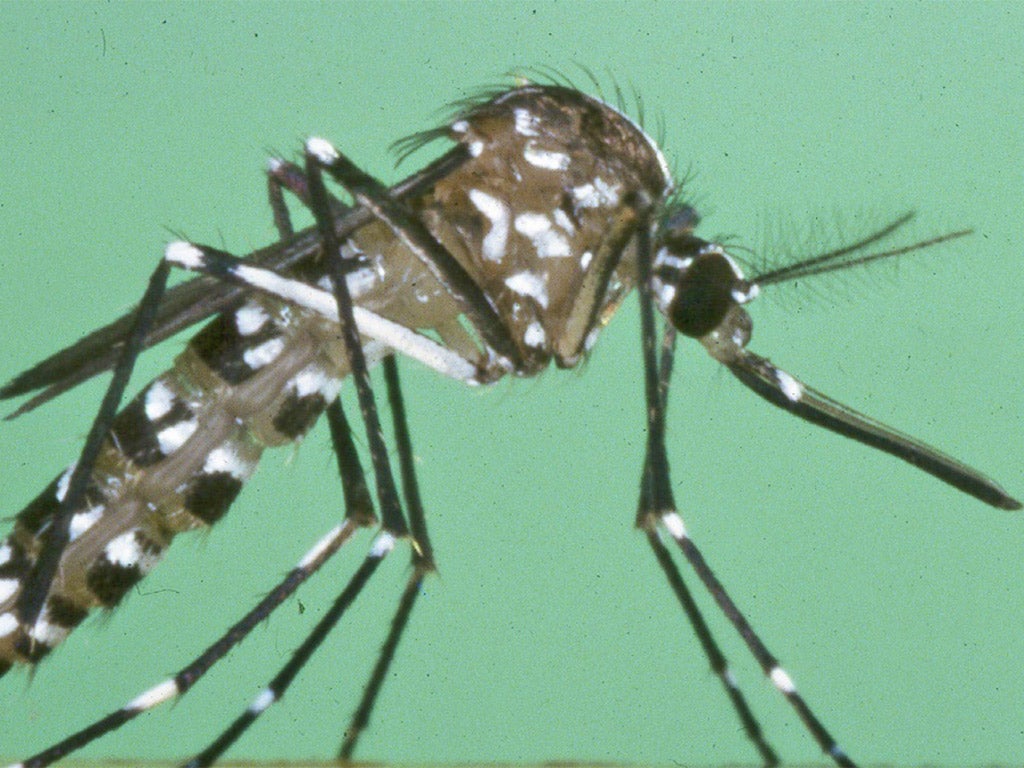
An Asian mosquito that can transmit potentially dangerous tropical diseases could soon become established in southern England, according to scientists who have mapped changes to Europe's climate over the past 50 years.
Click HERE to view graphic
The Asian tiger mosquito has already invaded large parts of Italy, Spain, southern France and the Balkans, as well as establishing itself as far north as The Netherlands, possibly as a result of the international trade in ornamental house plants.
It has caused several outbreaks of mosquito-borne infections such as dengue fever and chikungunya fever, and experts fear that it could become established in other parts of northern Europe, including southern England, where it could survive year-round in milder winters.
The Asian mosquito, Aedes albopictus, breeds in water-filled tree holes and was initially restricted to south-east Asia. But in recent years it has travelled to other parts of the world either as a result of the international trade in used car tyres, which can carry its eggs inside the water-filled rim, or lucky bamboo, a house plant transported in water-filled pots.
Computer simulations of how the climate in Europe has changed over the past half-century and of how it is likely to change in the coming decades suggest that conditions across wider areas of northern Europe will become more favourable for the mosquito, says a study by scientists from Liverpool University and the Government's Health Protection Agency.
"The results show that southern France, northern Italy, the northern coast of Spain, the eastern cost of the Adriatic Sea and western Turkey were climatically suitable areas for the establishment of the mosquito during the 1960s to 1980s," the researchers report in the Journal of the Royal Society Interface. "Over the last two decades, climate conditions have become more suitable for the mosquito over central north-western Europe (Benelux, western Germany) and the Balkans, while they have become less suitable over southern Spain.
"Similar trends are likely in the future, with an increased risk simulated over northern Europe and slightly decreased risk over southern Europe."
The Asian mosquito caused an outbreak of chikungunya fever in the north-eastern Italian province of Ravenna, where more than 200 people were infected in the summer of 2007 and one woman died. The start of the Italian epidemic was traced to an Italian tourist with a fever who had returned to Italy in June 2007 from the Indian state of Kerala. A report by the European Centre for Disease Prevention and Control in Stockholm found that the invading population of tiger mosquitoes in Ravenna caused the chikungunya virus to spread from the single infected tourist to scores of local residents.
"The outbreak of chikungunya fever in north-eastern Italy is the first documented local vector-borne transmission of chikungunya virus within the European mainland," the report said. The report said the importance of the event "should not be underestimated".
Chikungunya causes a fever that lasts a couple of days but sufferers can also experience intense headaches, joint pains and long bouts of insomnia.
In 2010, the mosquito resulted in two cases of chikungunya and two cases of dengue fever in the French department of Var. In the same year, dengue was also diagnosed in a German tourist returning from Croatia, where the mosquito is also established.
Join our commenting forum
Join thought-provoking conversations, follow other Independent readers and see their replies
Comments
Bookmark popover
Removed from bookmarks