Biofuel: the burning question
The production of biofuel is devastating huge swathes of the world's environment. So why on earth is the Government forcing us to use more of it?
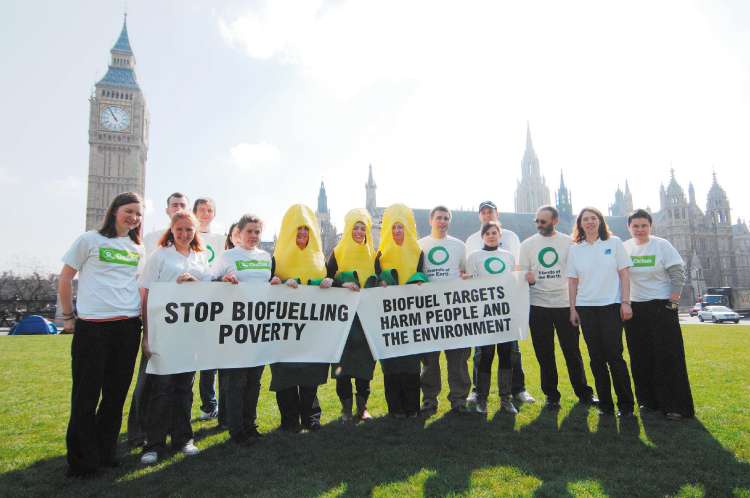
From today, all petrol and diesel sold on forecourts must contain at least 2.5 per cent biofuel. The Government insists its flagship environmental policy will make Britain's 33 million vehicles greener. But a formidable coalition of campaigners is warning that, far from helping to reverse climate change, the UK's biofuel revolution will speed up global warming and the loss of vital habitat worldwide.
Amid growing evidence that massive investment in biofuels by developed countries is helping to cause a food crisis for the world's poor, the ecological cost of the push to produce billions of litres of petrol and diesel from plant sources will be highlighted today with protests across the country and growing political pressure to impose guarantees that the new technology reduces carbon emissions.
On the day when the Renewable Transport Fuel Obligation (RTFO) comes into force, requiring oil companies to ensure all petrol and diesel they sell in the UK contains a minimum level of biofuel, campaigners condemned as "disastrous" the absence of any standards requiring producers to prove their biofuel is not the product of highly damaging agricultural practices responsible for destroying rainforests, peatlands and wildlife-rich savannahs or grasslands from Indonesia to sub-Saharan Africa to Europe.
A study by the RSPB published today criticises the introduction of the RTFO as "over-hasty" and "utter folly". The conservation body said there is already widespread evidence that biofuel production is destroying vast areas of unspoilt habitat and has made at least one species extinct.
Demonstrators will gather outside Downing Street and other locations including Aberdeen, Bristol, Manchester and Norwich to protest at the "perverse obstinacy" of the Government in going ahead with the RTFO and will call for its abandonment until the impact of biofuel production can be properly assessed.
Graham Wynne, chief executive of the RSPB, said: "The volume of biofuel that can be genuinely described as sustainable is at present very small indeed and is nowhere near enough to warrant the 2.5 per cent obligation. The impacts of biofuel production on forests and wetlands are already being seen worldwide. It is a tragedy that customers' money is going to be spent on driving this destruction."
The World Bank and the UN have, in recent days, expressed concern about the impact of biofuels on world food prices, sparking riots from Haiti to the Philippines. Gordon Brown, who has put the issue on the agenda at the forthcoming G8 summit, has also voiced concerns at EU level about deforestation and loss of habitats caused by biofuel production. And Alistair Darling, the Chancellor, raised the issue at the weekend's G7 meeting in Washington.
But ministers insisted that the RTFO, which will require Britain to produce or import up to 2.5 billion litres of biofuel each year, puts the UK at the forefront of efforts to make the industry sustainable by demanding that suppliers provide reports on where their green petrol and diesel comes from as well as the expected carbon savings.
The Department for Transport estimates 2.5 million tonnes of carbon dioxide will be saved by 2010. The proportion of biofuel will rise to 5 per cent by 2010 in the UK and there is a proposed EU-wide target of 10 per cent by 2020.
Jim Fitzpatrick, the Transport minister, said: "Making it easier for motorists to use greener fuel is an important step towards reducing carbon emissions from transport. It should help save millions of tonnes of carbon dioxide in the coming years."
For motorists, there will be no discernible difference at the petrol pump. Bio-diesel, largely sourced from processed palm oil, soya beans and rape seed, and bio-ethanol for petrol, produced from cereals and sugars, are simply mixed with fossil fuels.
But environmentalists insist the projected carbon dioxide savings are based on a false premise because the clearance of huge areas of Indonesian rainforest and peatland or South American savannahs, the use of fertiliser to grow crops, conversion into biofuel and transportation to petrol stations mean emissions caused by the manufacturing of the fuels can vastly outweigh any CO2 saved once put in a car's tank.
Researchers at the University of Minnesota published a study in February this year which found that growing biofuel crops on converted rainforests, grasslands or peat bogs created up to 420 times more CO2 than it saved.
Campaigners have pointed to palm oil, one of the key biofuel crops, as a particular menace because many plantations across south-east Asia are based on reclaimed forest and peatland, creating carbon emissions that can never be reclaimed by biofuel production. In South America, the Alagoas curassow, a large bird once found in north-eastern Brazil, has become extinct because sugar cane production wiped out its habitat.
The RSPB study, entitled A Cool Approach to Biofuels, points out that legally enforceable standards designed to eliminate such crops from the RTFO will not be imposed until 2011, leaving a three-year gap for non-sustainable biofuel to flood into Britain.
Mr Wynne said: "Proof that biofuels were truly green should have been in place long before the RTFO came into force. The method of production of some biofuel will cause habitat loss, displace food production and emit more greenhouse gases than are being saved."
Campaigners are calling for a legally binding target to ensure all biofuels save at least 60 per cent more carbon than they produce.
In the meantime, they point to a loophole in the RTFO which means that suppliers can answer "don't know" to a question about the previous use of the land that produced the biofuel.
Tesco, which has claimed all its biodiesel comes from rapeseed and soya, was forced to admit palm oil can make up a significant part of its product after a sample analysed was found to contain 30 per cent palm oil.
Norman Baker, the Liberal Democrat transport spokesman, said: "Thanks to flaws in the Government's system, companies selling these fuels will even be allowed to get away with saying that they don't know whether they've been sourced sustainably or not. This makes a mockery of the entire idea of sustainability standards."
Join our commenting forum
Join thought-provoking conversations, follow other Independent readers and see their replies
Comments
Bookmark popover
Removed from bookmarks