Britain. A breath of foul air
The UK faces £300m in fines after failing to meet EU pollution targets, but Britons also pay the price with heart disease, asthma and cancer
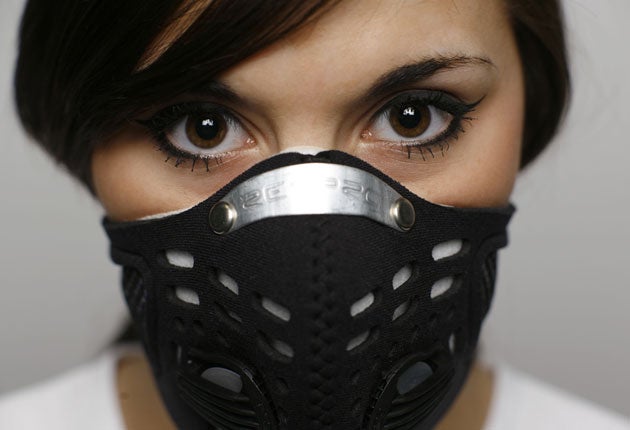
More than 50,000 people are dying prematurely in the UK every year, and thousands more suffer serious illness because of man-made air pollution, according to a parliamentary report published tomorrow. The UK now faces the threat of £300m in fines after it failed to meet legally binding EU targets to reduce pollution to safe levels.
Air pollution is cutting life expectancy by as many as nine years in the worst-affected city areas. On average, Britons die eight months too soon because of dirty air. Pollutants from cars, factories, houses and agriculture cause childhood health problems such as premature births, asthma and poor lung development. They play a major role in the development of chronic and life-shortening adult diseases affecting the heart and lungs, which can lead to repeated hospital admissions. Treating victims of Britain's poor air quality costs the country up to £20bn each year.
Nearly 5.5 million people receive NHS treatment for asthma, and more than 90,000 people were admitted to hospital as a result of the disease in England in 2008/09. US research has found that the lungs of children who live in highly polluted areas fail to develop fully.
Poor air quality is caused by three key pollutants – nitrogen oxides; particulate matter and ozone – where Britain fails to meet European safety targets.
Britain is Europe's worst emitter of nitrogen oxides and exposed 1.5 million people to unsafe levels in 2007, according to the World Health Organisation (WHO). Long-term exposure can cause breathing problems, worsen asthma and bronchitis in children and aggravate allergies. They are by-products of burning fuel, and contribute to acid rain and make plants more susceptible to disease. Despite almost halving emissions since 1990, Britain is widely expected to fall short of the 2010 EU target for nitrogen oxides, which are a precursor to particulate matter (PM), the most dangerous of all pollutants. They play a major role in the development of chronic obstructive pulmonary disease in adults which will affect more people than heart disease by 2020.
Particulate matter is airborne and comes from materials ranging from sulphates, ammonia, carbon and water to mineral dust. Sources include coal burning, exhaust emissions, tyre wear, quarrying and construction. There is no safe level of PM; some people are affected by very low concentrations over a long period. It is also linked to heart disease and cancer.
Reduced coal use in the 1990s led to a 20 per cent reduction in PM, but a big increase in diesel vehicles on the road has seen progress stall since 2000. Eight areas, including Greater London, Swansea, and Yorkshire and Humberside have exceeded 2005 EU limits at least once. Last December, the EU rejected an application from the Department for Environment, Food and Rural Affairs (Defra) to give Greater London more time to meet the target after it was unable to prove the city had worked hard to meet the target.
Britain is also doing badly on ozone in the lower atmosphere, a toxin formed from chemical reactions between various air pollutants and sunlight. Ozone concentrations are rising in UK cities, though, generally, rural areas and sunnier climates fare worse. Ozone causes eye and skin irritations, reduces lung function and damages airways and can be deadly; ozone-related summer smog caused an additional 800 deaths in 2003. There is no legally binding EU limit but, in 2007, nearly 90 per cent of the UK population were exposed to levels above WHO recommendations.
The Commons Environmental Audit Committee (EAC) will tomorrow issue damning criticism of the UK's failure to prioritise air quality despite more than a decade of pressure from scientists and the EU. Ministers from all departments will be told that our air quality is "shameful", and they must "drive this from the top... and accept responsibility for policies that conflict with air quality".
The Government will also be asked to explain why millions of pounds have been spent raising awareness about obesity, passive smoking and alcohol, but not air quality – even though the costs to human life and the NHS are similar. The Government will also face pressure to instigate immediate cross-departmental action to address the country's air quality, in order to meet EU pollution targets, avoid spiralling fines and ultimately reduce the unnecessary deaths and illness that disproportionately affect people from lower socio-economic groups.
Frank Kelly, professor of environmental health at King's College London, who gave evidence to the committee, said: "We have been banging this drum in the scientific community for 10 years and it now must be taken more seriously by the Government because this really is a damning report.... We must have an immediate major education campaign, because if people had an inkling about the impact of poor air quality on their children, then they would stop sitting outside the school gates in their big cars and would be much more likely to help. Maybe the threat of enormous fines from the EU will finally get the Government's attention."
While the air quality in the UK has improved significantly over recent decades because of cleaner fuels, vehicles and improved industrial processes required by national and European laws, these improvements have levelled off or slowed down.
Londoners live with the worst air quality in Britain. Eight million people live amid millions of vehicles and close to several airports. But some policies targeted at improving air quality have been scrapped or delayed since the election of Boris Johnson as Mayor of London. These include plans to charge £25 per day for the biggest, heavy-polluting vehicles, and a westerly extension of the congestion charge.
Professor Kelly said: "Instead of tightening up our policies, they have been dismantled instead."
Environmental Protection UK, an influential campaign group, condemned what it called the Government's "wait and see" approach to air quality, which has meant pinning too much hope on the impact of European standards for cleaner vehicles.
Ed Dearnley, the group's policy officer, said yesterday: "Resources dedicated to air quality have been tiny in comparison to other areas of public health work such as obesity and passive smoking. Defra has struggled to get other departments, such as transport and health, to understand the problem and to act. The failure to get to grips with [more] vehicles on the roads, and the well-intentioned but counter-productive policies that have encouraged more diesel vehicles, means their 'wait and see' policy has failed."
A Defra spokeswoman said the EAC report described fines as "potential" not "expected". She added that the Government intends to avoid them by asking for more time to meet the limits. "Over the last few years there have been a range of measures introduced which demonstrate close working between departments. These include substantial investment in public transport and incentives through vehicle excise duty for less polluting vehicles," she said. "Of course, we accept that further measures are needed, and discussion is continuing on some of these."
In the air: The UK's clean-up success rate
Where we do well
Britain has never exceeded the EU lead target since it was set in 2007.
The introduction of unleaded petrol in 1986 eradicated the main source of the highly toxic chemical.
Carbon monoxide emissions have decreased by 75 per cent since 1990, largely as a result of catalytic converters in machinery and vehicles.
Britain produced 16,800 tonnes of the cancer-causing benzene in 2007 – a 72 per cent decrease since 1990. The EU target was met well in advance of the 2010 deadline.
Where we fail
Nitrogen oxides levels in some cities are 20 per cent higher than the European average. The 2010 target will not be met unless new national and local strategies are introduced.
Although EU ambient air targets for ozone have been achieved, nearly 90 per cent of the country is exposed to levels considered too high by the World Health Organisation.
Polycyclic aromatic hydrocarbons increase risk of cancers. High levels were found in Scunthorpe in 2007, but the rest of the UK meets targets.
Join our commenting forum
Join thought-provoking conversations, follow other Independent readers and see their replies
Comments
Bookmark popover
Removed from bookmarks