Fears for Baltic's marine life as global warming decreases the salt in the sea
Changes in North Atlantic could also undermine the entire food chain, says Europe-wide study
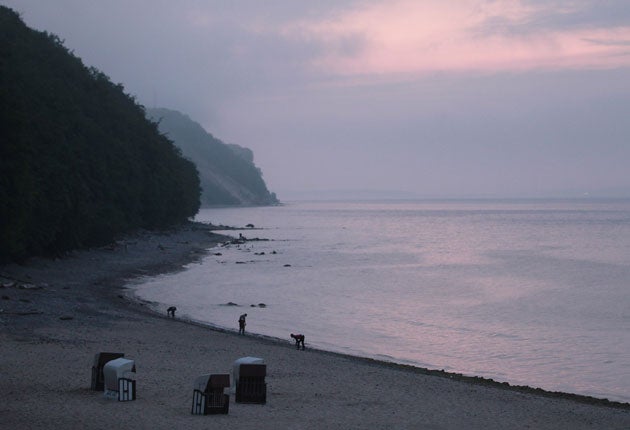
Climate change will turn the Baltic Sea into an increasingly freshwater sea and devastate its marine life, according to scientists.
A multinational study has found that an increase in precipitation in the region would lead the water in the Baltic to become less salty. Such a decrease in salinity would change the make-up of sea life, which is already suffering from over-fishing and harmful chemicals.
Professor Chris Reid, of the Marine Institute, University of Plymouth, who was involved in the study, said: "Due to global warming, it is predicted there will be an increase in precipitation in the river basins that flow into the Baltic Sea. As a result – because it's an enclosed sea with a very narrow exit – the sea will become fresher. We predict this will happen over the next 100 years."
Transformations to the Baltic's ecosystem is among a number changes reported in the research project, led by Climate Change & European Marine Ecosystem Research (Clamer) which has collated more than 13 years' worth of reports, involving 17 marine institutes from 10 European countries.
Another alarming discovery is the arrival of a new species of plankton in the north Atlantic from the Pacific. The microscopic species had disappeared from the region 800,000 years ago. As the melting Arctic icecap has opened the Northwest Passage, the plant has drifted back across the pole.
While the algae is a food source, experts say any changes at the base of the marine food web, could shake or even topple the pillars of existing Atlantic Ocean life.
Before the Arctic froze, nearly a million years ago, Pacific water was able to enter the North Atlantic, which allowed large numbers of Pacific species to dominate its ecosystems. Some of the species found in European waters today originally arrived from the Pacific. "If the Arctic continues to melt more species can get through; then we could see huge changes taking place in the north Atlantic," said Dr Reid. "The potential effect on fisheries could be huge. There would be increased competition. For example, there are about six different species of salmon in the Pacific, but only one in the Atlantic. The present stocks of salmon in the Atlantic are in a serious situation, so anything that's going to exacerbate that is going to be a real problem."
Just last year a Pacific grey whale was spotted in the Mediterranean, the first time it was seen in those waters for more than three centuries. Scientists believe the ice-reduced Arctic allowed the whale to cross into the North Atlantic.
Marine species are tending to migrate toward the poles, but they are doing so at varying speeds. This is making it difficult to predict how they will interact. In enclosed seas, species that require cooler conditions might have nowhere to go as waters become warmer. Researchers predict that by 2060, as the Mediterranean warms, one third of its 75 fish species will be threatened and six will be extinct.
In the similarly enclosed Black Sea, however, where new Mediterranean species are arriving, warming air and seawater are expected to result in increased diversity, with adverse affects limited to the decline or loss of a small number of native species.
Other findings from the report reveal an influx of highly venomous jellyfish in the north east Atlantic, often forming massive blooms. A particularly dangerous warm-water species dominates in many areas and outbreaks have forced the closure of some European beaches. This particular species is also a predator of young fish, so experts consider its spread a harmful trend. Recently, the Portuguese Man-of-War, a poisonous jellyfish-like subtropical creature, has been found more regularly in Atlantic waters.
Dr Carlos Heip, the director general of the Royal Netherlands Institute for Sea Research, said: "We need to learn much more about what's happening in Europe's seas, but the signs already point to far more trouble than benefit from climate change. Despite the many unknowns, it's obvious that we can expect damaging upheaval as we overturn the workings of a system that's so complex and important."
Join our commenting forum
Join thought-provoking conversations, follow other Independent readers and see their replies
Comments
Bookmark popover
Removed from bookmarks