Glaciergate part II: climate chief reheats Himalayas row
Head of IPCC's claim of meltdown caused outcry two years ago – now he's repeated the warning
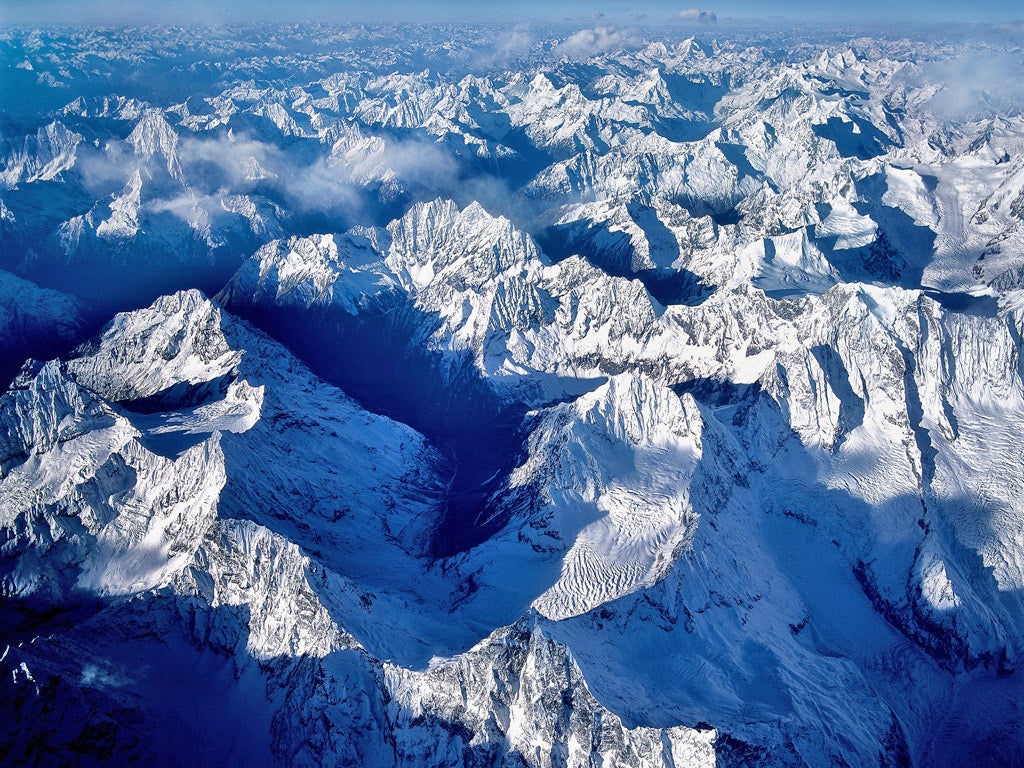
The glaciers of the Himalayas, suppliers of fresh water to more than a billion people, are undoubtedly retreating because of global warming, the head of the UN's climate change body reaffirmed yesterday – two years after he was embroiled in an international political row about similar forecasts.
Raj Pachauri, the Indian chairman of the Intergovernmental Panel on Climate Change (IPCC), became a controversial figure around the world in December 2009 when it was revealed that a claim in the IPCC's previous report about Himalayan glacier meltback was wildly inaccurate.
A paragraph buried on page 493 of the report, published in 2007, said that the likelihood of the glaciers disappearing by the year 2035 was "very high". When this was noticed, many scientists criticised it as ridiculous and it is now not accepted by mainstream science.
Dr Pauchauri at first attacked critics of the claim, accusing one of producing "voodoo science" and provoking a widespread controversy which became known as "Glaciergate". He was later forced to apologise and correct the claim in the IPCC report.
Yesterday, however, Dr Pachauri reasserted that the glaciers in general were melting back, after the publication of the most authoritative report produced on those in the Himalayan-Hindu Kush region.
The report, from the International Centre for Integrated Mountain Development (ICIMOD) based in Kathmandu, used satellite data to establish the geography of the snow cover of Asia's giant mountains, revealing for the first time that the number of glaciers in the region is in excess of 54,000.
Only 10 of them, it says, have been closely studied for changes in "mass balance" – the shifting volume of the ice which can indicate a glacier is growing, shrinking or stable. But in these 10, the rate of ice loss has roughly doubled between 1980 and 2005. In the Everest area, the data shows a marked acceleration in the loss of glacial mass between 2002 and 2005, the report says. Glaciers appear to be shrinking in both the central and eastern Himalayas, while country-specific studies have found that depletion of glacial area over the past 30 years was 22 per cent in Bhutan and 21 per cent in Nepal.
One of the key implications of the melting is that the glaciers provide the headwaters of the major river systems which come off the Himalayas and provide water for more than a billion people.
Dr Pachauri, who is in Durban for the UN Climate Conference, said the glaciers of the Himalayas were "undoubtedly" melting and retreating. "Of that there's no doubt at all... Yes, in the aggregate they are melting, there's no question about it."
He added: "Those 10 [glaciers studied in the report] are those where we've got publications based on measurements, but I can tell you there are a large number of other measurements that have been made which have not necessarily been published in peer-reviewed journals – but if you look at the raw data, which incidentally I've done personally, you do get a similar conclusion."
On the question of a timescale for the glaciers melting completely, he said: "It's very difficult, that's something which we have to get much more scientific evidence on." Asked if he had any regrets over "Glaciergate", he said: "Well, we obviously made an error which we have corrected, and it's there on the website of the IPCC. We did that as soon as it came to our attention."
Join our commenting forum
Join thought-provoking conversations, follow other Independent readers and see their replies
Comments
Bookmark popover
Removed from bookmarks