Humans <u>must</u> be to blame for climate change, say scientists
No possible natural phenomenon could have caused the huge rise in temperatures experienced in last half-century
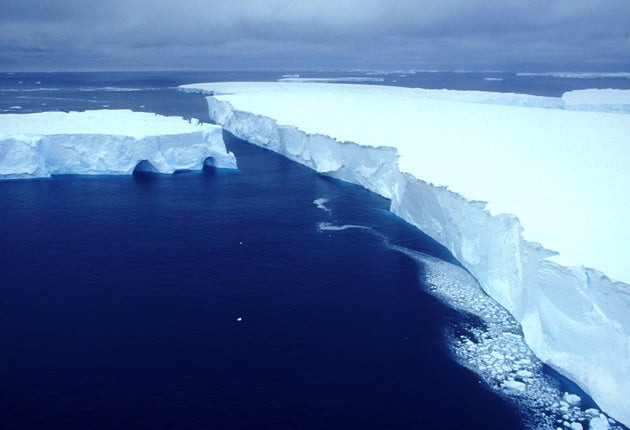
Climate scientists have delivered a powerful riposte to their sceptical critics with a study that strengthens the case for saying global warming is largely the result of man-made emissions of greenhouse gases.
The researchers found that no other possible natural phenomenon, such as volcanic eruptions or variations in the activity of the Sun, could explain the significant warming of the planet over the past half century as recorded on every continent including Antarctica.
It is only when the warming effect of emitting millions of tonnes of carbon dioxide into the atmosphere from human activity is considered that it is possible to explain why global average temperatures have risen so significantly since the middle of the 20th century.
The study updates a 2007 report by the Intergovernmental Panel on Climate Change and has discovered several new elements of the global climate which have been influenced by humans, such as an increasing amount of water vapour evaporating from the warmer oceans into the atmosphere and a corresponding increase in the saltiness of the sea.
"There is an increasingly remote possibility that climate change is dominated by natural rather than anthropogenic [man-made] factors," the scientists concluded in their study, published in the journal Wiley Interdisciplinary Reviews of Climate Change.
Scientific observations based on temperature recordings on every continent, as well as thermometer readings on, in and above the oceans, leave "little room for doubt" that the earth is warming, but trying to attribute a cause for this global warming is not possible unless man-made activity in the form of carbon dioxide emissions is taken into account, the scientists said.
The review, led by Peter Stott of the Met Office Hadley Centre in Exeter, found the "fingerprints" of human activity on many different aspects of climate change, including the overall warming of the Antarctic recently documented for the first time by other researchers.
"The observations cannot be explained by natural factors," Dr Stott said. Since 1980, the Earth has warmed by about 0.5C and is now warming at a rate of about 0.16C per decade, with even higher rates at higher latitudes such as in the Arctic.
"The fingerprint of human influence has been detected in many different aspects of observed climate change. We've seen it in temperature, and increases in atmospheric humidity, we've seen it in salinity changes. We've seen it in reductions in Arctic sea ice and changing rainfall patterns," Dr Stott said. "What we see here are observations consistent with a warming world. This wealth of evidence we have now shows there is an increasingly remote possibility of climate change being dominated by natural factors rather than human factors."
He dismissed suggestions that variations in solar activity – the intensity of the Sun – could explain warming patterns over the past few decades. If the Sun was responsible then both the upper and lower atmosphere would be getting warmer, instead of just the lower atmosphere as predicted by computer models of greenhouse gas warming.
He also said that more water vapour is evaporating into the atmosphere as a result of warmer oceans and this is driving the water cycle harder, causing wetter areas in northern latitudes such as Britain to get wetter and drier areas in tropical regions such as East Africa to get drier.
Asked whether climate sceptics would agree with the findings, Dr Stott said: "I just hope people look at the evidence of how the climate is changing in such a systematic way. I hope they make up their minds on the scientific evidence."
Join our commenting forum
Join thought-provoking conversations, follow other Independent readers and see their replies
Comments
Bookmark popover
Removed from bookmarks